What Is Traditionally Eaten At Christmas In Italy?
The two-day structure of the Italian Christmas table, region by region, from the fish-only Christmas Eve meal to panettone, pandoro and the cured-meat antipasto, with real Milan prices and the law behind the cakes.
What Is Traditionally Eaten At Christmas In Italy?
The traditional Italian Christmas table runs across two days: Christmas Eve is a lean, fish-centred meal of seven or more courses in much of the south, while Christmas Day carries the richer antipasto of cured meats and aged cheeses, a stuffed pasta or roast, and panettone or pandoro to finish. Regional dishes vary widely, but that two-day structure holds everywhere.
The first thing to understand is that Christmas in Italy is not one meal but a sequence. The evening of 24 December, la vigilia, is traditionally a day of light eating or fasting, broken by a fish dinner with no meat at all. In many southern households this grows into the feast of the seven fishes, though the count is symbolic rather than a strict rule, and some families serve nine, thirteen or simply as many courses as the cook can manage. Baccalà, salt cod, and capitone, fried eel, anchor the table from Naples southward.
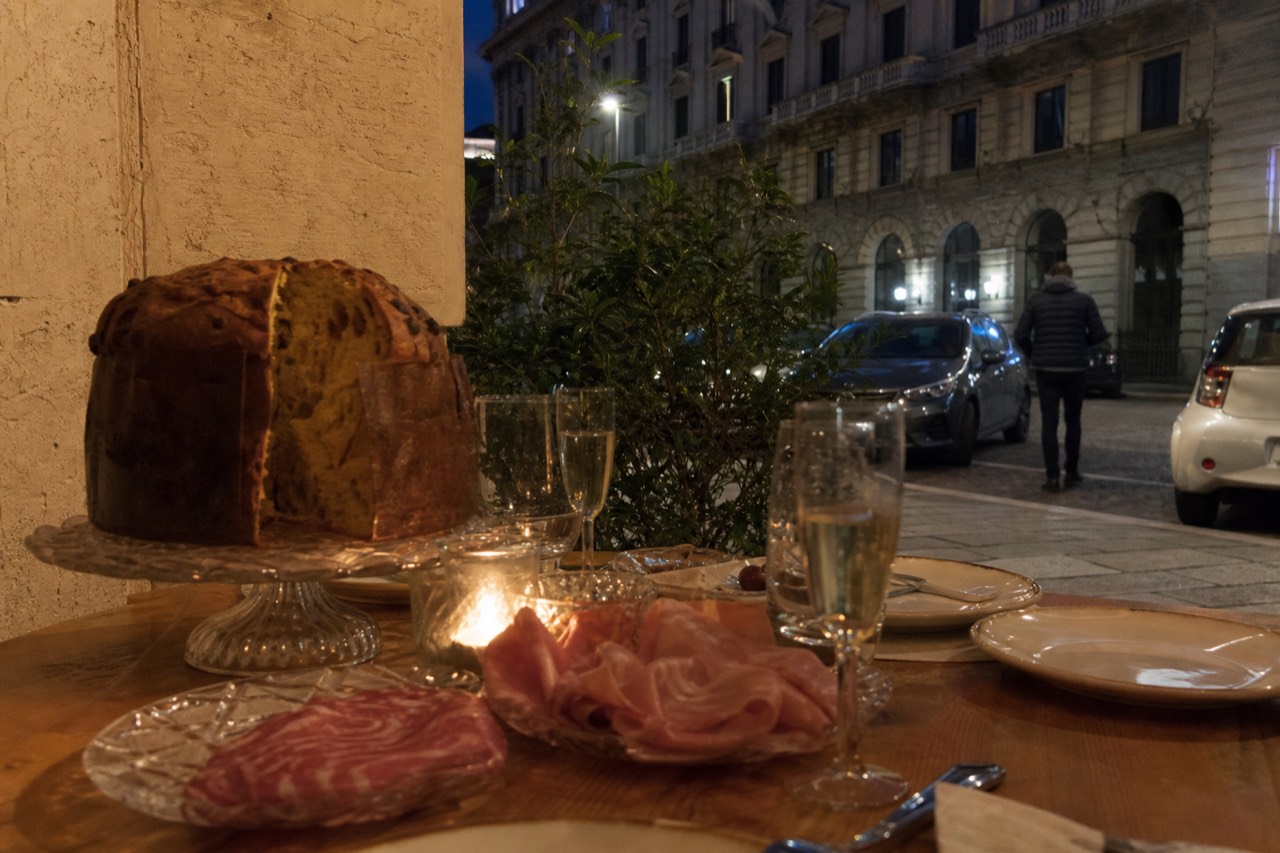
Christmas Day, il pranzo di Natale, is the opposite: the biggest, longest meal of the year, eaten at midday and stretching into the afternoon. It opens with antipasto, a board of cured meats and aged cheeses, moves through one or two pastas, often tortellini in brodo in Emilia or lasagne in the north, then a roast, then salads and cheese, then dolci. The whole thing can run four hours, and nobody apologises for it.
The context for this national table changed in December 2025, when UNESCO inscribed Italian cuisine on its Intangible Cultural Heritage list, the first entire national cuisine to receive the designation, by unanimous decision of the committee meeting in New Delhi, as CNN reported at the time. Christmas eating is the most visible expression of exactly that tradition of cooking, rituals and transmission the inscription recognises.
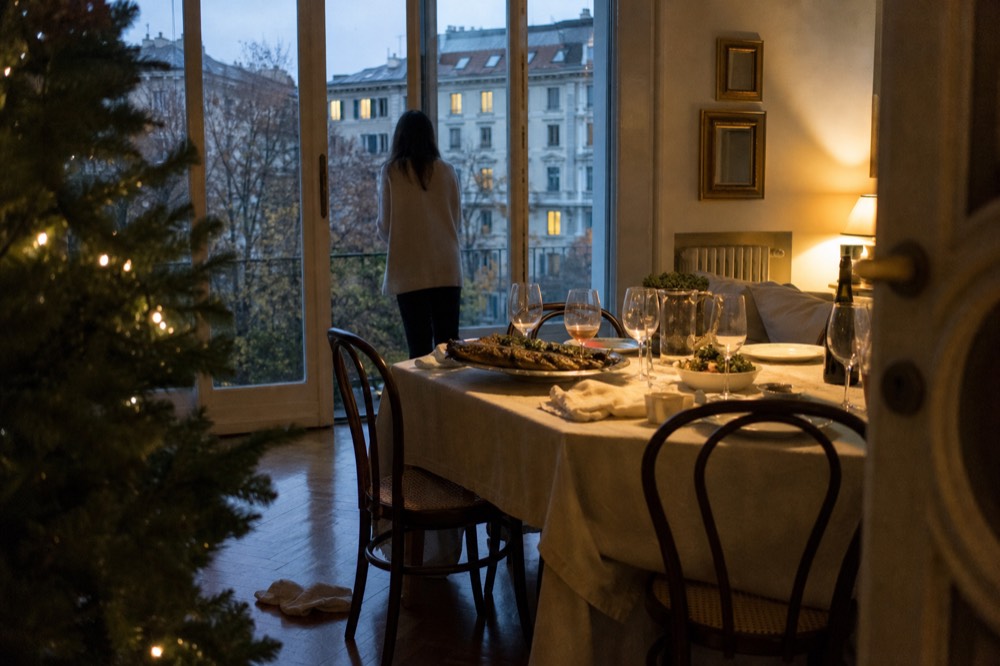
Milan's own contribution to the national table is panettone, the tall sourdough cake that appears at practically every Italian Christmas from the Alps to Sicily. If you want the full Milanese story of the cake itself, our guide to panettone in Milan covers it in depth, and the question of Milan's famous desserts goes beyond the Christmas season. For now, the point is simpler: panettone is one dish on a very long national table, and the rest of that table is worth knowing before you plan a food-focused trip over the holidays.
What Is The Difference Between Christmas Eve And Christmas Day Menus?
Christmas Eve is fish, oil and vegetables with no meat; Christmas Day is meat, cheese, stuffed pasta and slow roasts. The Eve meal is traditionally lean because 24 December was a vigilia, a vigil day of abstinence before the feast, so baccalà, eel, shellfish and vegetables dominate, while the Day menu unpacks everything that was denied the night before.
The religious logic comes first. The Catholic calendar treated Christmas Eve as a day of fasting and abstinence, and even in households that no longer observe the rule, the menu keeps its shape. No meat, no butter-heavy roasts, often no cheese in the main courses. What replaces them depends on the region, but the structure holds from Valle d'Aosta to Puglia.
Christmas Day then reverses everything. Antipasto of cured meats, salumi and cheeses, a primo of stuffed or baked pasta, a secondo of roast meat, capon, lamb or beef, and sweets to finish. In Milan the Day meal has its own anchors, and the city's classic dishes carry municipal recognition: the Comune di Milano's De.Co. register, established by council resolutions in 2007 and 2008, lists panettone, cassoeula, risotto alla milanese, ossobuco and michetta among its recognised products, per the Comune's own food policy pages.
| Region | Christmas Eve | Christmas Day |
|---|---|---|
| Lombardy and Milan | Baked fish, vegetable dishes, panettone at midnight | Antipasto of salumi and aged cheeses, tortellini or agnolotti, roast capon or cotoletta, panettone |
| Emilia-Romagna | Baccalà, fish and fried vegetables | Tortellini in brodo, zampone or cotechino with lentils, parmigiano |
| Rome and Lazio | Baccalà fritto, broccoli, spaghetti with clams | Cappelletti in brodo, abbacchio al forno, panettone or pandoro |
| Naples and Campania | The fish vigil: capitone, baccalà, shellfish, insalata di rinforzo | Lasagne, roast meat, struffoli and honey sweets |
| Sicily | Pasta with sardines or anchovies, fried fish | Timballo, roast lamb, buccellato and cassata |
| Veneto | Baccalà alla vicentina, polenta | Bigoli, roast meats, pandoro |
The table is a planning tool, not a rulebook. Families mix, migrate and improvise, and a Milanese household with Calabrian grandparents will serve both tables at once. But if you are eating out in Italy over Christmas, the Eve/Day split is the single most reliable predictor of what a restaurant will put in front of you.
The antipasto course deserves special attention, because it is the thread that runs through every regional Christmas Day menu. Cured meats and aged cheeses, prosciutto, salami, Parmigiano Reggiano, Gorgonzola, are the constant from Bolzano to Palermo. Gorgonzola in particular had a record 2025, with the consortium reporting 5,421,517 wheels produced, up 2.72 percent on the year before, per the consortium's own release. A good part of that cheese lands on Christmas boards.
Panettone Or Pandoro: What Does Italian Law Actually Say?
A panettone must, by Italian ministerial decree, be a naturally leavened sourdough cake with at least 16 percent butterfat, at least 4 percent egg yolk and at least 20 percent raisins and candied citrus peel, while pandoro must contain at least 20 percent butterfat and no fruit at all. The names are legally reserved, so a cake that misses those floors cannot be sold under either name.
This is not folklore, it is the Decreto 22 luglio 2005, published in the Gazzetta Ufficiale n. 177 of 1 August 2005, which reserves the sale names of certain baked sweet products. The full text of the decree is published as an official PDF, and its numbers are worth knowing because they explain the price gap between supermarket and artisan cakes.
| Requirement | Panettone | Pandoro |
|---|---|---|
| Leavening | Natural sourdough (pasta acida) | Natural sourdough |
| Minimum butterfat | 16% | 20% |
| Minimum egg yolk | 4% | Not specified in the same terms |
| Raisins and candied citrus | At least 20% | None |
| Shape | Round base, cracked top crust | Star-shaped, tall |
| Typical dressing | Plain, or with creams | Vanilla sugar dusting |
Neither cake holds an EU DOP or IGP designation, and no such application has been verified at any stage. What Milan's panettone does hold is a place on the Comune's municipal De.Co. register from 2007, a statement of territorial belonging rather than an EU protection. The distinction matters: a writer or menu that calls panettone "DOP protected" is wrong, and the difference between a legal sale-name standard and a geographical protection is exactly the kind of detail that separates a good food story from a repeated one.
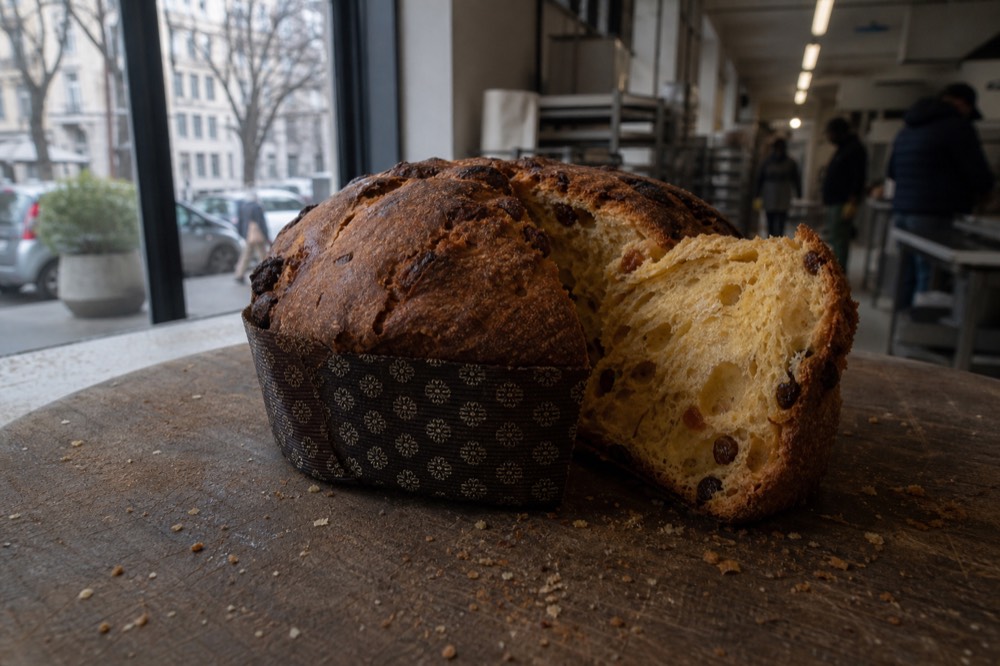
The decree was amended in 2017, adjusting egg and butter categories, though that amendment is reported second-hand in Italian food press rather than fetched here, so treat it as context. The 2005 floors are the numbers that matter to a shopper: they are the reason an honest panettone cannot be cheap to make, since butter, yolks, candied fruit and a long natural leavening are all built into the legal minimum.
How Much Does Artisan Panettone Cost In Milan?
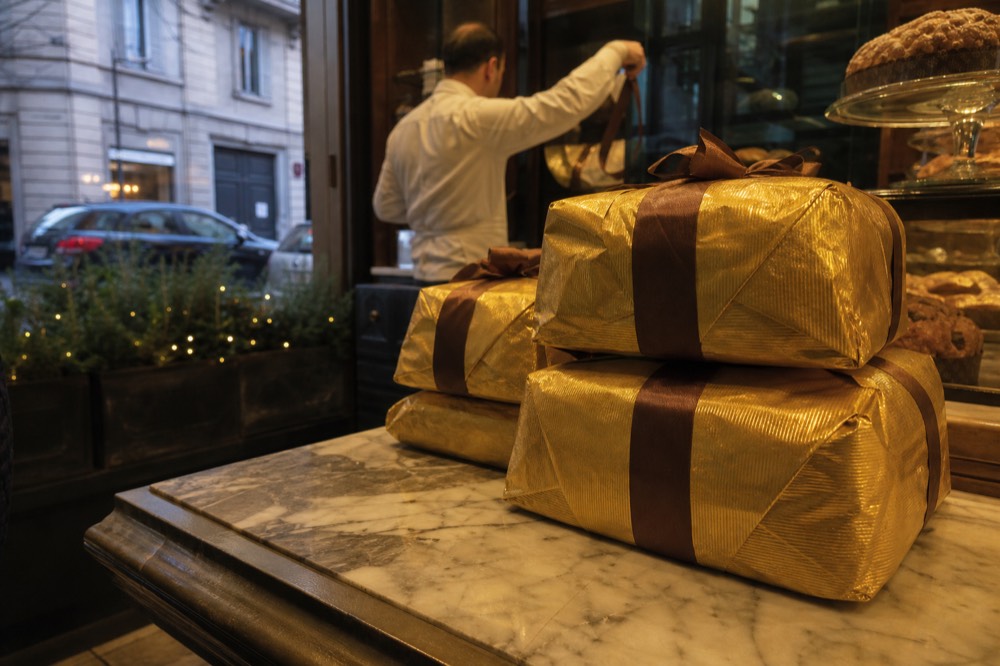
Artisan panettone in Milan was selling above 50 euro per kilo in the 2025 Christmas season, with named pastry shops Marchesi and Gattullo both listing at 50 euro per kilo, according to a Resmart analysis reported by Food Affairs, which also found prices up 55 percent over five years. Industrial supermarket panettone sells for a small fraction of that.
The price gap is not snobbery, it is the decree's ingredient floors meeting labour. An industrial cake can use the permitted emulsifiers and the one percent yeast allowance to shorten the process; an artisan baker works a live sourdough over days. The Resmart analysis, reported by Food Affairs in December 2025, put the named Milan shops at that 50 euro per kilo mark, and the same reporting headlined the five-year rise.
| Type | Typical Milan price | What you are paying for |
|---|---|---|
| Industrial supermarket panettone | A few euro per cake | Permitted emulsifiers, faster leavening, long shelf life |
| Mid-range branded panettone | Mid-teens euro per kilo | Better fruit and butter, still process-driven |
| Artisan panettone | Above 50 euro per kilo in 2025 | Natural sourdough, top-grade butter and fruit, days of labour |
For visitors in Milan in the weeks before Christmas, the practical advice is to buy one of each and taste the difference side by side, which is the fastest education in what the 2005 decree is protecting. For everyone else, the season is short: panettone is a Christmas product, tied to the festive calendar in its own De.Co. entry, and it disappears from the better pastry shops in January.
Where Does The Christmas Antipasto Actually Come From?
The cured meats and aged cheeses that open every Italian Christmas Day meal come from the Po valley, and the Parmigiano and Prosciutto Day Trip shows you the source directly: it runs from Milan by first-class Italo train, but you meet the tour leader at Reggio Emilia AV Mediopadana station, not in Milan, and the train leg is travelled independently. It runs 6 to 8 hours, from $195 per person.
That meeting-point detail is worth stating plainly because it surprises people: the day starts at Milano Centrale, but the tour leader waits at Reggio Emilia AV Mediopadana station, Via Citta del Tricolore 1, Reggio nell'Emilia, and the first-class train ride out is on your own. What you get at the other end is the production side of the antipasto course, the dairies and curing rooms behind the cheese and prosciutto that appear on every Christmas board in the country.
The tour carries a single review so far, so there is no rating worth quoting; the count is the honest picture. Free cancellation runs up to 24 hours, which matters for a winter day trip where fog or a strike can reshuffle northern Italian train schedules.
Seeing a wheel of Parmigiano made, rather than buying a wedge at a counter, is the difference between knowing a product and understanding it, and Christmas is the moment that knowledge pays off. When you assemble your own antipasto back in Milan, or order one at a restaurant on 25 December, you will know why the cheese costs what it costs and what the age statements mean.
What Sweet Things Close The Christmas Meal?
Panettone and pandoro close most Christmas meals, but they are not alone: the Milanese table adds chocolate in every form, and the city has a working artisan chocolate factory you can visit, the Enrico Rizzi chocolate factory tour, a one-hour tasting visit from $35 per person, rated 4.6 across 68 reviews.
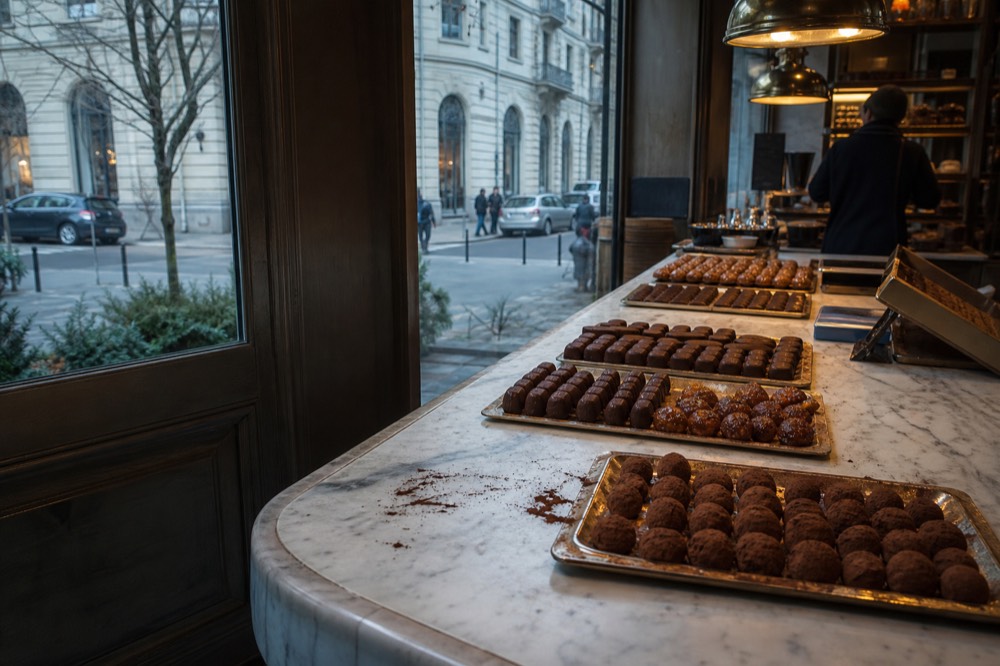
Chocolate is the quiet second pillar of Italian Christmas sweets. Gianduja torrone, chocolate-coated panettone variants, and gift boxes from serious chocolatiers all spike in December, and Milan's own Enrico Rizzi, whose Fabbrica del Cioccolato sits at Via Gian Giacomo Mora 18 with the M4 De Amicis stop as the way in, opens his factory for a one-hour guided tasting visit. It is rated 4.6 across 68 reviews, from $35 per person, with free cancellation up to 24 hours.
Beyond the factory gate, the city's pastry tradition runs deep at Christmas, and not only in panettone. If you are in Milan in the weeks before the holiday, a guided walk of the patisserie counters is the efficient way to cover it, and the patisserie sweets walk by Do Eat Better is the format built for exactly that: 2 hours 30 minutes, from $65.07 per person, rated 4.8 across 59 reviews.
How Should A Visitor Plan Around The Italian Christmas Table?
Plan for closures and book ahead: Christmas Eve dinner and Christmas Day lunch are family meals, so most restaurants close or serve a fixed menu, the 24th, 25th and 26th are the tightest days of the year, and any food tour or tasting you want before the holidays should be booked well in advance because December is peak season.
The structural fact is that Christmas in Italy is eaten at home. Restaurants that stay open on the 25th typically serve a fixed-price festive menu at lunch, booked days ahead, and the 26th, Santo Stefano, is a public holiday with its own family lunches. For a visitor, the workable strategy is to eat your festive meal at a booked restaurant on one of those days and spend the other days on the city's everyday food culture, which does not stop.
Milan in late December is also a strong time for the food experiences that need no holiday kitchen: the chocolate factory visit, the patisserie walk, the market halls. The one to treat differently is the day trip, because regional trains run reduced holiday timetables from Christmas Eve through Santo Stefano, and a Parmigiano dairy visit depends on production schedules, which pause for the holidays. Book the day trip for the days before Christmas Eve, not between the 24th and 26th.
If you are assembling your own antipasto instead of eating out, the practical notes are on Milan Food Tours year-round: Peck at Via Spadari closes on Sundays and opens only in the afternoon on Mondays, so a Christmas Eve shop must happen on the 23rd or earlier, and the covered markets run reduced holiday hours. The antipasto course rewards the same planning as the rest of the table.
The questions below cover the core of the Italian Christmas table in short form: what is eaten on each of the two days, why Christmas Eve has no meat, how panettone and pandoro differ and what the law says about their names, and how a visitor should handle restaurant closures across the 24th, 25th and 26th of December.
Common Questions About Christmas Food In Italy
What Is Traditionally Eaten At Christmas In Italy?
A fish-centred, meat-free meal on Christmas Eve, often with seven or more courses in the south, followed on Christmas Day by a long lunch of antipasto with cured meats and aged cheeses, stuffed pasta such as tortellini in brodo, a roast, and panettone or pandoro to finish.
Why Is There No Meat On Christmas Eve In Italy?
Christmas Eve was traditionally a vigil day of fasting and abstinence before the feast. Even in households that no longer observe the religious rule, the menu keeps its shape: baccalà, eel, shellfish and vegetables instead of meat, with the rich foods saved for Christmas Day.
What Is The Difference Between Panettone And Pandoro?
Panettone is a Milanese sourdough cake with raisins and candied citrus peel, legally required to contain at least 16 percent butterfat and 20 percent fruit. Pandoro is a Veronese star-shaped cake with no fruit and at least 20 percent butterfat, usually dusted with vanilla sugar.
Is Panettone Protected Like A DOP Cheese?
No. Panettone holds no EU DOP or IGP designation. What governs it is a 2005 Italian ministerial decree reserving the sale name, plus a place on the Comune di Milano's municipal De.Co. register since 2007, which is a statement of territorial belonging rather than EU protection.
Do Restaurants Open On Christmas Day In Italy?
Some do, typically serving a fixed-price festive lunch menu that must be booked in advance, but Christmas is fundamentally a home-cooked holiday in Italy. The 24th, 25th and 26th are the tightest days of the year for eating out, and the days before Christmas Eve are the easiest for food experiences.