What Dessert Is Milan Famous For?
Milan's most famous dessert is panettone, but the city's sweet identity runs deeper: a legal definition signed into Italian law, a municipal register of sweets, and the pastries Milanese actually eat on a Tuesday morning.
What Dessert Is Milan Famous For?
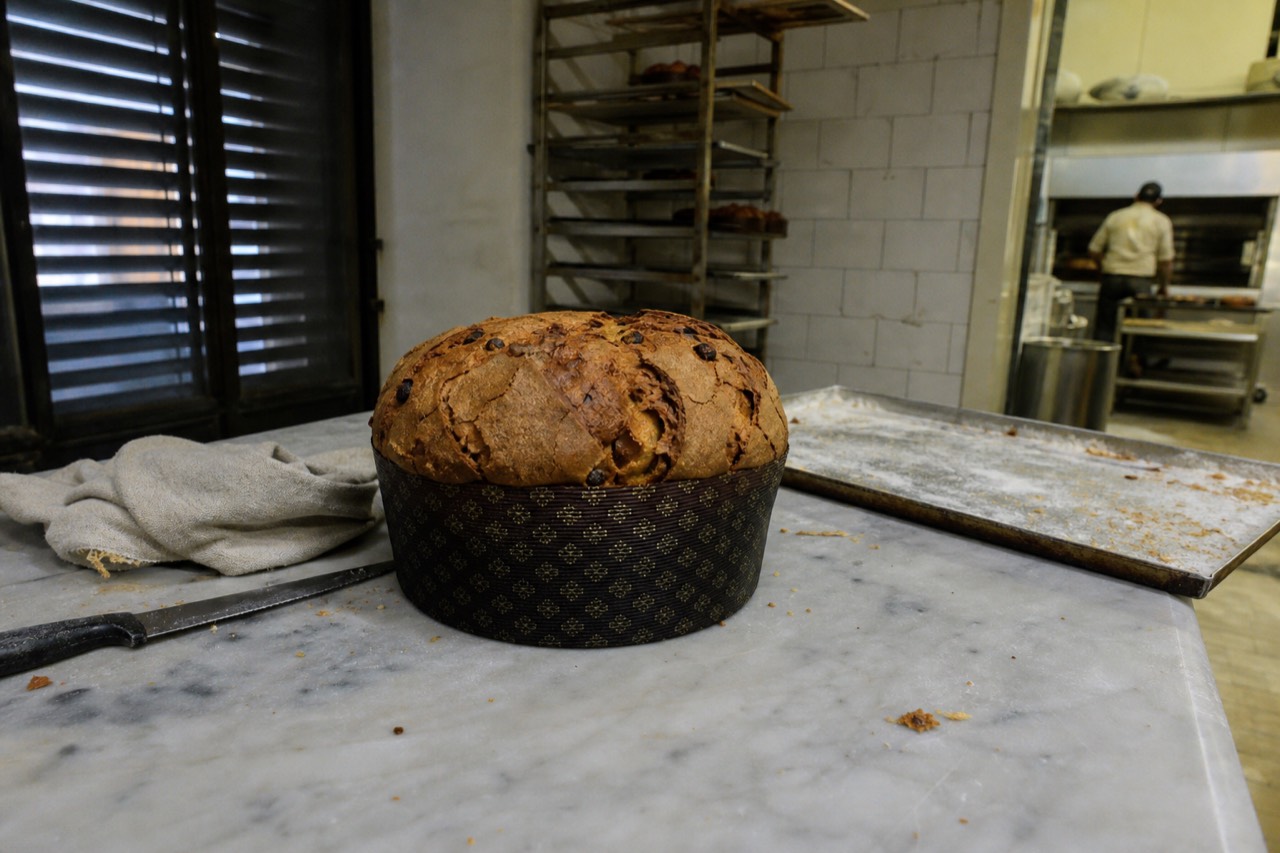
Milan is famous for panettone, the tall, domed sweet bread with raisins and candied citrus that is legally defined by an Italian ministerial decree and has held the city's own municipal De.Co. designation since 2007. Around it sits a quieter repertoire: everyday counter pastries, the 2008-registered barbajada drink, and a new 2026 addition, Pan de Mej, tied to 23 April.
The short answer travels well. Panettone is the dessert the world knows Milan by, the boxed cake that appears in every Italian household at Christmas and in half the food shops of Europe and North America besides. But the short answer also hides the interesting part. Panettone is not just famous; it is defined in law, with minimum quantities of butter, egg yolk and candied fruit written into a decree published in Italy's official gazette in 2005. It sits on a municipal register of Milanese food products alongside ten other dishes and sweets. And for eleven months of the year, when panettone is out of season, Milan's pastry counters carry on regardless with a whole everyday repertoire that visitors rarely hear about.
That gap between the famous dessert and the desserts people actually eat is what this article is about. We will start with the law, because it is genuinely strange and genuinely useful: there is a legal answer to the question of what can be called panettone. Then we move to the counter, the pastries a Milanese orders on a Tuesday morning, and the old chocolate drink the city quietly put on its official register in 2008. Finally, a correction that saves face: tiramisu is not Milanese, and knowing that is worth something in a city where half the cooking classes teach it. This is the kind of question Milan Food Tours exists to answer properly, with the decree text and the register entries rather than the folklore.
If you would rather taste your way through the answer than read it, these three experiences cover the ground well: a hands-on dessert-making class, a guided walk through Milan's patisseries, and a chocolate factory tasting.
What Does Italian Law Actually Say Panettone Is?
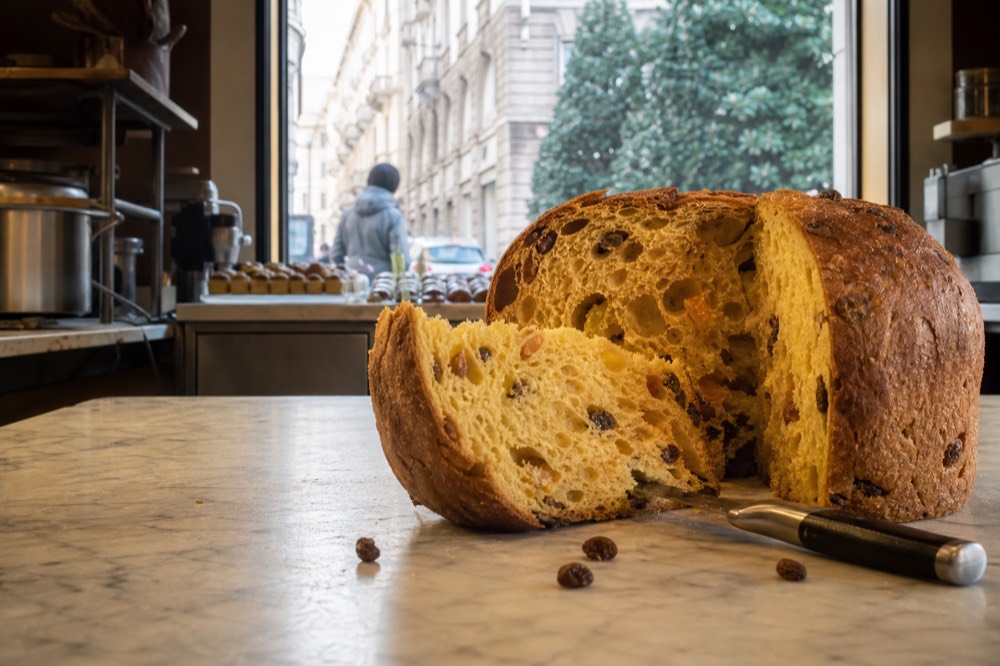
Panettone is defined by the Decreto 22 luglio 2005, published in Gazzetta Ufficiale n. 177 on 1 August 2005, which reserves the name for a naturally leavened sourdough product containing at least 16% butter, at least 4% egg yolk and at least 20% raisins and candied citrus peel, with a cracked top crust and an elongated open crumb.
That is a mouthful, but every clause matters. The decree, signed jointly by two government ministers, is a sale-name rule: it says that if a bakery or industrial producer wants to sell something under the name panettone, the product must be made a certain way. The leavening must come from natural sourdough, pasta acida, not ordinary brewer's yeast alone. The fat must be butter, and lots of it, a minimum of sixteen per cent of the dough. The eggs must contribute at least four per cent yolk. And the fruit content, raisins plus candied citrus peel, cannot fall below twenty per cent. The full text is published by the Gazzetta Ufficiale, and the same issue defines pandoro separately, with a higher butter minimum of twenty per cent.
Two consequences follow for a visitor. First, the cheap supermarket panettone and the artisan one at a Milan pastry shop are both legally panettone, but the floor of the law is a floor, not a ceiling, and the best producers go far beyond it with longer fermentation and better fruit. Second, and this is the correction most guides never make: panettone holds no EU DOP or IGP designation. None of Milan's classic dishes do. What panettone holds instead is De.Co., Denominazione Comunale, a municipal recognition the Comune di Milano granted it in 2007. De.Co. is described by the city itself as a statement of territorial belonging, not a European-style quality guarantee. Calling panettone "protected" or "DOP" is simply wrong, and you will hear it wrong constantly in December.
Seasonality is real here. Panettone is a Christmas product, and the De.Co. register ties it to the festive calendar. What it costs at the top end is documented too: an analysis of named Milan pastry shops put artisan panettone above 50 euro per kilo in the 2025 season, with Marchesi and Gattullo both listed at 50 euro per kilo, and the same reporting headlined a 55 per cent rise over five years. That is the ceiling, not the norm, but it tells you what the top of the market looks like. Our longer guide covers the season, the producers and the price ladder in detail: how to buy and eat panettone in Milan.
| Sweet | What it is | When you find it | What it costs |
|---|---|---|---|
| Panettone | Naturally leavened sweet bread, raisins and candied citrus, cracked top crust | Christmas season, roughly October to December | Industrial versions from a few euro; artisan above 50 euro per kilo in 2025, Marchesi and Gattullo at 50 euro per kilo |
| Pandoro | Tall star-shaped sweet bread, no fruit, richer butter minimum of 20% | Christmas season | Similar spread to panettone, priced at the counter |
| Pan de Mej | Cornmeal and elderflower-flower small cake, newest De.Co. entry | Tied to the feast of San Giorgio, 23 April | Priced at the counter in season |
| Barbajada | Hot drink of coffee, chocolate and milk, De.Co. since 2008 | Autumn and winter, traditional cafés | Priced at the counter |
| Mignon pastries | Miniature cream puffs, fruit tarts and bites, sold by weight | All year, every pasticceria | Sold by weight, check the display |
What Is On A Milan Pastry Counter The Rest Of The Year?
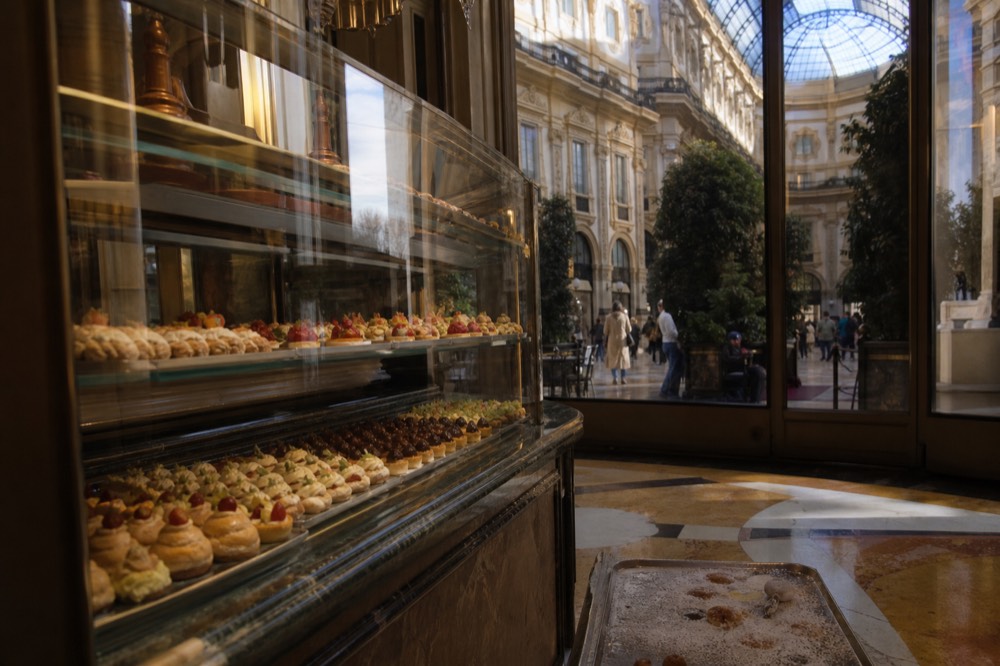
For eleven months of the year the answer to Milan's dessert question is the pasticceria counter: mignon, miniature pastries sold by weight, plus cream-filled brioches at breakfast, seasonal fruit tarts, and the sfogliatelle and cannoncini that travel down from Naples and the north respectively. This is what Milanese actually order, on a Tuesday, standing at the counter.
The mignon habit is the heart of it. A Milanese does not buy one large dessert; they buy a paper tray of six or eight tiny ones, a cannoncino with cream, a mini profiterole, a fruit tartlet, a chocolate-covered meringue, and the tray is passed around the table after lunch. The counter is where you see the city's real sweet life, and it runs all year with no regard for the panettone calendar. Breakfast follows the same logic: a cornetto, the Italian croissant, plain or filled with apricot jam or crema pasticcera, eaten standing at the bar with an espresso, is the standard Milanese morning. There is a whole set of unwritten rules around that ritual, which we cover separately in the Milan coffee rules explained.
Seasonal rotation matters more here than visitors expect. Autumn brings chestnut-based dolci and the first panettone previews; late winter brings chiacchiere for Carnival; spring brings strawberry tarts; summer brings ice cream, and Milan's gelaterie are a serious subject of their own, covered in our guide to the best gelato in Milan. The point is that the dessert identity of the city is not one product, it is a rhythm, and the counter moves with it.
The most efficient way to sample that rhythm without doing the research yourself is a guided walk. The Sweet Delights Patisserie Tour by Do Eat Better runs two and a half hours, from $65.07 per person, rated 4.8 across 59 reviews, and the listing shows it is booked 46 days ahead on average, so it is worth reserving early. It covers exactly this territory: the historic pastry shops and their signature sweets, with a guide explaining what each one is and when Milanese eat it.
One practical note for planners: the city's most famous gastronomia, Peck at Via Spadari 9, keeps restricted hours, open Monday only from 15:00 and closed Sunday, so a Monday-morning sweet crawl cannot include it. Check opening days before building a route around any single shop.
If the counter walk sounds good but you would rather make the dessert yourself, the home cooking class is the natural pairing: you spend the afternoon in a Milanese home, learn fresh pasta and tiramisu, and sit down to eat both. It carries free cancellation up to 24 hours, so you can hold a slot now and adjust your itinerary later.
What Is Barbajada, Milan's Forgotten Dessert Drink?
Barbajada is a hot drink of coffee, chocolate and milk, created in Milan in the nineteenth century and registered by the Comune di Milano as a De.Co. product in 2008, making it one of only a handful of sweets on the official municipal register and almost certainly the one least known outside the city.
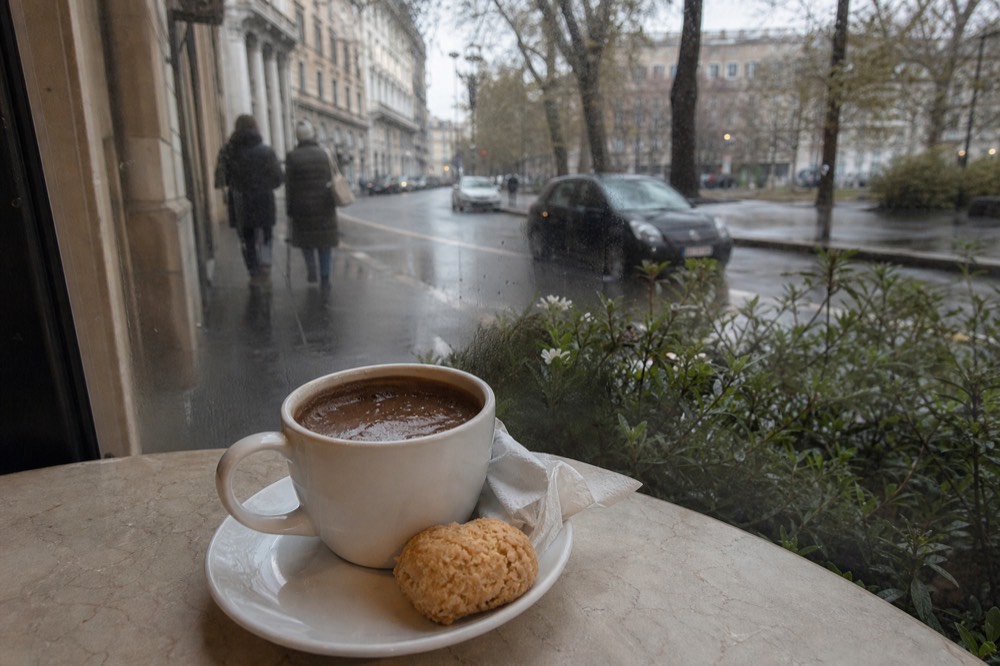
This is the deep cut. Before espresso culture conquered Italy, Milan drank barbajada, a thick, warming mix of coffee and chocolate credited to a Milanese waiter of the nineteenth century, and for a century it was the city's signature cold-weather drink, served in the historic cafés around the Duomo and the Galleria. It is not a dessert you eat, but it belongs in this conversation for two reasons. First, the city itself thinks it matters: barbajada sits on the De.Co. register alongside panettone, entered in the 2008 round of designations. Second, almost nobody outside Lombardy has heard of it, which makes it the single best answer to give when someone asks what dessert Milan is famous for and you want to go one level deeper than panettone.
Finding it takes a little work. It survives in a handful of old cafés and in the winter menus of traditional pasticcerie, sometimes with cream on top, occasionally iced in summer versions. When you do find it, you are drinking the same drink that the register entry protects as a statement of territorial belonging. The register itself, with every product and year, is published on the Comune di Milano food policy pages.
The full De.Co. sweet and baked list is short enough to show in full:
| De.Co. product | Year designated | What it is |
|---|---|---|
| Panettone | 2007 | The city's famous leavened Christmas sweet bread |
| Michetta | 2007 | The Milanese bread roll, hollow and crusty, the everyday sandwich bread |
| Barbajada | 2008 | Hot coffee-chocolate-milk drink, the forgotten one |
| Pan de Mej | 2026 | Cornmeal and elderflower cake tied to the feast of San Giorgio, 23 April |
The 2026 entry is worth pausing on. Pan de Mej, a small yellow cornmeal cake flavoured with elderflower, joined the register in 2026, and the Comune ties it explicitly to the feast of San Giorgio on 23 April. It is the freshest designation on the books and a genuinely usable seasonal hook: if you are in Milan in late April, you can eat a dessert that was granted municipal recognition months ago, in the week the city's own register says it belongs to.
Is Tiramisu From Milan?
No, tiramisu is not from Milan. Its documented origins lie elsewhere in the Veneto and Friuli, and no serious source claims Milanese parentage. Yet tiramisu is arguably the dessert most visitors actually make and eat in Milan, because a large share of the city's cooking classes teach it alongside fresh pasta.
This is the correction worth having in your pocket. Tiramisu, the coffee-soaked, mascarpone-layered dessert, belongs by general attribution to the Veneto, with Treviso and Friuli both claiming the modern version. Milan has no claim on it. But look at what visitors to Milan actually do, and tiramisu is everywhere, not on the city's heritage register but in its classrooms. The roster of Milan cooking classes is dominated by pasta-and-tiramisu formats, because the combination is what travelers want to learn and what they can realistically reproduce at home.
The numbers make the point. The Authentic Pasta and Tiramisu Cooking Class, held in a local's home, runs three hours from $75.42 per person, booked from $75.42 per person, and is rated 4.9 across 1,303 reviews. The Gnocchi, Pasta, Tiramisu and Wine Class by Chef in Milan adds a fourth dish and wine, from $70.55 per person, rated 5 across 1,362 reviews. Towns of Italy runs a pizza class with an unlimited gelato option from $65.28. Milan's cooking-class scene, which we survey in full in the guide to cooking classes in Milan, has effectively adopted tiramisu as its signature dessert lesson, Veneto origins notwithstanding.
There is nothing wrong with that, and we are not about to tell you to skip it. Making tiramisu in a Milanese home kitchen is one of the most popular food experiences in the city, and the home format, where a local host teaches you in their own kitchen, is a genuinely Milanese style of hospitality. Just know what you are eating: a dessert Milan loves and teaches, but does not own. Saying so, politely, over the mascarpone is the kind of small precision that the best food travelers carry.
Which Milan Experiences End In Something Sweet?
A surprising number of Milan's food tours and experiences finish with dessert: the pasta-and-tiramisu cooking classes, a dedicated patisserie walk, a chocolate factory tasting, and the cooking class whose second half is gelato. If your question is really about how to eat Milan's sweets rather than name them, these are the formats that deliver.
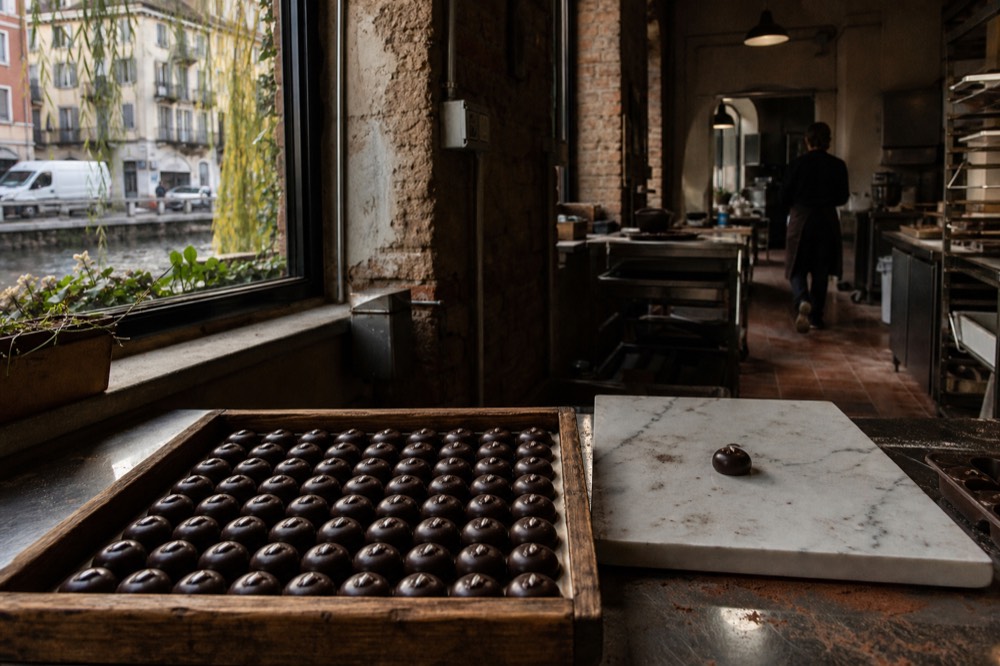
The chocolate option is the one people forget. Enrico Rizzi is Milan's best-known artisan chocolatier, and his Fabbrica del Cioccolato, the chocolate factory near the Navigli area reachable by the M4 De Amicis stop, runs a one-hour tasting tour from $35 per person, rated 4.6 across 68 reviews. It is the shortest and cheapest dessert-focused experience in the city, and it covers chocolate from bean to finished praline. For a fuller survey, the patisserie walk covered earlier strings together the historic pastry shops.
There is also a wider context worth knowing: Italian cuisine as a whole, the entire national tradition of cooking and its rituals, was inscribed on UNESCO's Intangible Cultural Heritage list on 10 December 2025, the first entire national cuisine to receive the designation. Milan's pastry tradition is a small branch of that tree, but the inscription is the backdrop against which the city's De.Co. register, its decree-defined panettone and its barbajada revival all make sense: Italy as a whole is currently very serious about writing down what its food is.
Whatever you choose, book the sweet experiences the way you book everything in Milan: with an eye on the calendar. The patisserie walk runs year-round but books weeks ahead; the chocolate factory hour fits any afternoon; the cooking classes fill evening slots fastest. All three below offer free cancellation up to 24 hours, so there is little cost to locking one in early.
Milan's signature dessert is panettone, a naturally leavened sweet bread legally defined by a 2005 ministerial decree and registered by the city in 2007, but the honest full answer includes the everyday pasticceria counter, the 2008-registered barbajada drink, the new 2026 Pan de Mej entry, and one clarification: tiramisu, beloved and taught across the city, is not Milanese. The questions below cover the specifics.
Common Questions About Desserts In Milan
What Dessert Is Milan Famous For?
Panettone, the naturally leavened sweet bread with raisins and candied citrus peel, legally defined by an Italian ministerial decree since 2005 and on Milan's own De.Co. register since 2007. Beyond it, the city's everyday answer is the pasticceria counter: miniature pastries sold by weight, breakfast cornetti, and the old coffee-chocolate drink barbajada.
Is Panettone Protected By Law?
Yes, but not by an EU designation. A 2005 Italian ministerial decree reserves the name panettone for products made with natural sourdough leavening and minimum quantities of butter, egg yolk and fruit. There is no DOP or IGP for panettone; what Milan grants it is a municipal De.Co. recognition, held since 2007.
When Is Panettone Season In Milan?
Roughly October through December. Panettone is a Christmas product, tied to the festive calendar by the city's own De.Co. register entry. Artisan versions in Milan sold above 50 euro per kilo in the 2025 season, so expect the best ones to be an investment.
Is Tiramisu From Milan?
No. Tiramisu is generally attributed to the Veneto and Friuli regions. It is nonetheless one of the most-cooked desserts in Milan because so many of the city's cooking classes teach it alongside fresh pasta, including a home-based class rated 4.9 across 1,303 reviews.
What Is Barbajada?
A hot Milanese drink of coffee, chocolate and milk, dating to the nineteenth century and added to the city's De.Co. register in 2008. It survives in a handful of traditional cafés, mainly in the colder months, and is the city's least-known registered sweet.
What Sweet Things Do Milanese Eat Day To Day?
Counter pastries: miniature mignon sold by weight, cornetti with jam or crema pasticcera at breakfast, seasonal fruit tarts, and gelato in summer. The rhythm rotates with the calendar rather than sitting on one signature item, which is why the pastry counter, not the panettone box, is the everyday face of Milan's sweet tooth.