What Is The Coolest Neighbourhood In Milan?
Five Milan neighbourhoods judged on what you can actually eat and drink, from Navigli's canal-side aperitivo to Nolo's EUR 4 spritzes, with the 2026 outdoor-drinking rules that shift every evening.
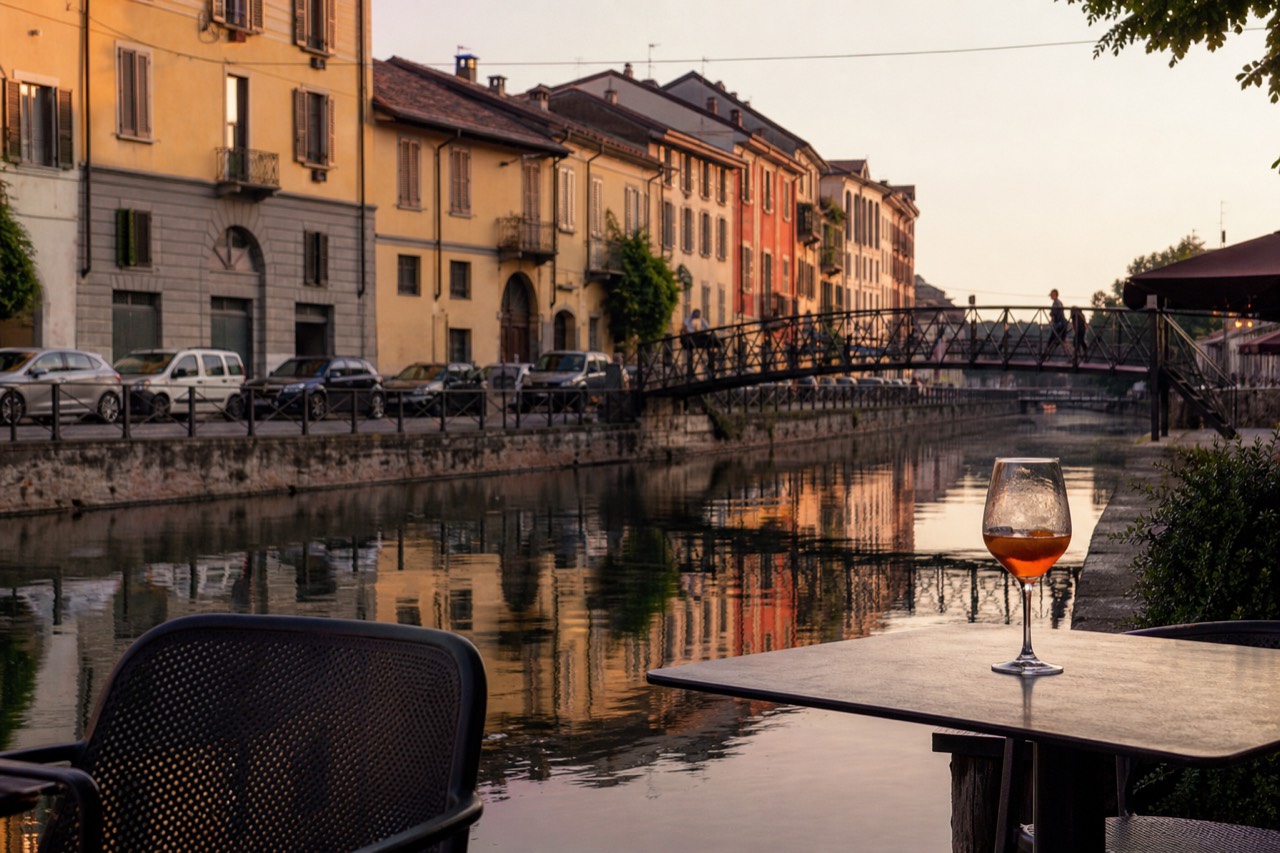
The coolest neighbourhood in Milan is Navigli, the old canal quarter where aperitivo never stops, a real urban winery makes its own wine, and the evening crowd moves between stone bridges as the sun sets. But Navigli’s relentless energy is exactly what makes it wrong if you want a quiet dinner or a seat you can hear yourself think in. Isola offers a more creative, slower-burn version of the same ritual, Porta Romana is rewriting itself as a food-first district on its own timeline, Brera does polished pre-dinner drinks with Michelin-star backdrops, and Nolo keeps things under five euro. The city’s own 2026 outdoor-drinking ordinance, which names almost every one of these zones as too busy to self-regulate, has pushed the evening’s real ending earlier than it used to be. Choose based on the balance of food, drink and hours you actually want.
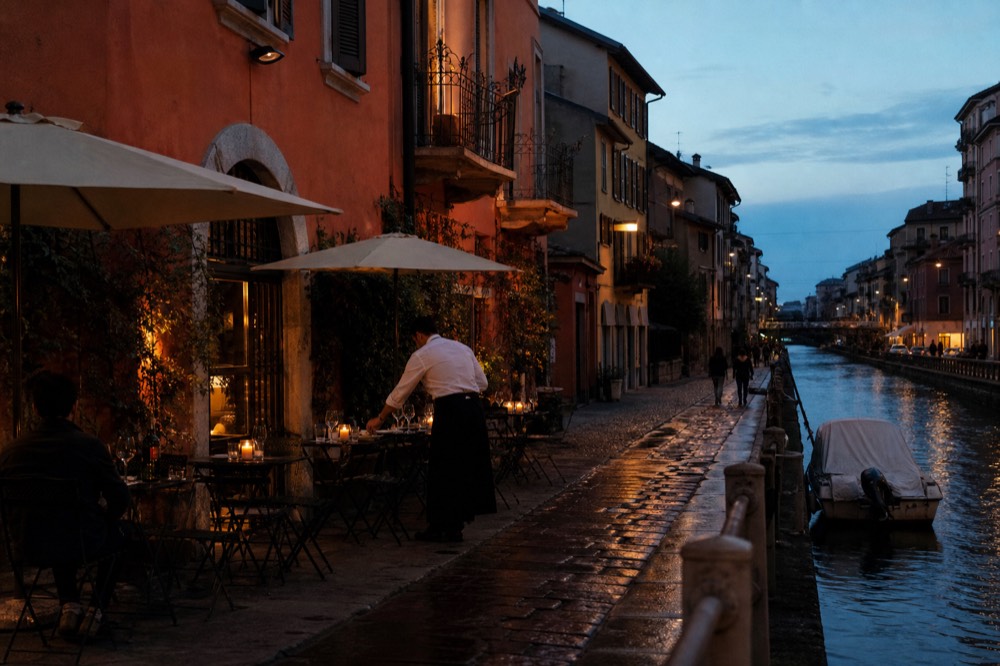
What Is The Coolest Neighbourhood In Milan?
Navigli is the coolest neighbourhood in Milan because it concentrates the city’s aperitivo ritual into one canal-side walk, with the Darsena basin and iron footbridges doing the scenic work. The caveat is the 2026 movida ordinance, which from 11 June to 2 November imposes a hard midnight takeaway ban and a 01:00 terrace shutdown, so the legendary late-night energy is now an earlier evening. Porta Romana and Isola benefit from that gap.
The verdict rests on food and drink, not on facades. Navigli wins because aperitivo here is a full economic layer, not a happy-hour stunt. The prices Corriere della Sera tracked in the 2025-2026 season put a spritz at Montalcino Caffè on the Naviglio Grande at EUR 9, while a few streets away the Navigli apericena format pairs a drink with a generous spread that many treat as dinner. The 2026 Aperol Spritz Index, reported by Euronews, put the Milan average at EUR 16.66, so the canal stays under the citywide mean. The pedestrian-only stretches make it a walking neighbourhood, not a car one, and the mix of historic osterie, new openings like Giza (Egyptian street food, October 2025), Suqsu (couscous specialist, December 2025) and the all-day 142 Restaurant means you land a meal that is not part of a photo set while you drink.
But Navigli is wrong for anyone who wants a slow, seated dinner at 21:30 without the pavement press. The 2026 movida ordinance, published by the Comune on 9 June and applying to the whole Ticinese-Darsena-Navigli zone, bans alcohol retail sale at 22:00 and takeaway from midnight, with plateatico use banned from 01:00 (02:00 at weekends). That means a district famous for late-night canals runs out of legal outdoor seats by 2:00 at the very latest, earlier on weeknights, and the remaining indoor scene is smaller and louder. If your idea of cool is a glass of wine at an uncrowded bar after 1:00, Porta Romana or Isola fit better.
Navigli: Aperitivo, An Urban Winery And A Midnight Cutoff
Navigli’s identity is the aperitivo-into-apericena sequence that colonises both banks of the Naviglio Grande and Naviglio Pavese, backed by a wave of 2025-2026 openings. The appeal is the water, the stone and the density of choice. The downside, codified in the 2026 ordinance, is that the outdoor party now closes earlier than its reputation suggests.
What makes it the coolest neighbourhood is also what sharpens the edges. The canal-side stretch from Porta Ticinese to the Darsena operates like an open-air food court of aperitivo bars, each with its own buffet style. Expectations matter: a spritz with a small bowl of olives at a classic bar is the aperitivo; a spritz or cocktail with a substantial hot-and-cold buffet that runs until 22:00 or 22:30 is the apericena, and you pay for the drink rather than the plate. Many visitors do not know the difference and leave either underfed or over-spent. The neighbourhood is at its best if you arrive before 19:00 on a Friday, pick one bar for the first drink and one for the second, and treat the buffet as your dinner. Anyone who misreads the ending risks a 01:00 scramble for a last drink.
A block back from the canal, Cantina Urbana at Via Ascanio Sforza 87 gives the district a different kind of cool: a real working urban winery that produces wine on site from Lombardy grapes and runs 90-minute tastings for around EUR 59.16 per person. It sits just outside the strictest movida grid, so a 21:00 tasting on a weekday finishes before the deadline but still leaves you inside the Navigli basin with all the evening choices around you. It is rated 4.8 from 32 reviews, a modest count that means it has never been swept into the mass-tourism path the canal blocks have become.
The ordinance re-frames every Navigli evening. From 11 June to 2 November 2026, you cannot buy takeaway alcoholic drinks after midnight, and all outdoor seating must close by 01:00 on weekdays, 02:00 on weekends and holidays. The district still hums inside the remaining bar rooms, but the canal-bank terrace experience has a hard stop. That is a genuine differentiator from Isola and Porta Romana, where the same rules apply heavily to Isola but less dramatically to Porta Romana, which was not named in the 12-zone list. If you want the full basin scene, plan an early start; if you want to stay late, Cantina Urbana’s earlier schedule actually aligns with the rules better than a late-night bar crawl.
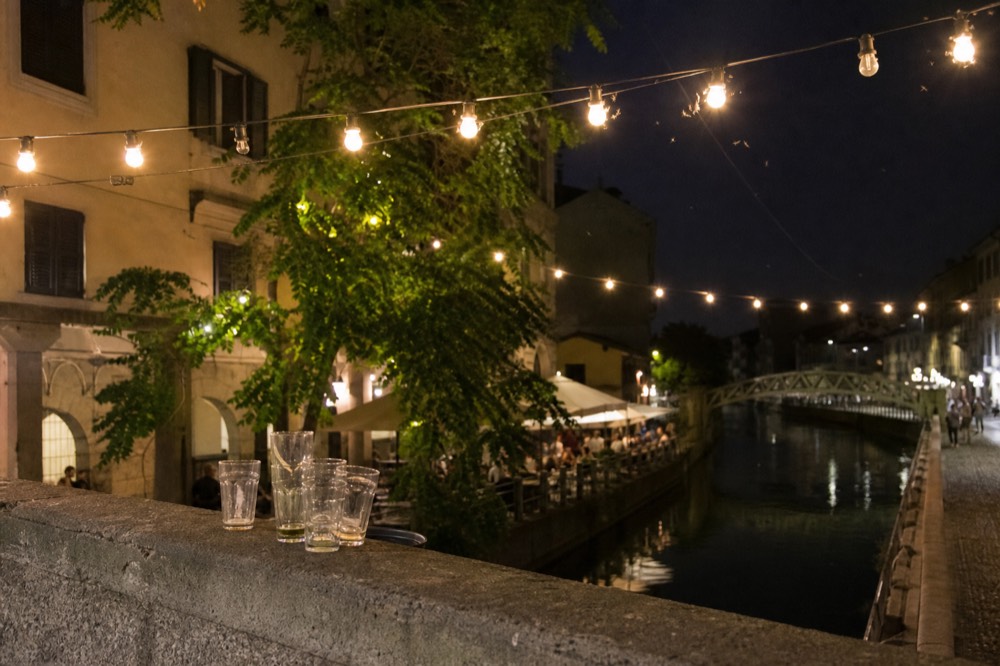
Isola: Street Art, Natural Wine And The New Aperitivo Hour
Isola is the creative counterweight to Navigli, trading canals for murals, chain-hotel bars for independent natural-wine spots, and the tourist press for a scene that locals actually defend. The neighbourhood’s cool is slower, drier and built around small production lists rather than spectacle, and the 2026 movida ordinance hits it just as hard as Navigli, so the timeline of an Isola evening has shortened to roughly 18:00 to 01:00.
Two 2026 openings tell the story. Noloteca, a no-and-low-alcohol enoteca that opened in Isola around September 2026, is the neighbourhood’s signal that the sober-curious wave now has a Milan address, and it sits alongside veteran cocktail spots like 1930 Milano (22nd on Europe’s 50 Best Bars 2026) and the year-old Mogo, a bakery-and-kitchen project by Yoji Tokuyoshi that works as a casual breakfast through to early-dinner stop. A spritz in Isola runs broadly the same as Navigli, typically EUR 8-12, but the apericena buffet is less common and the drinking arc is more about the glass than the food.
The Isola zone appears on the Comune’s 2026 movida list, so the same alcohol-sale and plateatico restrictions apply: no retail alcohol after 22:00, no takeaway after midnight, no outdoor seating after 01:00 (02:00 weekends). The difference from Navigli is that Isola was never a late-late district; its terraces filled early and wound down around midnight anyway, so the ordinance formalises what was already happening. Where Navigli feels like a regulated party, Isola feels like a regulated gallery, and the people who choose it over the canal are usually people who value curation over volume.
That curation extends to the food. Isola shares a border with the Porta Nuova and Gae Aulenti zones, so high-end dining sits right next door, while the neighbourhood's own kitchens trend toward small-plate natural-wine bistros and street-food concepts. Recent openings matter because they shift the centre of gravity away from the Corso Como end: Via Pasteria’s new Isola branch (early 2026), the Burbero bar à vin by Eugenio Boer and Carlotta Perilli opening 20 September 2026 at via delle Pioppette 3, and the quiet succession of Japanese-influenced tasting counters all add up to a neighbourhood that is no longer the underdog but the destination.
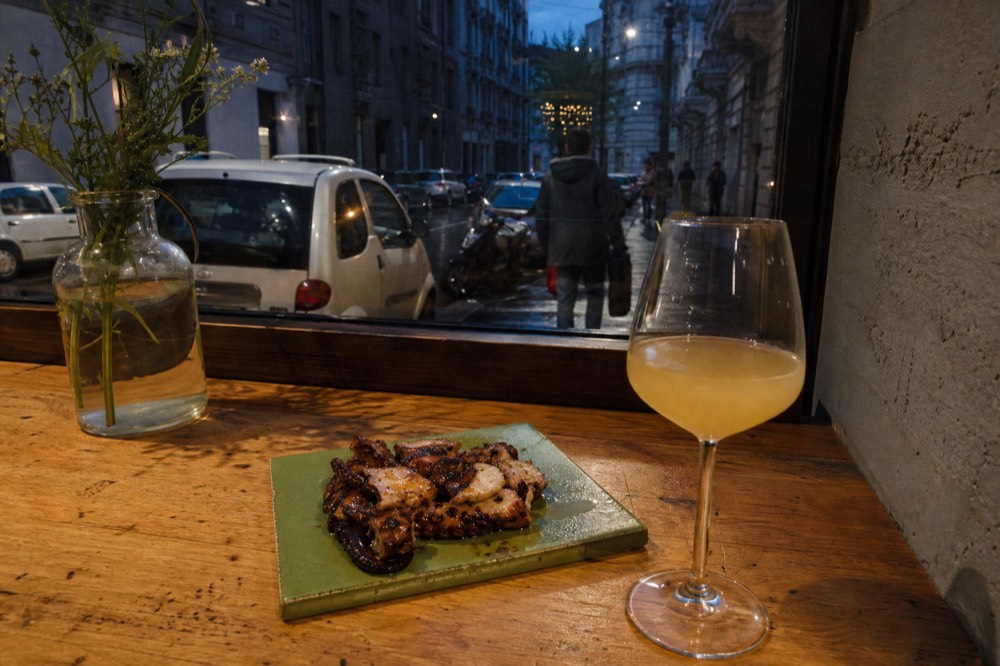
Porta Romana: The Food-Lover’s New Frontier
Porta Romana is the neighbourhood that did not need to be cool to become essential. Its appeal is entirely restaurant-driven, with a surge of independent openings across every format, from a 100% gluten-free gastronomia to Lebanese fine dining, and because the district was left off the 2026 movida list, it now enjoys the unusual advantage of being a full-evening destination without a municipal curfew.
The 2025-2026 roll call is dense. Rosticceria Anomala, the entirely gluten-free gastronomia near the Porta Romana gate, opened in September 2025 and immediately became a reference for coeliac visitors who previously had almost no neighbourhood-level counter service in Milan. Lubna, the Lebanese restaurant that landed in the “SouPra” quarter (south of Fondazione Prada), was named by the Financial Times in April 2026 as one of the city’s most significant new addresses. Smash House moved into Via Tortona 12, bringing a high-end burger concept to the district’s edge, and the established Sandì and Coso – Cose da mangiare continue to anchor the everyday side. The aperitivo scene is thinner here than Navigli or Isola when it comes to buffet-heavy rituals, but the cocktail bars that do exist, tucked into the patient streets around Viale Montenero, are the kind of places where a EUR 8-10 spritz comes with no urgency to leave.
Because Porta Romana and the adjacent Tortona area are not among the 12 regulated zones in the 2026 movida ordinance, the district operates without a mandated outdoor-seating shutdown time. That does not make it lawless, individual venues still close at their own published hours, but it does mean a Wednesday-night dinner at a new osteria can stretch its terrace beyond 01:00 without enforcement. This one difference flips the choice for anyone visiting in summer months. If you want an evening shaped by restaurant reservations rather than canal-side schedules, Porta Romana is the answer, and its cool is the cool of informed eating rather than scenography.
| District | Vibe & food strength | Aperitivo price range (spritz) | Movida ordinance impact (2026) |
|---|---|---|---|
| Navigli | Canal-side aperitivo to apericena, evolving street food | EUR 8–12 (standard), EUR 9 (Montalcino Caffè), EUR 105.3 sunset tour format | Hard stop: alcohol sale ends 22:00, takeaway midnight, terraces 01:00 (02:00 weekends) |
| Isola | Independent natural wine and street art, no-apron bistros | EUR 8–12 | Same hard zones as Navigli; historically earlier closing so impact is softer |
| Porta Romana / Tortona | Restaurant frontier, new-wave gastronomia, quiet cocktail bars | EUR 8–10 | Not on the 12-zone list; no mandated terrace closure time |
| Brera | Polished aperitivo, Michelin-starred restaurants, art-gallery precinct | EUR 12–18 | In the ordinance zone; same closure rules as Navigli/Isola |
| Nolo | Grassroots spritz culture, no-brand wine bars, former working-class streets | EUR 4 (Rondò), EUR 3.50 (Picchio) | In the ordinance zone; sale ban 22:00, takeaway midnight, terraces 01:00 |
The table makes the choice tangible: if the evening’s budget and the terrace’s warmth are your top two variables, Nolo and Porta Romana bookend the spread, and the middle three depend on how late you need to be out. A visitor who wants a canal-side sunset and a structured aperitivo tour can put Navigli or Isola on the itinerary and simply start earlier; a visitor who wants to eat and talk until late will be happier in Porta Romana, where the ordinance stays silent.
Brera: Polished Aperitivo, Old-World Charm
Brera remains the neighbourhood you go to when you want the aperitivo ritual dressed in its best clothes, complete with Campari’s 1915 Camparino counter, art galleries that melt into wine bars, and a EUR 12-18 spritz price that signals the address before the taste. It is the easiest of the five to admire and the most difficult to spend a whole evening in without a reservation.
The Formentini opening early in 2026, a contemporary osteria on the street of the same name, and Antica Gelateria Matteo’s first Milan store on Via Mercato (September 2026) add new texture, but Brera’s core food identity remains unchanged: high-end aperitivo bars where the drink comes with a tiny plate, followed by a trattoria or starred restaurant you booked days earlier. The 2026 movida ordinance matters here because Brera is specifically named in zone 7 of the Comune’s list. Terraces that once drifted late now close at 01:00 (02:00 weekends), and the takeaway alcohol ban from midnight has already shortened the after-dinner promenade.
Brera is wrong for anyone chasing a bargain or a spontaneous table. The neighbourhood’s aesthetics, Liberty ironwork, buttery lighting, stone lanes, promise an accessible Milanese evening, but that promise unspools when you realise a walk-in dinner at 20:00 means a long queue or a EUR 25 cocktail at the bar. Its cool is architectural and nostalgic, a postcard that happens to be real, and if you have the budget and the reservation, it is unmatched. Without them, Porta Romana and Isola are more forgiving.
Nolo: Grassroots Cool And EUR 4 Spritzes
Nolo (North of Loreto) is the neighbourhood where the cool starts with a EUR 4 spritz at Rondò, continues with a no-name wine bar on Via Padova, and ends with the 2026 movida ordinance cutting the outdoor terrace earlier than anyone who lives there would like. It is the anti-Brera, a district whose food identity is still emerging and whose energy is genuinely local, and it wins on price every time.
The numbers from Corriere della Sera’s 2025-2026 aperitivo survey draw the map: Rondò charges EUR 4 for a spritz with a mini buffet, Picchio charges EUR 3.50 with no buffet, and the entire Nolo-Rovereto corridor operates on a different decimal point from the rest of the city. The food is not a destination yet, the standout addresses are scattered, a Sri Lankan canteen here, a Sicilian rosticceria there, but the evening value is so far below the city’s average that it changes how you plan. If the metric is how many good things you can eat and drink for EUR 30, Nolo wins, and if the metric is a curated gastronomic experience, it does not yet compete.
Nolo is one of the 12 movida zones, so the retail alcohol ban and terrace shutdown apply, and that is the neighbourhood’s loudest argument with itself: it was regulated alongside Brera despite having none of Brera’s infrastructure. The effect is that the late-night bar scene, which was already fragile, now has to work inside the same 22:00-to-01:00 window as the centre. For a visitor who does not mind starting and finishing early, that makes no difference; for someone who heard “cool neighbourhood” and expected the Navigli bass line, it is a disappointment. Nolo is the right call only if you genuinely want value and a non-tourist frame, and you do not need the night to stretch past midnight.
| District | Notable openings (2025–2026) | Closure / note |
|---|---|---|
| Brera | Sea Signora (fish, Sep 2025), Formentini (osteria, early 2026), Antica Gelateria Matteo (Sep 2026) | The Sound of Love bistrot relocated to CityLife (spring 2026) |
| Navigli / Ticinese | Giza (Egyptian street food, Oct 2025), Suqsu (couscous, Dec 2025), 142 Restaurant (all-day, 2026) | Antica Pizzeria Da Giulio closed May 2026 after 101 years |
| Isola | Mogo (Tokuyoshi, summer 2025), Via Pasteria (2026), Noloteca (no-alcohol enoteca, Sep 2026) | – |
| Porta Romana / Tortona | Rosticceria Anomala (gluten-free, Sep 2025), Lubna (Lebanese, early 2025), Smash House (Dec 2025) | – |
| Nolo / Sarpi | 112+ new food enterprises on Via Paolo Sarpi by early 2025, many street-food | No named closures in the 2025–2026 wave |
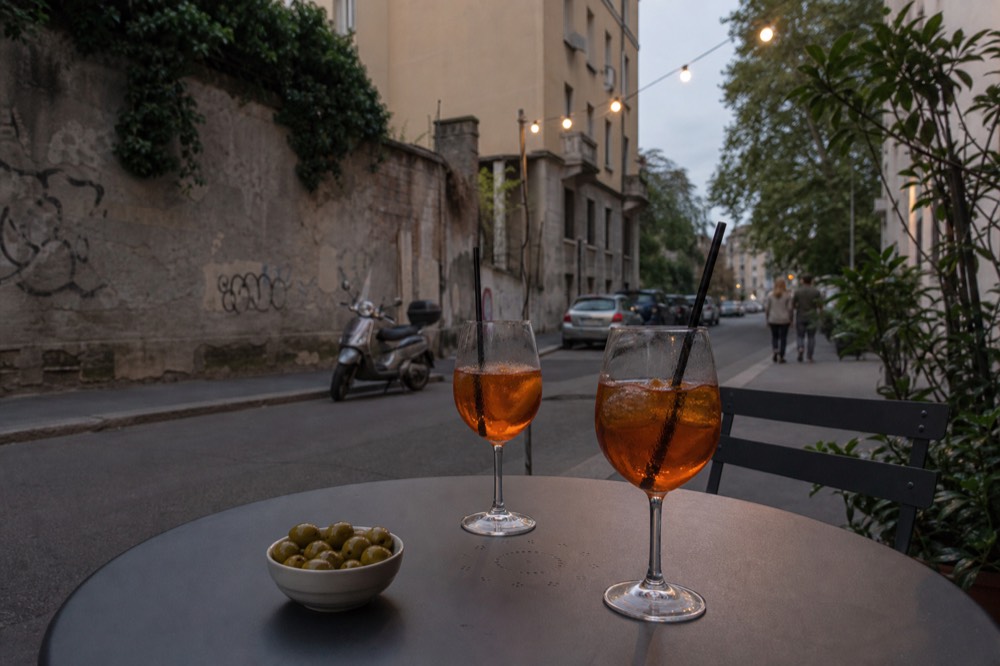
The closing figure across all five neighbourhoods is the ordinance itself. The Comune’s decision to name Isola, Brera, Navigli/Ticinese and Nolo in the same document means four of the five coolest districts now share the same evening timeline, while Porta Romana sits outside. That single fact may shift the definition of “coolest” for anyone planning a trip in 2026, because it puts a legal end on the very thing that made the districts famous: the long, unstructured outdoor evening. Adapting to it is not a downgrade; it is a schedule change, and the neighbourhood you pick should be the one whose hours match your appetite.
The aperitivo circuit also keeps moving, and keeping a local alternative on hand is part of the Milan Food Tours approach. For a long-form look at how the ritual has evolved and which venues fit the 2026 rules, the guide to aperitivo in Milan breaks down the different formats neighbourhood by neighbourhood. If you want to take the Navigli verdict straight onto the street, the Navigli restaurants and bars guide covers the same canal blocks this article assessed, with concrete opening hours that match the ordinance limits.
The answer depends on how you define cool, because each district leads on a different variable. Navigli wins on aperitivo density, Isola on independent natural wine, Porta Romana on restaurant growth, Brera on polished settings, and Nolo on price, while the 2026 movida ordinance governs how late four of the five can legally stay open. These are the questions readers ask most when they compare them.
Common Questions About Milan's Coolest Neighbourhoods
What Is The Coolest Neighbourhood In Milan?
Navigli wins for its uninterrupted aperitivo culture and canal-side setting, but the 2026 movida ordinance has shortened the evening significantly. Isola, Porta Romana, Brera and Nolo each lead on a different variable: creativity, restaurant density, polish and price, so the answer depends on what you want from the night.
Which Neighbourhood Has The Best Aperitivo?
Navigli and Isola share the crown for the best aperitivo ritual. Navigli does it with canal-side density and apericena buffets; Isola does it with independent natural-wine bars and a quieter, more curated rhythm. Brera offers the most polished version at a higher price point.
Where Can I Eat And Drink Late In Milan Under The 2026 Outdoor Rules?
Porta Romana and the Tortona area are not on the Comune’s 12-zone movida list, so their terraces are not subject to a forced closure time. In Navigli, Isola, Brera and Nolo, all outdoor seating must close by 01:00 on weekdays and 02:00 on weekends from June to November 2026.
Is Nolo Worth Visiting For Food And Drink?
Yes, for the value. Spritzes with mini buffets at EUR 4 and a grassroots bar scene make it the cheapest aperitivo neighbourhood in the city. The restaurant roster is thinner than the other four districts, but the savings on drinks fund a better dinner elsewhere.
What Is The Most Romantic Neighbourhood In Milan For Dinner?
Brera is the most romantic for a dinner that combines old-town lanes, Liberty-era architecture and a reservation at a starred table. The cost is high and the atmosphere formal, but there is no other district that turns an evening meal into a city postcard as effectively.