Where To Eat In Milan: A District-By-District Decision Guide
Milan's worst food is concentrated in the streets closest to the Duomo, and the fix is geographic, not mysterious. This guide breaks the city into districts, tells you what each one is actually good at, and shows which quarters are moving in 2025 and 2026.
Short answer
Eat in Brera for trattoria classics, Navigli for aperitivo and canal-side dinner, Isola and Porta Venezia for new independent cooking, and Sarpi for street food. A spritz runs EUR 3.50 in Nolo and EUR 21 by the Duomo, a spread that explains the whole city. Walk a few streets from the Duomo and both quality and price improve.
Milan rewards geography. The single biggest predictor of whether you eat well or badly here is not your budget, your research or your Italian, it is the street you are standing on when you get hungry. The corridors within a few minutes of the Duomo and inside the Galleria exist to process footfall, and the prices there reflect rent, not the kitchen. Ten minutes further out, in Brera, Navigli, Isola or Porta Venezia, the same city cooks for itself.
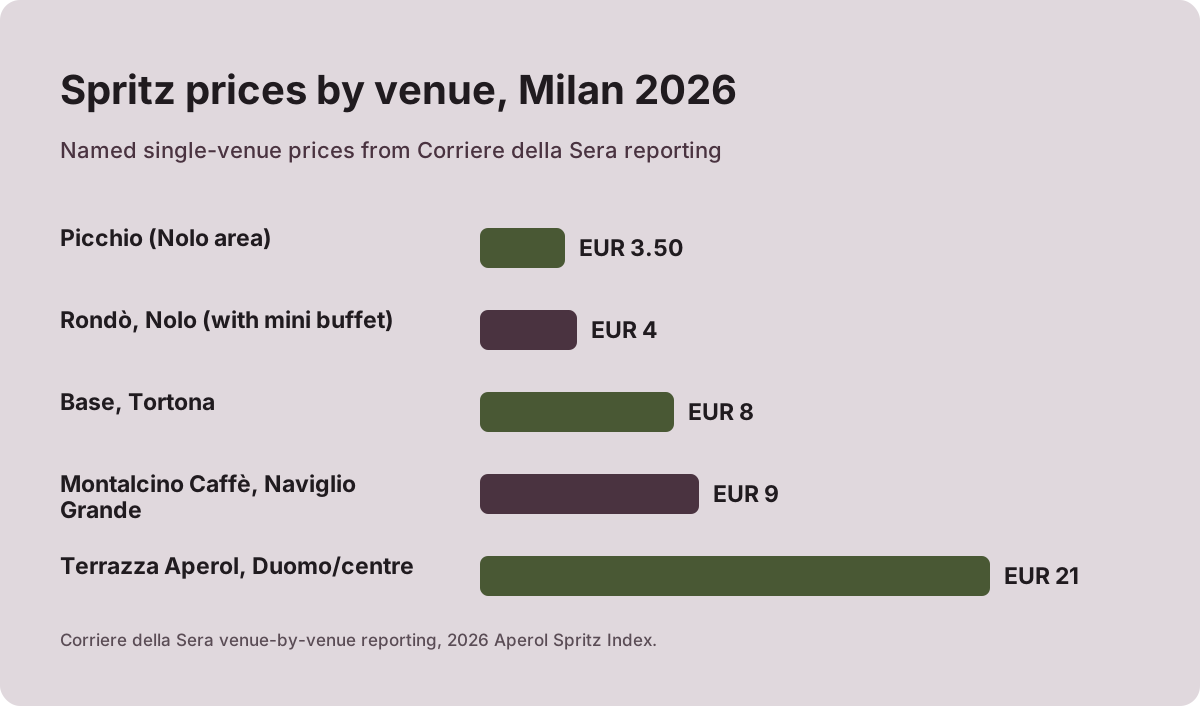
The evidence is not anecdotal. A 2026 Aperol Spritz Index put the average spritz in Milan at EUR 16.66, but the spread underneath that average is the real story: Corriere della Sera's venue-by-venue reporting found a spritz at EUR 3.50 at Picchio and EUR 4 with a mini buffet at Rondò in the Nolo area, EUR 8 at Base in Tortona, EUR 9 at Montalcino Caffè on the Naviglio Grande, and EUR 21 at Terrazza Aperol beside the Duomo. One drink, one city, a sixfold price range that maps almost perfectly onto distance from the cathedral. That pattern holds for food too, and this guide, from Milan Food Tours, is built around it.
Why The Food Nearest The Duomo Is Milan's Worst Value
The streets immediately around the Duomo and through the Galleria Vittorio Emanuele II carry Milan's highest rents and its most transient customers, so the kitchens there optimise for volume and view rather than repeat business, which is why quality and price both improve a few streets out in almost any direction. The economics are blunt. A room facing the cathedral does not need you to come back; a room in Isola or Porta Romana does. That difference shows up on the plate, in the bill, and in how the staff treat a table of two who order one course each.
The spritz data above is the cleanest illustration. Terrazza Aperol, in the Duomo/centre zone, charges EUR 21 for a drink that costs EUR 4 with a buffet in Nolo. Nobody is claiming the view is worth nothing; it is simply a different product. The mistake is treating the two as the same purchase and concluding Milan is expensive.
The same logic explains the Galleria's food floors. They are beautiful and worth walking through, and the new SYNC by Aperol listening bar that opened on the fourth floor in April 2026 will be a destination in its own right. Go for a drink and the architecture. Eat your dinner elsewhere.
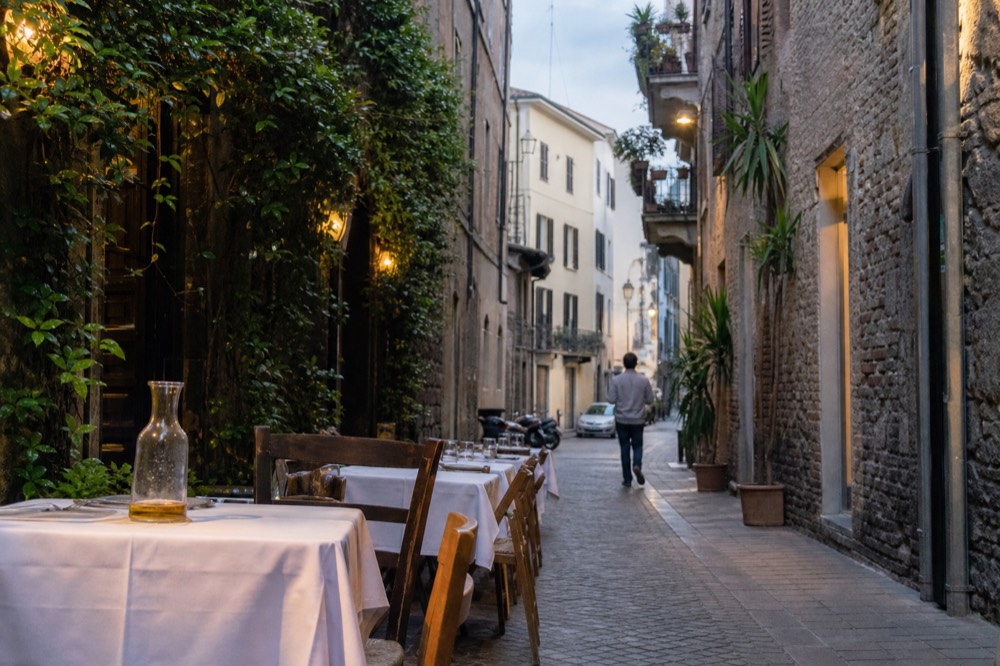
There is a second, quieter factor: the 2026 movida ordinance. The Comune di Milano's rules published 9 June 2026, in force 11 June to 2 November 2026, restrict alcohol takeaway and outdoor table use after midnight in twelve zones including Brera, Ticinese, Darsena/Navigli, Isola and Sarpi, per the official Comune announcement. Central tourist streets sit outside most of that nightlife economy, which is part of why they close early and cook for the lunch rush.
Where Do Locals Eat In Milan, Italy?
Milanese locals eat mostly outside the tourist core: weekday lunches near their offices in Porta Nuova and CityLife, dinners and aperitivo in Navigli, Isola, Porta Romana and Porta Venezia, and casual street food along Via Paolo Sarpi, with the splurge rooms concentrated in Brera and a handful of central addresses that have earned decades of trust. The pattern is consistent across every dataset the city produces. Even the Michelin Guide's 2026 edition, which awarded Milan twenty starred restaurants including the three-star Enrico Bartolini al MUDEC, spreads its stars well beyond the cathedral perimeter.
The clearest single marker of where local appetite is flowing is Via Paolo Sarpi, Milan's Chinatown. Corriere della Sera counted more than 112 new food enterprises registered on or near the street since early 2024, many of them street food, with clothing shops converting to food outlets. The city has responded with a cleanliness ordinance in June 2026 and approved plans in July 2026 for a monumental Chinese paifang gateway at the Piazzale Baiamonti entrance. This is a district where Milan itself goes to eat, cheaply and often.
If you want the local experience without the research burden, a guided walk does the filtering for you. These three cover the geographic spread well:
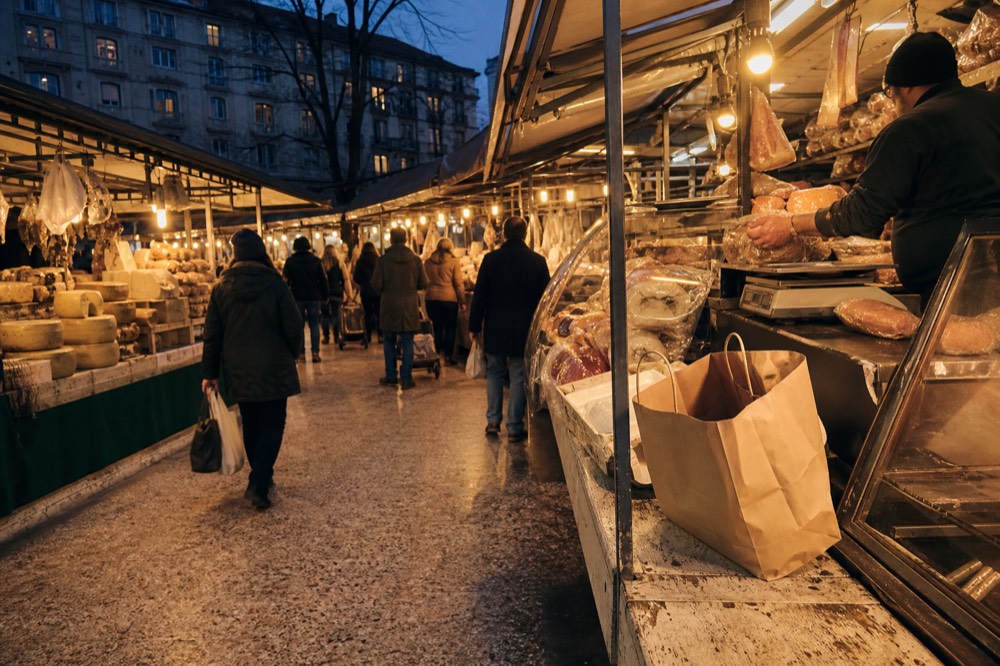
The premium option, Do Eat Better's 3.5-hour tasting experience from $87.55 per person, rated 4.9 across 288 reviews, starts at Piazza Cordusio and works outward from the centre, which is exactly the direction quality travels in. For a fuller picture of the city's food culture before you commit to districts, our Milan street food overview covers the casual end, and where to eat near the Duomo deals with the one central zone where a few rooms are genuinely worth your time.
What A Menu Turistico Signals, And Three Tells A Room Cooks For Locals
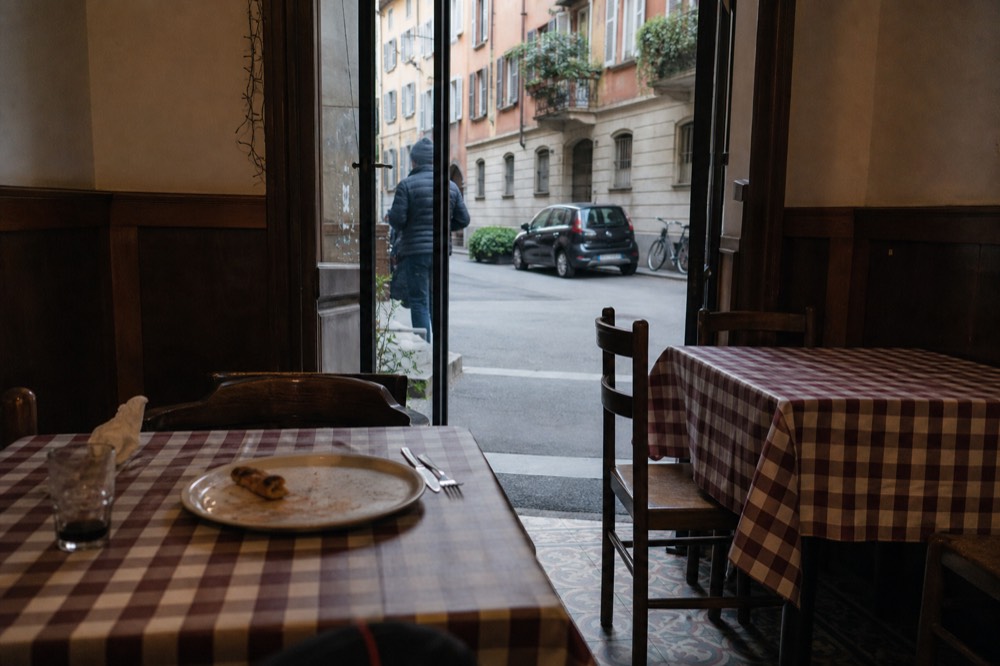
A laminated menu turistico with photographs, a host inviting you in from the street, and dishes from four Italian regions at once are reliable signals that a room cooks for visitors; a room cooking for locals instead shows a short handwritten or printed menu, a coperto charge of EUR 1-3 listed openly, and Milanese dialect or fast Italian at the surrounding tables. None of these tells is about quality in the abstract; each is about incentives. A kitchen feeding regulars cannot survive a bad week.
The three tells, in order of reliability:
First, the menu. Short, seasonal, and specific to Lombardy. Risotto alla milanese, cotoletta, cassoeula in winter, mondeghili, ossobuco. A menu offering carbonara, pizza, lasagne and a "Milanese mix grill" is cooking for everyone, which means for no one. Note that the classic Milanese dishes carry no EU protection at all; they hold only De.Co., the Comune's municipal register, per the city's food policy pages. Any room leaning hard on "authentic DOP risotto" is guessing you will not know that.
Second, the schedule. Rooms cooking for locals open for the Italian dinner hour, which in Milan means tables filling from 20:00 onward, and they close one or two nights a week. A kitchen open fourteen hours a day, seven days, is running a tourist shift pattern.
Third, the clientele's pace. Locals linger. If every table around you is eating within forty minutes of sitting, the room is optimised for turnover.
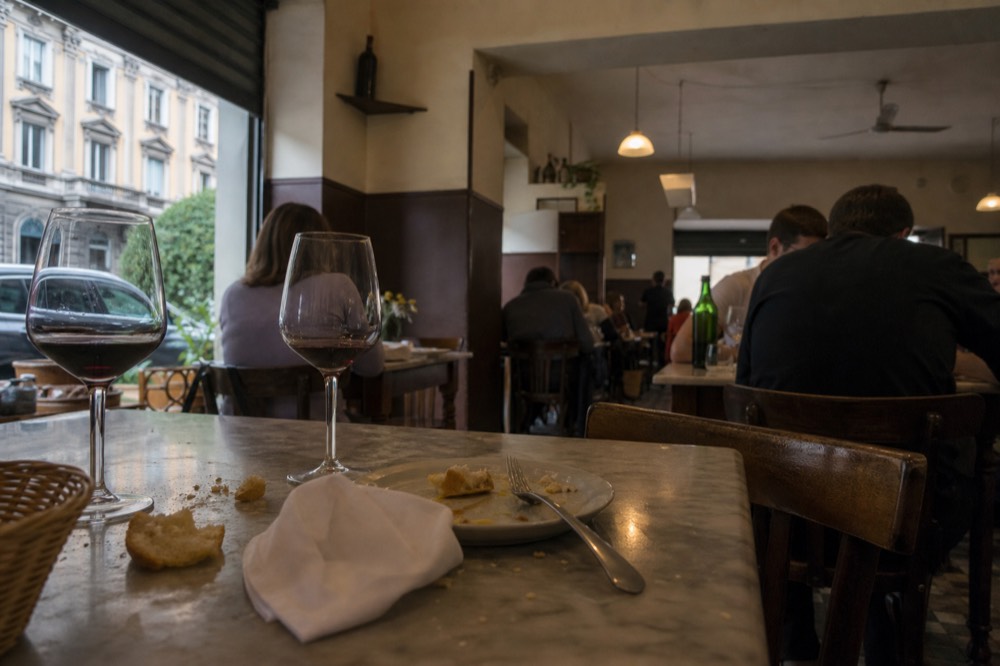
A guided tasting walk is one shortcut past all the guesswork, because the operator has already done the filtering and the local relationships. The small-group tastings walk by NO DIET CLUB runs 3 hours from $74 per person, rated 4.8 across 165 reviews, and its stops are rooms that survive on repeat business.
If you would rather have the premium version of that filtering, with a longer route and more stops, the same operator family behind the premium tasting experience covers the central quarters in depth. Either way, the decision you are outsourcing is exactly the geographic one this guide keeps returning to: which streets, not which dishes.
For a deeper primer on the city's classic dishes before you read a single menu, the risotto alla milanese guide explains what the real thing should taste like, which is the fastest way to judge a kitchen in thirty seconds.
Where To Eat In Milan That Isn't Touristy?
The least touristy eating districts in Milan are Isola, Porta Venezia and Citta Studi east of the centre, Porta Romana south of it, and Via Paolo Sarpi for street food; each has a distinct speciality, a real resident base, and price bands well below Brera or the Duomo corridor, as the district table below sets out. None of these requires a car or even a long metro ride; the EUR 2.20 single ticket covers ninety minutes across the whole urban network.
| District | What it is actually good at | Real price signals | Who it suits |
|---|---|---|---|
| Brera | Trattoria classics, wine bars, pastry | Cocktail-bar aperitivo EUR 12-18; apericena EUR 10-14 per drink | First visit, couples, splurge nights |
| Navigli and Ticinese | Aperitivo, canal-side dinner, new openings | Spritz EUR 9 at Montalcino Caffe on Naviglio Grande | Groups, evenings, weekend pace |
| Isola | New independent cooking, bakeries, natural wine | Aperitivo with buffet EUR 8-12 | Food-first travellers |
| Porta Romana and Tortona | Modern gastronomia, wine bars, gluten-free options | Spritz EUR 8 at Base in Tortona | Longer stays, repeat visits |
| Porta Venezia and Citta Studi | Filipino-Mediterranean and everyday trattorie | Spritz EUR 4 with mini buffet at Rondo in Nolo, adjacent | Budget and mid-range eating |
| Sarpi / Chinatown | Street food, dumplings, bubble tea | Street food prices, well below restaurant bands | Quick, cheap, casual |
| Duomo and Galleria | Views, historic cafes, one drink | Spritz EUR 21 at Terrazza Aperol | A drink and the architecture, not dinner |
Two caveats on those bands. The EUR 8-12, EUR 10-14 and EUR 12-18 ranges come from a 2026 venue guide rather than primary reporting, so treat them as planning ranges and check the room. The named single-venue prices, Rondo, Base, Montalcino Caffe and Terrazza Aperol, are from Corriere della Sera's own venue reporting and are solid.
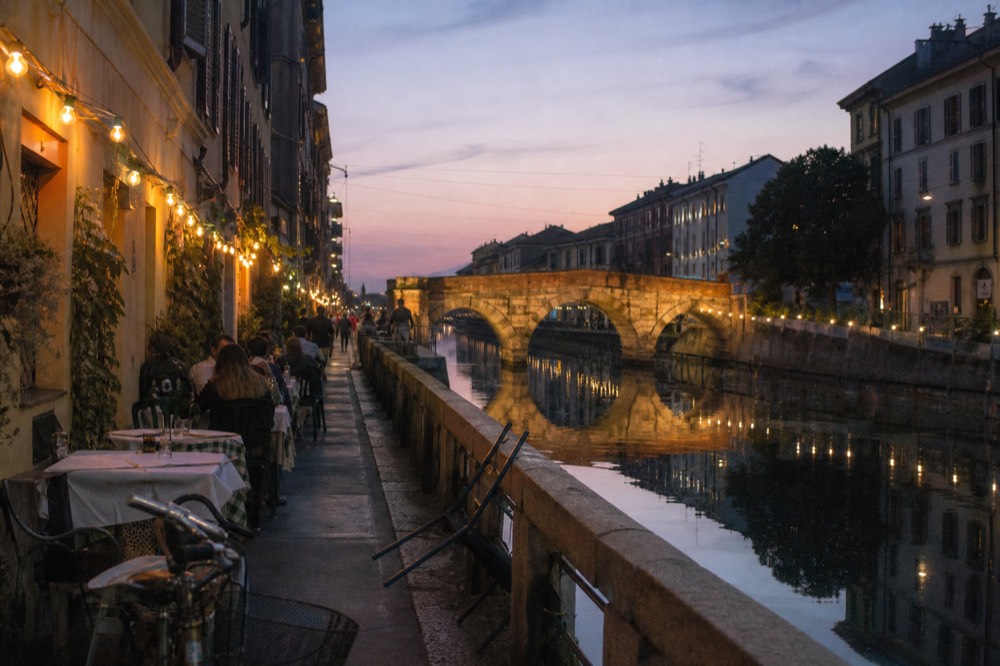
Isola deserves its own paragraph. The district around Piazza Gae Aulenti's towers has been accumulating serious food credibility: Mogo, by chef Yoji Tokuyoshi with a bakery, opened in summer 2025, Via Pasteria opened a pasta-focused location there, and Noloteca, a no/low-alcohol enoteca, arrived in September 2026. It is the rare Milan quarter where new openings are aimed squarely at residents. For the canal-side alternative, our Navigli restaurants guide goes restaurant by restaurant.
What Each District Is Good At, And What It Costs To Eat There
A realistic daily food budget in Milan runs from roughly EUR 25-35 per person eating street food and market fare in Sarpi or Nolo, through EUR 45-70 for trattoria dinners in Brera or Navigli, to EUR 100-plus once you enter the starred and Tre Forchette rooms, and the district you choose matters more than any ordering decision inside it. The budget floor is genuinely low: Mercato Centrale, inside Centrale station, is open daily 06:30-23:00 and lets you assemble a meal from individual vendors.
The top of the market is documented and public. Gambero Rosso's Ristoranti d'Italia 2026 gave Cracco in Galleria 93/100, Seta by Antonio Guida 92/100, D'O 92/100, and Enrico Bartolini al Mudec 91/100, all Tre Forchette. The Michelin Guide Italy 2026, presented in November 2025, lists twenty starred restaurants in Milan with Procaccini and Abba newly promoted to one star, per the Michelin ceremony announcement. Those rooms need booking weeks ahead and have nothing to do with the tourist trap problem; they are a separate sport.
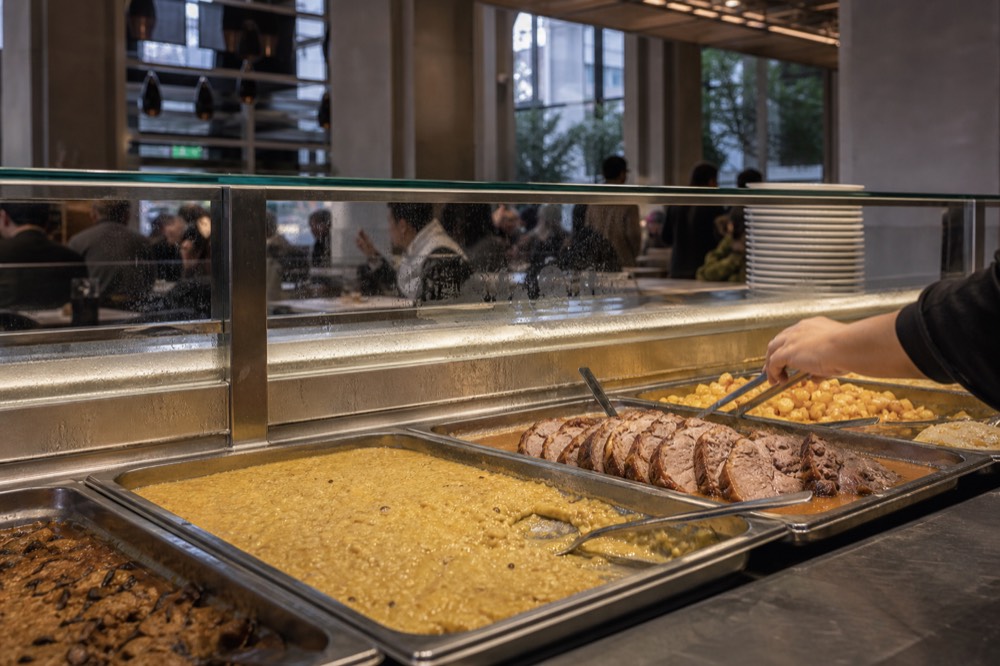
For shopping-and-snacking days rather than restaurant days, Peck at Via Spadari 9 is the historic delicatessen, but its hours decide your plan: Monday 15:00-19:30 only, Tuesday to Saturday 09:00-19:30, Sunday closed. A Monday-morning food route through the centre cannot include it. Our Milan food markets guide covers the covered markets and farmers' markets in detail.
Which Districts Are Moving In 2025 And 2026
Milan's restaurant map shifted measurably between 2025 and 2026: Brera, Navigli, Isola and Porta Romana all gained serious new rooms while Porta Venezia lost Polpo and Ticinese lost the century-old Antica Pizzeria Da Giulio, changes that tell you where the city's food energy is compounding and where it is thinning. Openings cluster where rent and appetite align, and right now that means the residential quarters, not the tourist core.
| District | Opening or closure | Venue | When |
|---|---|---|---|
| Brera | Opening | Formentini, contemporary osteria | Early 2026 |
| Brera | Opening | Antica Gelateria Matteo, first Milan store | September 2026 |
| Brera / Porta Volta | Closure | The Sound of Love, relocating to CityLife | Spring 2026 |
| Ticinese / Navigli | Opening | Giza, Egyptian street food | October 2025 |
| Navigli | Opening | Suqsu, couscous specialist | December 2025 |
| Isola | Opening | Noloteca, no/low-alcohol enoteca | September 2026 |
| Porta Romana | Opening | Rosticceria Anomala, fully gluten-free gastronomia | September 2025 |
| Porta Venezia | Closure | Polpo, fish trattoria by Viviana Varese | December 2025 |
| Ticinese | Closure | Antica Pizzeria Da Giulio, open since 1925 | May 2026 |
The closure that stings is Da Giulio, a pizzeria that had operated on Corso San Gottardo since 1925 and shut in May 2026 after 101 years. The closure that signals a trend is Polpo, a chef-driven room in Porta Venezia; its loss does not mean the district is fading, since Balay, a Filipino-Mediterranean tapas wine bar, opened there in September 2025 and the quarter remains one of the two most-cited transforming food neighbourhoods of 2026, alongside Porta Romana.
Mercato Centrale's troubles are worth knowing before you build a plan around it: the February 2026 ATS inspection suspended 17 of 27 activities, and vendors returned progressively after extraordinary cleaning. It is open daily again, but check current vendor lists. Our Mercato Centrale guide tracks the detail.
How Aperitivo Hours And The 2026 Movida Rules Shape Your Evening
Aperitivo in Milan runs roughly 18:00 to 21:00, dinner tables fill from 20:00 onward, and the 2026 movida ordinance means that in twelve nightlife zones alcohol takeaway stops at midnight and outdoor seating closes at 01:00 on weekdays and 02:00 at weekends, so an evening food plan in Navigli or Brera has a real curfew built into it. The ordinance, in force 11 June to 2 November 2026, covers Nolo, Isola, Sarpi, Arco della Pace, Brera, Ticinese, Darsena/Navigli and five other zones, with a stricter Lazzaretto-Melzo rule banning all food and drink takeaway from 22:00 to 06:00.
For a visitor this cuts two ways. If your evening is aperitivo then dinner, nothing changes: restaurants inside the zones serve normally, and the dehors rules bite only in the small hours. If your plan is a late canal-side drink bought from a shop, it cannot happen after midnight in those districts this year.
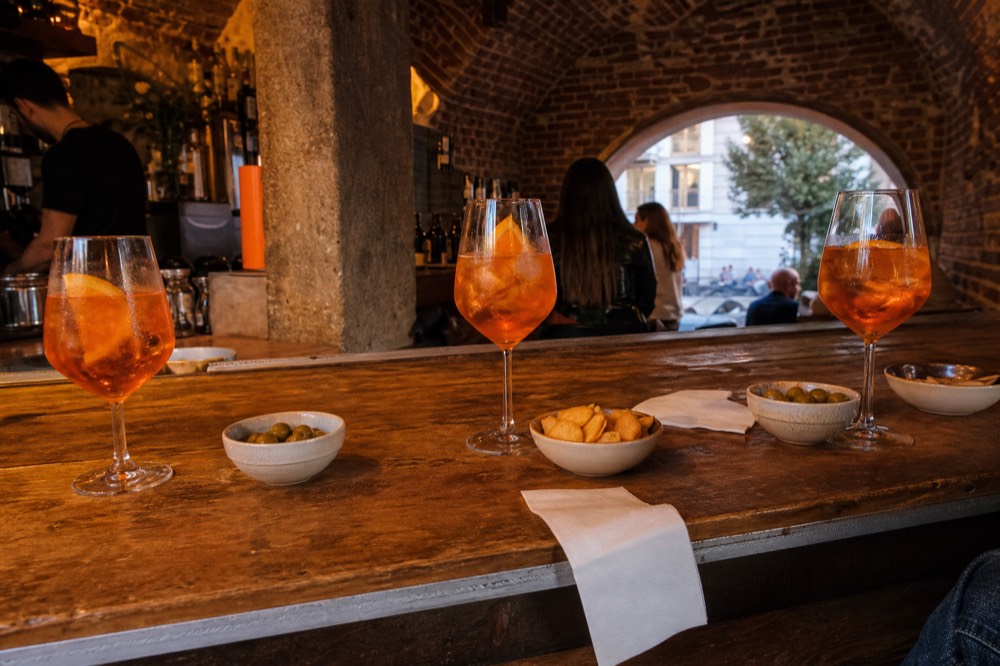
The aperitivo decision itself is geographic, as the spritz prices already showed. Our full aperitivo in Milan guide covers the ritual, the hours and the drinks; the short version for route-planning is that EUR 8-12 in Navigli or Isola typically buys a drink plus buffet, while the same hour by the Duomo costs double for less. Two guided options cover the canal-side version well: the sunset Navigli walk by Do Eat Better, a 3.5-hour evening tour rated 4.7 across 634 reviews, and Eating Europe's Navigli food and drinks tour with aperitivo, rated 4.9 across 545 reviews.
A Sample Eating Day Across Three Districts
A day that strings together Sarpi for a mid-morning street food snack, Isola or Porta Venezia for a trattoria lunch, and Navigli for aperitivo and dinner samples Milan's three best-value districts for less than one dinner in the Duomo corridor would cost, and every leg is reachable on a single EUR 2.20 metro ticket or a short walk. The order matters less than the spread; the point is that the districts worth eating in form a loose arc around the centre, and none of them is the centre.
| Time | District | What to do | Rough spend per person |
|---|---|---|---|
| 10:30 | Sarpi / Chinatown | Street food snack while vendors set up | EUR 5-10 |
| 13:00 | Isola | Trattoria or bakery lunch | EUR 15-25 |
| 16:00 | Centre or Porta Romana | Peck or a covered market browse, Tuesday to Saturday | EUR 0-15 |
| 18:30 | Navigli | Aperitivo with buffet | EUR 8-12 |
| 20:30 | Navigli or Ticinese | Dinner at a booked trattoria | EUR 25-40 |
Start on Via Paolo Sarpi mid-morning, when the street food vendors are set up and the queueing is local. Move to Isola for lunch: the district's pasta-focused and bakery openings mean a sit-down lunch there costs what a central sandwich does. Give the afternoon to a market or Peck if it is Tuesday to Saturday. Then take the tram or stroll down to the Navigli for the evening: aperitivo from 18:00 with a buffet, dinner from 20:00 at a room that took a booking, and home before the movida curfew matters.
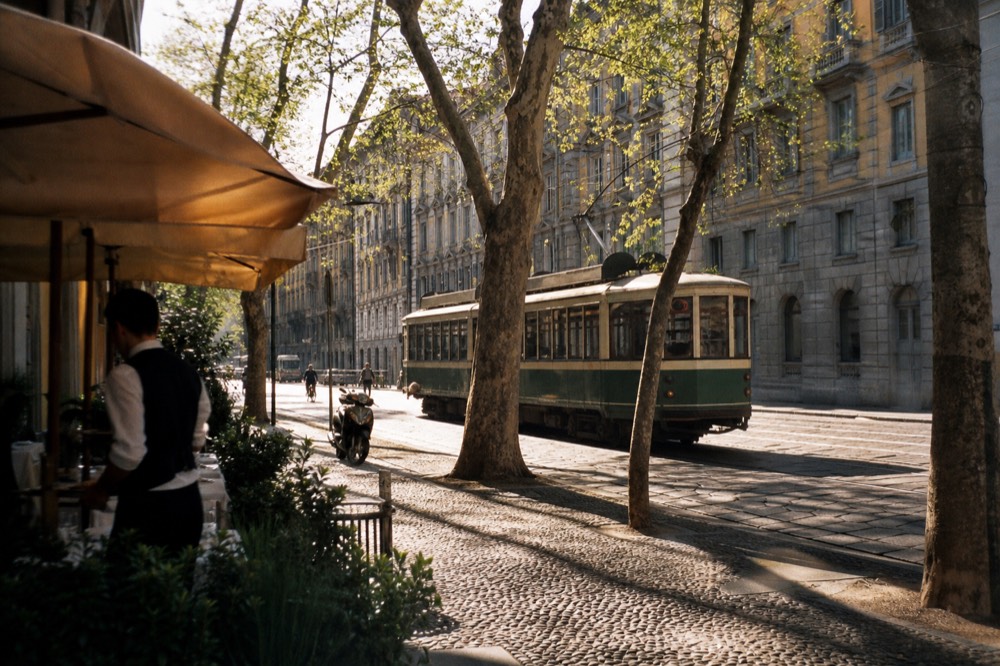
If a full self-planned day feels like work, the walking food tour with city highlights by Tours of Milan, 2.5 hours from $49.69 per person, rated 4.6 across 26 reviews, pairs the food stops with the sights, which suits a first day in the city before you branch out on your own. The Brera appetizer-dinner walk by Army Sale, from $93.47, rated 4.9 across 320 reviews, does the same for the evening in the city's most atmospheric quarter; its listing shows it is booked 58 days ahead on average, so plan early.
Whatever you choose, the underlying rule of this guide holds: in Milan, the best decision about where to eat is made with your feet, before you ever open a menu. Walk away from the cathedral, pick a district from the table above that matches your budget and mood, and the city does the rest.
The questions visitors ask most about eating in Milan come down to geography, budget and timing: which districts locals actually use, whether the food near the Duomo deserves its reputation, what a menu turistico really signals, what a day of eating costs, and how the 2026 movida rules affect evening plans, and each answer below is drawn from the verified figures in this guide. Read them in order or jump to the one that matches your trip.
Common Questions About Where To Eat In Milan
Where Do Locals Eat In Milan, Italy?
Locals eat in Navigli and Isola for dinner and aperitivo, Porta Venezia and Citta Studi for everyday trattorie, Via Paolo Sarpi for street food, and Brera for occasion dinners. The Michelin-starred and Tre Forchette rooms are spread across these same quarters, not the Duomo corridor.
Where To Eat In Milan That Isn't Touristy?
Isola, Porta Romana, Porta Venezia and Sarpi are the least touristy districts with strong food scenes, each with a resident base and price bands well below central Brera. A short menu, a coperto of EUR 1-3 listed openly, and tables filling from 20:00 are the tells a room cooks for locals.
Is Food Near The Duomo Really That Bad?
It is not bad so much as poor value. The highest rents and most transient customers sit closest to the cathedral, so kitchens optimise for volume. A spritz costs EUR 21 at Terrazza Aperol by the Duomo against EUR 4 with a buffet in Nolo, and food follows the same curve.
What Is A Menu Turistico?
A fixed multi-course menu aimed at visitors, usually laminated, photographed and multi-regional. It signals a kitchen cooking for one-time footfall. Locals' rooms instead show short seasonal menus focused on Lombard dishes like risotto alla milanese, cotoletta and cassoeula.
How Much Does Eating Out In Milan Cost?
Roughly EUR 25-35 per person per day eating street food and market fare, EUR 45-70 for a trattoria dinner with wine in Brera or Navigli, and EUR 100-plus at starred rooms. District choice moves the bill more than ordering choices within a district.
Do Restaurants In Milan Close At Night Because Of The Movida Rules?
No, restaurants serve normally. The 2026 ordinance, running 11 June to 2 November in twelve zones, bans alcohol takeaway from midnight and outdoor table use from 01:00 on weekdays and 02:00 at weekends. Only late takeaway drinking and small-hours outdoor seating are affected.