What Is The Most Popular Aperitivo Drink In Milan, Italy?
The Spritz dominates Milan's aperitivo hour, but Negroni, Americano and Campari soda each signal something different. Here is what to order and what it costs.
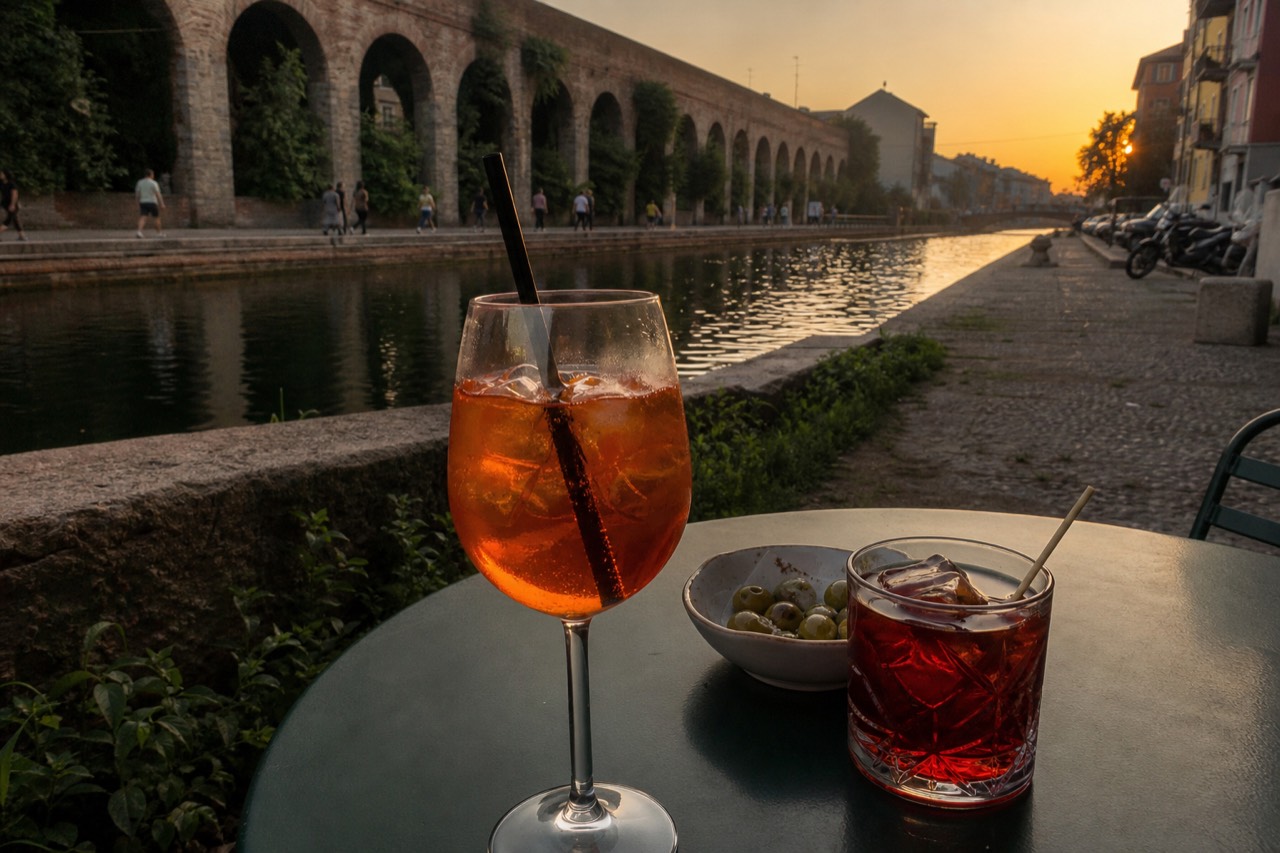
What Is The Most Popular Aperitivo Drink In Italy?
The answer in Milan is the Spritz, and most often the Aperol Spritz, but the city's aperitivo menu runs deeper than one orange drink. Ordering a Spritz signals easy sociability; a Negroni signals a classic Milanese palate; an Americano or Campari soda signals loyalty to the Campari family's local roots.
Most visitors arrive expecting an Aperol Spritz, and they are not wrong. It is the most photographed drink of aperitivo hour in Milan, and the named price data backs its ubiquity. A Corriere della Sera survey of neighbourhood bars puts a Spritz at 3.50 euro in Picchio and 4 euro at Rondò with a mini buffet, while Aperol's own Terrazza Aperol charges 21 euro for the same ritual above the Duomo. That gap matters: the Spritz is both the cheapest aperitivo in town and the most expensive, depending entirely on address. For travellers planning around the ritual, Milan Food Tours schedules its food walks so every stop matches the hour's rhythm, from quick Nolo corners to Galleria counters.
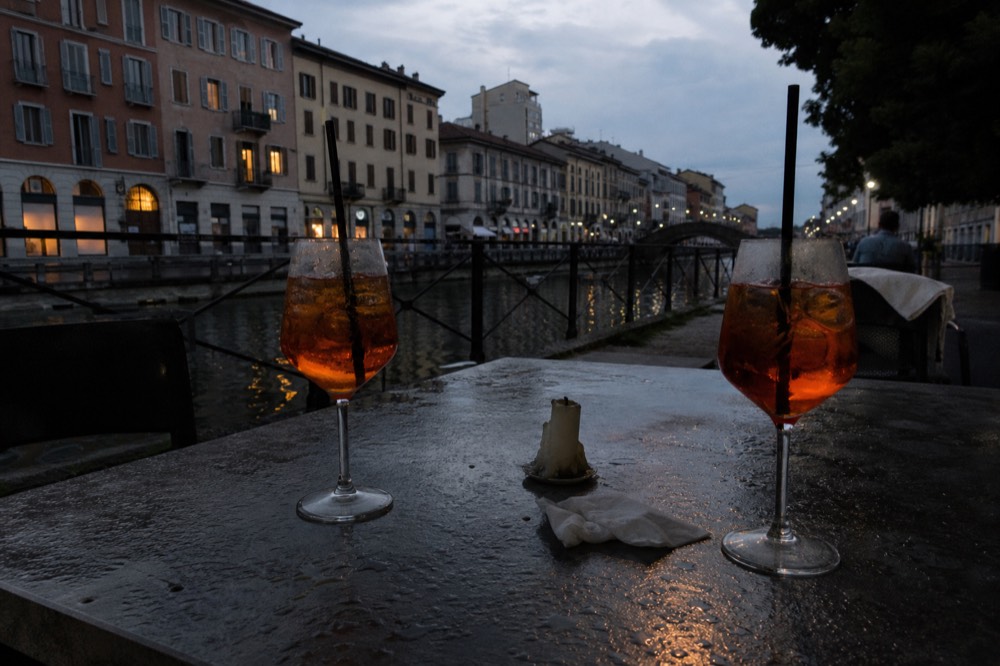
The Spritz is not the only answer, though. In Milan, a Negroni reads as a deliberate choice, the drink of someone who knows the city's Campari backbone. An Americano, lighter and topped with soda, signals an older Milanese way of drinking bitter before dinner. A Campari soda, served at Camparino in Galleria with soda piped from the cellars since 1915, is the most local order of all.
| Drink | What is in it | Who orders it in Milan | Price from named venues |
|---|---|---|---|
| Aperol Spritz | Aperol, sparkling wine, soda | Tourists and locals, the default aperitivo order | 3.50 euro Picchio; 4 euro Rondò; 8 euro Base; 9 euro Montalcino Caffè; 21 euro Terrazza Aperol |
| Negroni | Campari, red vermouth, gin | Classic Milanese drinker who wants bitter backbone | No named venue price |
| Americano | Campari, sweet vermouth, soda | Older-school drinker, lighter bitter before dinner | No named venue price |
| Campari soda | Campari and soda water | The most local order, especially at Camparino | No named venue price |
What the table cannot capture is the social weight of each order. A Spritz says you are here for aperitivo as an event, open to company and to the small plates that appear with the drink. A Negroni says you came to drink, not to graze, and that you read Milan through its Campari history rather than its Instagram tags. An Americano sits between the two, old-fashioned and easy, the drink of a Milanese aunt before dinner. A Campari soda is the shortest sentence in the language: it names the bitter, the city and the habit in two words. To understand when Milan starts this ritual, read what time aperitivo actually starts in Milan.
How Much Does A Spritz Cost In Milan Right Now?
A Spritz in Milan spans a wider range than almost any other drink: 3.50 euro at Picchio in the neighbourhoods, 4 euro at Rondò with a mini buffet, 8 euro at Base in Tortona, 9 euro at Montalcino Caffè along the Naviglio Grande, and 21 euro at a Terrazza Aperol seat above the Duomo.
The 3.50 to 21 euro spread is the single most useful pricing fact for a visitor, because the same drink changes meaning with the postcode. Neighbourhood bars in Nolo and Rovereto price a Spritz as an everyday habit, often with a small buffet of snacks at Rondò. Naviglio Grande and Tortona move into the 8 to 9 euro band as the canal view becomes part of the price. A table at Terrazza Aperol turns the same orange glass into a Duomo-view experience, which is why the 2026 Aperol Spritz Index lists Milan's average Aperol Spritz at 16.66 euro.
| Venue | Area | Spritz price |
|---|---|---|
| Picchio | Neighbourhood | 3.50 euro |
| Rondò | Nolo/Rovereto | 4 euro with mini buffet |
| Base | Tortona | 8 euro |
| Montalcino Caffè | Naviglio Grande | 9 euro |
| Terrazza Aperol | Duomo/centre | 21 euro |
The table uses named prices reported by Corriere della Sera and its sister titles across 2025 and 2026. It is not a promise of what you will pay on a given night, but it is a real map of how Milan prices the same drink by zone. The Aperol Spritz Index average of 16.66 euro is misleading if you treat it as a local price, because it is pulled upward by the same Duomo-area venues that charge 21 euro. For a visitor planning three different aperitivo stops, the practical range is closer to 4 euro in Nolo, 8 to 9 euro in the canal and design districts, and 15 to 21 euro at a landmark terrace. For more on how the city's aperitivo hours and habits work, see our guide to Milan aperitivo.
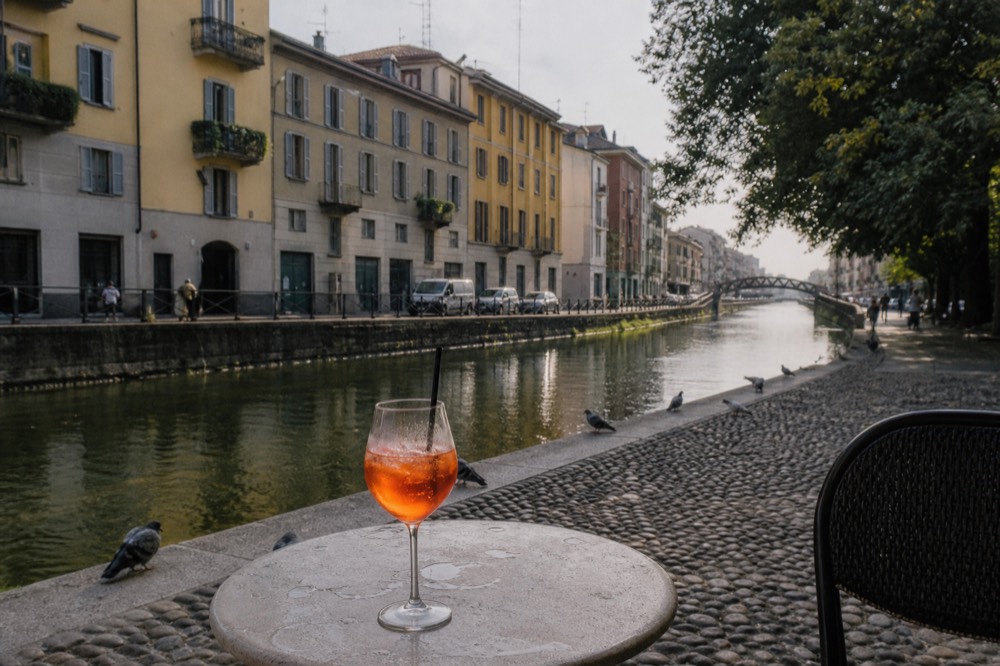
If you are deciding where to spend aperitivo hour, the price spread also tells you what each part of the city values. A Nolo bar at 4 euro is built for locals, and the mini buffet at Rondò is part of the rent you pay to sit with the neighbourhood. A Terrazza Aperol at 21 euro is built for the photograph and the Duomo sightline, not for the same small-plate ritual. Neither is fake, they are just different products wearing the same name. That is why a guided evening walk through Navigli can make the cost easier to read, because the guide can point out which places are actual aperitivo traditions and which are simply bars next to a canal. The 2026 outdoor-drinking rules also matter here, because a late table in Navigli now has a hard closing time, but the early-evening Spritz at 18:30 or 19:00 is unaffected.
Which Milan Bars Set The Aperitivo Agenda In 2026?
Europe's 50 Best Bars 2026 ranking placed four Milan addresses in the top fifty: Moebius at sixth, Camparino in Galleria at eighteenth, 1930 at twenty-second, and Rita at forty-ninth. The World's 50 Best Bars ceremony itself lands in Milan at Palazzo del Ghiaccio in early October 2026.
The 2026 ranking matters to an aperitivo article because it names the rooms where Milan's drink culture is most concentrated. Moebius, at number six, is the highest-placed Italian bar in the Europe list. Camparino in Galleria, at number eighteen, is the historic anchor. 1930 and Rita round out the city's four entries. The global ceremony choosing Milan as its host in early October confirms what the rankings imply: the city is the Italian centre of the modern aperitivo conversation. The official announcement for the event is on The World's 50 Best Bars site.
| Bar | Europe's 50 Best Bars 2026 place |
|---|---|
| Moebius Milano | 6th |
| Camparino in Galleria | 18th |
| 1930 Milano | 22nd |
| Rita Milano | 49th |
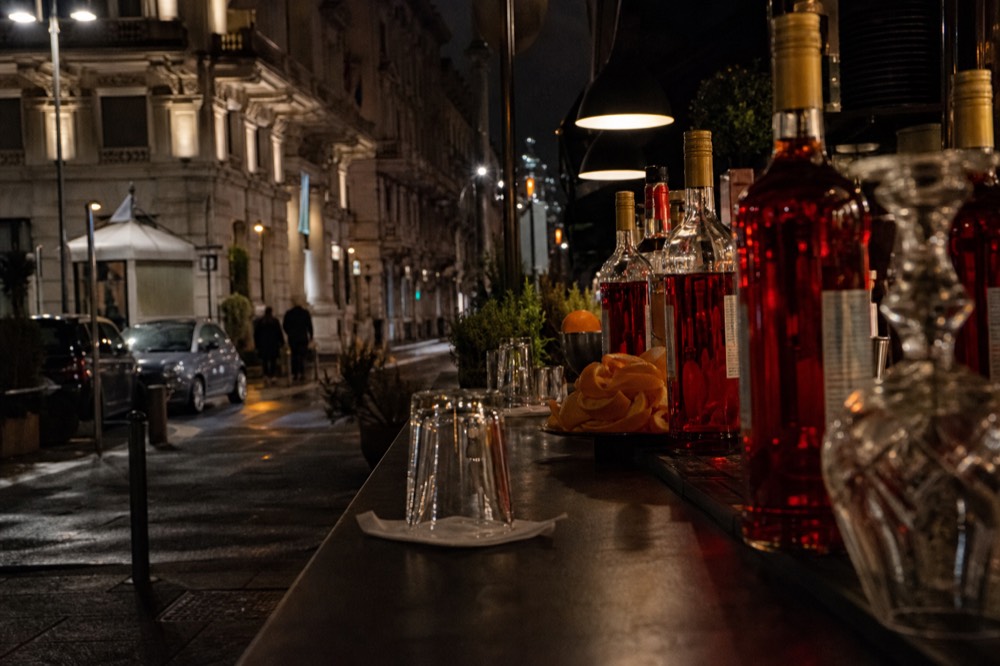
The rankings tell only one part of the story. Milan's aperitivo power is not limited to four bars, and most of the city's daily ritual happens in ordinary neighbourhood spots far from any list. The gap between the 3.50 euro Picchio Spritz and the 21 euro spritz at Terrazza Aperol is the gap between two different nights. What the 2026 list does is help a visitor decide when to spend the higher price: if you want the Campari history in its most polished form, Camparino at number eighteen is the obvious call. If you want the city's current cocktail edge, Moebius is the destination.
For a visitor who wants to taste the city's aperitivo rank rather than only read it, the wine-focused tasting at Cantina Urbana offers a simpler entry point. The Urban Cellar Wine Tasting is a 90-minute sitting at Via Ascanio Sforza 87, where the focus stays on poured wine rather than cocktail construction. It is not a 50 Best room, but it shows the same Milanese habit of pairing a drink with a place. That half-step between bar ranking and neighbourhood cellar is useful if Moebius or Camparino feels too formal for an early evening.
For the full canal-side version of aperitivo, the Navigli Food and Drinks Tour with Aperitivo runs three and a half hours along the Navigli and includes both food stops and a timed aperitivo moment. It starts at Arco di Porta Ticinese, rated 4.9 across 545 reviews, with free cancellation up to 24 hours before the start.
The same tour is the one we point to when a reader wants to see the gap between a 4 euro neighbourhood Spritz and a 9 euro Naviglio Grande view in one evening. It covers the movement between zones, which is the part a static menu cannot teach. A good guide will also know which bars are inside the 2026 outdoor-seating ordinance zones, so you do not find yourself at a canal-side table after the plateatico has legally closed.
Where Did Milan's Aperitivo Ritual Actually Begin?
The documented origin starts with the Campari family and the Galleria Vittorio Emanuele II. Gaspare Campari opened Caffè Campari on the corner of the Galleria and Piazza Duomo in 1867. His son Davide opened Camparino in the Galleria in 1915 with soda water piped up from the cellars for a perfectly chilled Campari and soda.
The history worth telling is narrower and more solid than the folklore. Camparino's own history page records the 1867 opening of Caffè Campari and the 1915 opening of Camparino as the "younger brother" bar, with a constant soda-water supply piped up from the cellars. The Liberty interiors were made by cabinet maker Eugenio Quarti, blacksmith Alessandro Mazzucotelli and painter Angelo d'Andrea. The bar was bombed in August 1943 and later taken over by Guglielmo Miani, whose family ran it until 2018. The venue's own strapline today is "The Milanese Aperitivo since 1915". You can read the full opening record on Camparino's official history page.
What the company's own sources do not say is that the aperitivo ritual, or any single cocktail, was invented at these addresses. The verified dates are the openings and the soda system. Everything beyond that is marketing or myth, and a careful article should not repeat it. The distinction matters because Milan's aperitivo is older and more diffuse than one bar, but Camparino remains the most famous physical anchor for the Campari bitter that gives Negroni, Americano and Spritz their Milanese edge. That is why ordering a Campari soda in the Galleria feels like a small act of local loyalty even today: the bitter, the bar and the family story are the same three ingredients.
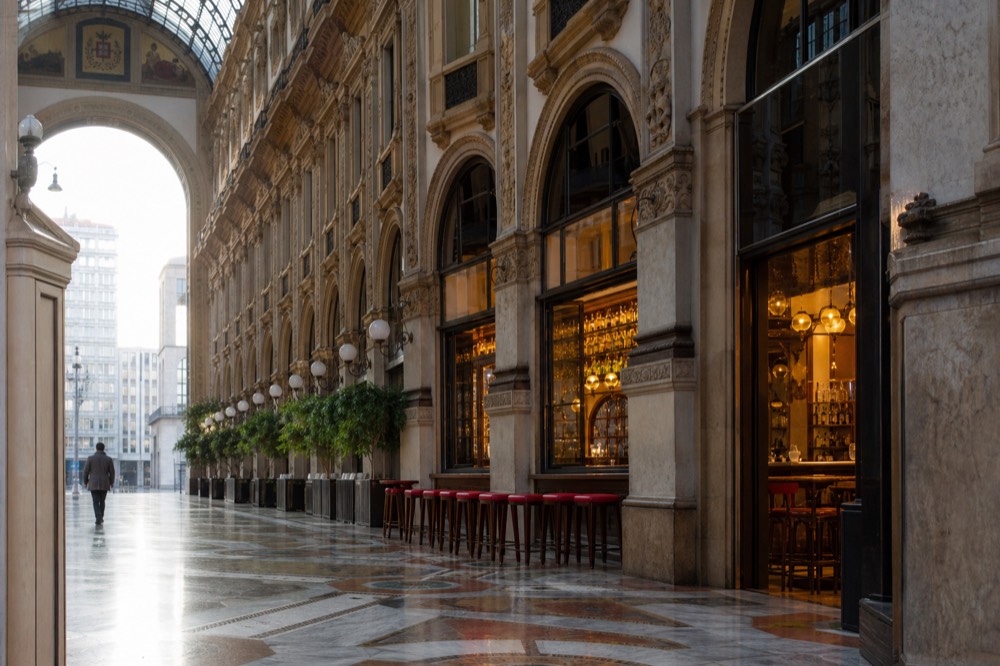
The Campari connection also explains why Milan's most popular drink is not a single Spritz but a family of bitter-based aperitivi. The same bottle of Campari sits behind a Negroni, an Americano and a Campari soda. The Spritz, made with Aperol, belongs to the same broader Campari Group stable, which is why the orange drink feels so at home in Milan even though it is not the city's oldest order. When a bar in Brera or Isola pushes a Negroni, it is not being difficult; it is leaning into the local bitter tradition that runs from Gaspare Campari's 1867 coffee counter to the 2026 rankings.
How Do Milan's Evening Drinking Rules Affect Aperitivo Plans?
A Comune di Milano ordinance in force from 11 June to 2 November 2026 bans alcohol retail sale from 22:00 in twelve zones, takeaway of all alcoholic drinks from midnight, and outdoor table use from 01:00 on weekdays and 02:00 on weekends. Navigli, Brera, Ticinese and Isola are all inside the map.
This ordinance changes how a visitor should plan a late evening, especially in the neighbourhoods most associated with aperitivo. The Comune di Milano published the rules on 9 June 2026, covering Nolo, Isola, Sarpi, Cesariano, Arco della Pace, Como/Gae Aulenti, Garibaldi, Brera, Ticinese, Darsena/Navigli, Cinque Vie and Bicocca. The effect is that after 22:00 you cannot buy alcohol from a shop in those zones, after midnight you cannot take any alcoholic drink away, and outdoor tables close at 01:00 on weekdays and 02:00 on weekends. The full announcement is on the Comune di Milano's movida ordinance page.
For most aperitivo-goers the rules are a schedule shift, not a cancellation. A Spritz at 19:00 still works exactly as it always did. It is the tail end, the post-midnight takeaway bottle and the 01:30 canal-side table, that the city has tightened. If your food tour ends in Navigli, the operator has likely already built the 2026 rules into the route, because no licensed guide wants to keep a group at a plateatico table after the closing time. Our related tour picks in the previous section stay within the early-evening window, which is why they remain the most practical way to taste the aperitivo culture without tripping the ordinance.
The same logic applies to visitors staying near Sarpi or Isola, where the 22:00 retail alcohol ban is the first cut-off of the night. If you want a bottle to take back to your room, buy it before 22:00 in those zones or simply choose a bar that will serve you at the table until it closes. The rule is not a blanket prohibition on drinking, it is a ban on late-night off-sales and outdoor use. That distinction keeps the aperitivo ritual itself intact. Brera's bars still operate, but the chairs outside go quiet earlier than they did a year ago. For a visitor, the practical move is to start earlier, drink slower, and keep the late-night part of the evening indoors.
Common Questions About Milan's Most Popular Aperitivo Drink
What Is The Most Popular Aperitivo Drink In Italy?
In Milan the Spritz, usually the Aperol Spritz, is the drink most people order at aperitivo hour. It ranges from 3.50 euro in neighbourhood bars to 21 euro at Terrazza Aperol. Negroni, Americano and Campari soda each carry a more local, Campari-rooted signal.
What Is The Difference Between A Spritz And An Aperol Spritz?
A Spritz can be made with Aperol, Campari, Cynar or another bitter, while Aperol Spritz specifically uses Aperol. In Milan the Aperol version is the default order, and it is the one represented in the 2026 Aperol Spritz Index average of 16.66 euro.
Is Negroni More Popular Than Aperol Spritz In Milan?
The Spritz leads in sheer volume among tourists and casual aperitivo-goers, but the Negroni is a strong second among Milanesi who want a drier, more bitter drink. The city's Campari history makes the Negroni a marker of local taste, not a tourist order.
What Time Does Aperitivo Start And End In Milan?
Milan's aperitivo generally starts around 18:00 and runs until dinner, with many bars serving small plates until 21:00 or 22:00. The 2026 outdoor-drinking ordinance bans retail alcohol sales after 22:00 in twelve zones and closes outdoor tables at 01:00 on weekdays and 02:00 on weekends.
How Much Should I Budget For Aperitivo In Milan?
Budget 4 to 12 euro per drink in neighbourhood and canal areas, with 15 to 21 euro expected only at landmark terraces. A mini buffet at a place like Rondò can replace a full dinner, which makes the 4 euro Spritz some of the cheapest eating and drinking in the city.