What Is A Must Eat In Milan?
A decided shortlist of the five dishes worth crossing Milan for, where to order each one, what it should cost, and which the city has formally claimed on its De.Co. register.
What Is A Must Eat In Milan?
What Is A Must Eat In Milan?
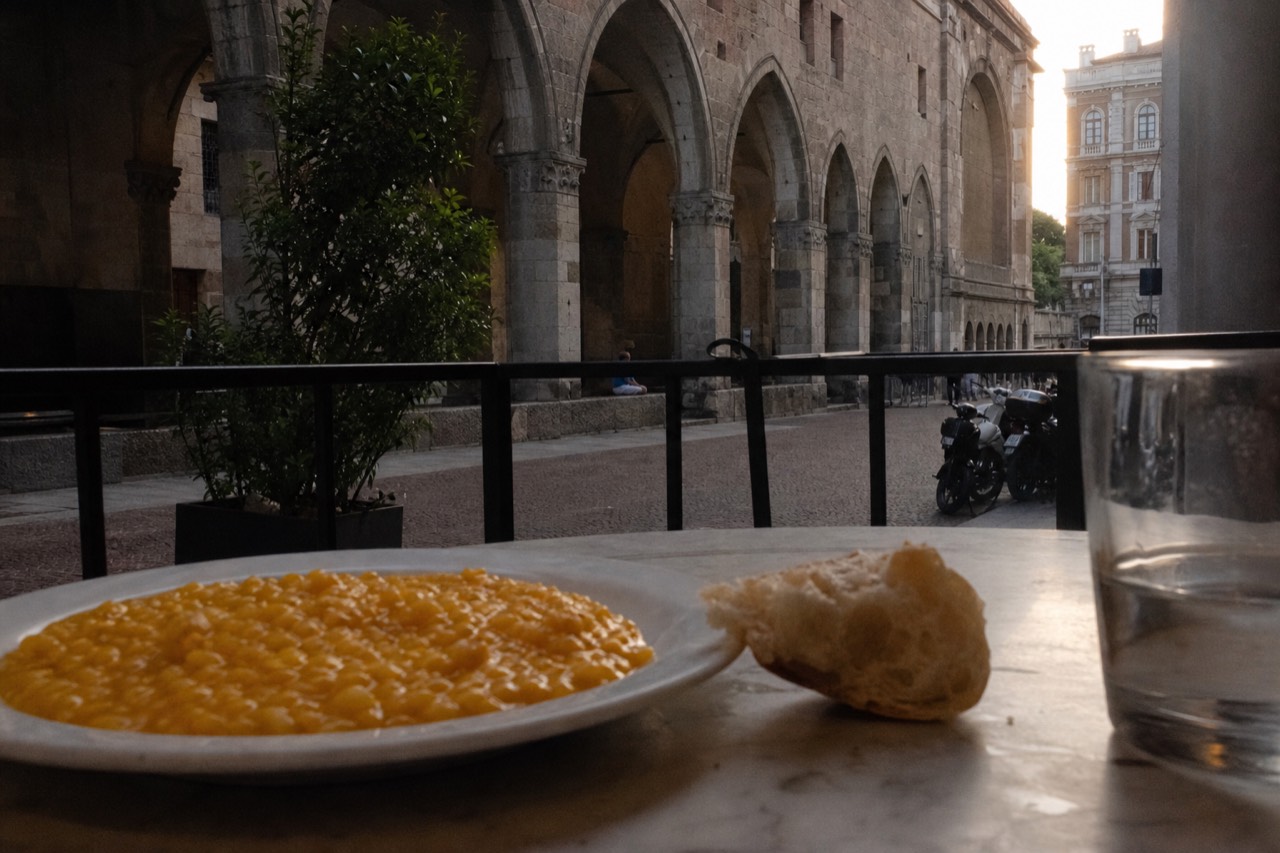
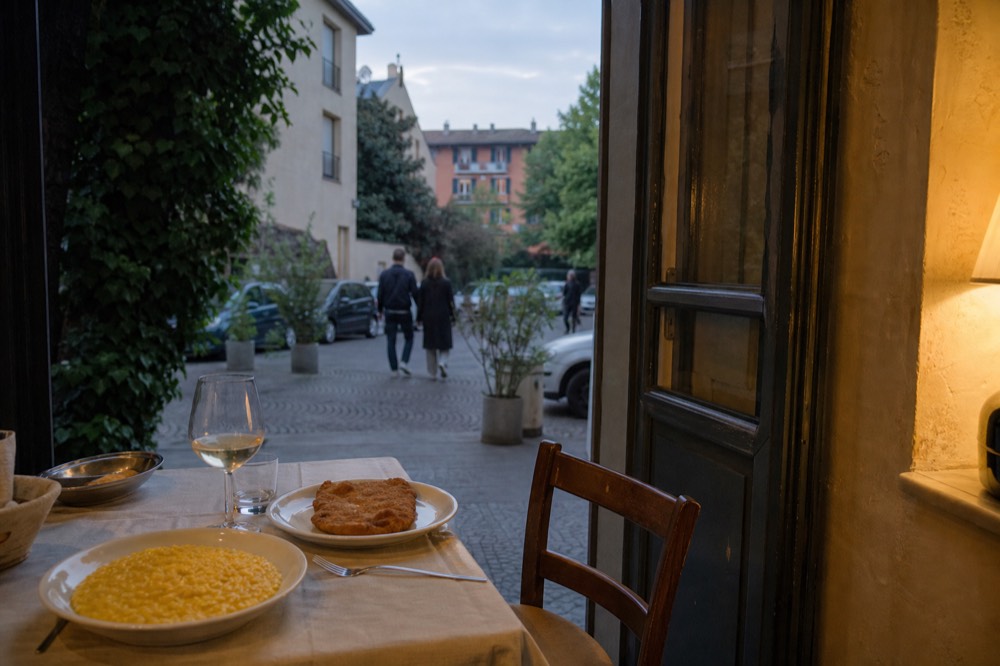
If you eat exactly one Milanese dish in Milan, make it risotto alla milanese: saffron-gold rice, bone marrow in the base, slow stock, and a texture no restaurant outside Lombardy seems to reproduce. It is the city's signature plate, it carries the Comune's own 2007 De.Co. designation, and a proper restaurant portion should cost roughly EUR 15 to EUR 25. After that, the honest shortlist runs cotoletta, panzerotto, michetta and, in season, panettone.
That is the decided answer, and the rest of this article defends it dish by dish. Milan's food identity is narrower and more specific than Rome's or Naples's, which is actually good news for a short visit: five dishes cover almost everything the city's kitchen is famous for, and each one has a right place to order it and a wrong one.
Two of the five are restaurant dishes, two are bakery and street items you can eat standing, and one is seasonal. That mix matters when you plan a day, because a visitor who only books restaurant meals will miss half the list. The panzerotto and the michetta live in bakeries and fry-shops, and the panettone is a Christmas product that has spread across the whole year in tourist shops but belongs, properly, to the weeks before 25 December.
A word on what "must eat" means here. This is not a list of famous nouns. Each entry below comes with a paragraph on what the dish actually is, a price expectation, and the reason it earns its slot over the dozens of things you could also eat in Milan. If you want to compress several of these into a single afternoon without researching addresses yourself, a guided walk does that job, and we name the ones worth considering further down.
The shortlist in one table, then the dish-by-dish defence:
| Dish | Format | Where it belongs | Rough cost |
|---|---|---|---|
| Risotto alla milanese | Restaurant plate | A traditional trattoria at lunch or dinner | EUR 15-25 |
| Cotoletta alla milanese | Restaurant plate | An old-school Milanese restaurant, shared is fine | EUR 20-35 |
| Panzerotto | Fried street snack | A fry-shop or bakery, eaten standing | EUR 3-6 |
| Michetta | Bread roll | A bakery in the morning, or as a sandwich at lunch | EUR 1-3 |
| Panettone | Seasonal leavened cake | An artisan pastry shop, December only | From about EUR 20 for a 1 kg loaf |
Why Risotto Alla Milanese Is The One Dish To Pick
Risotto alla milanese is the pick because it is the dish Milan actually owns outright. The rice is Carnaroli or Arborio, the colour comes from saffron, the base starts with bone marrow and onion, and the finished texture should wave, not stand. The Comune granted it De.Co. status on 14 December 2007, and a correct restaurant portion runs roughly EUR 15 to EUR 25 in the centre.
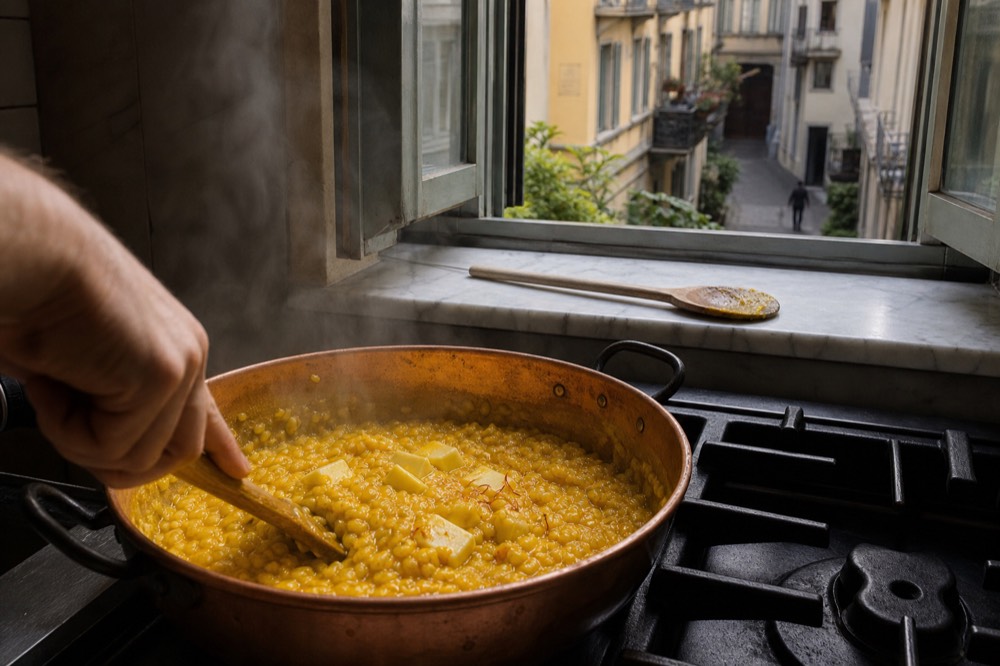
The origin story you will hear, that saffron was spilled into the rice by a glass-stainer decorating the Duomo, is legend and should be enjoyed as legend. What is verifiable is the dish's place in the municipal register: risotto alla milanese was recognised by the Comune di Milano with a resolution of 14 December 2007, part of the city's De.Co. programme, which the Comune describes as a statement of territorial belonging rather than an EU-style protection. You can read the register on the Comune's food policy pages.
Ordering it well is mostly about avoiding the wrong venue. Airport restaurants, all-you-can-eat buffets and places with photographed menus in five languages will serve you yellow rice; the wave, the marrow depth and the saffron aroma come from a kitchen that makes it daily. Traditional Milanese trattorias around the Navigli and in the Ticinese side streets are the safest bet, and lunch is often cheaper than dinner for the identical plate.
One pairing note worth the space: ossobuco, braised veal shank, is the classic companion and also carries De.Co. status from 2007. If your budget allows one large traditional meal in Milan, risotto with ossobuco is the plate to order, and it is a two-course experience served as one.
Cotoletta Alla Milanese, And Why It Is Not A Schnitzel
Cotoletta alla milanese is a bone-in veal cutlet, breaded and fried in butter, and it earned its own De.Co. entry on 17 March 2008. It differs from the Viennese schnitzel in the bone, the thickness and the frying fat, and a full portion in a traditional restaurant runs roughly EUR 20 to EUR 35. Order it once, expect it to arrive larger than the plate, and share it without embarrassment.
The Milan-Vienna argument over who breaded meat first has run for well over a century and has never been settled, and 2025-2026 press searches turned up no new official protection moves on either side. What Milan has that Vienna does not is the municipal designation: the Comune claimed cotoletta alla milanese in 2008, a year after the risotto, under the same De.Co. register.
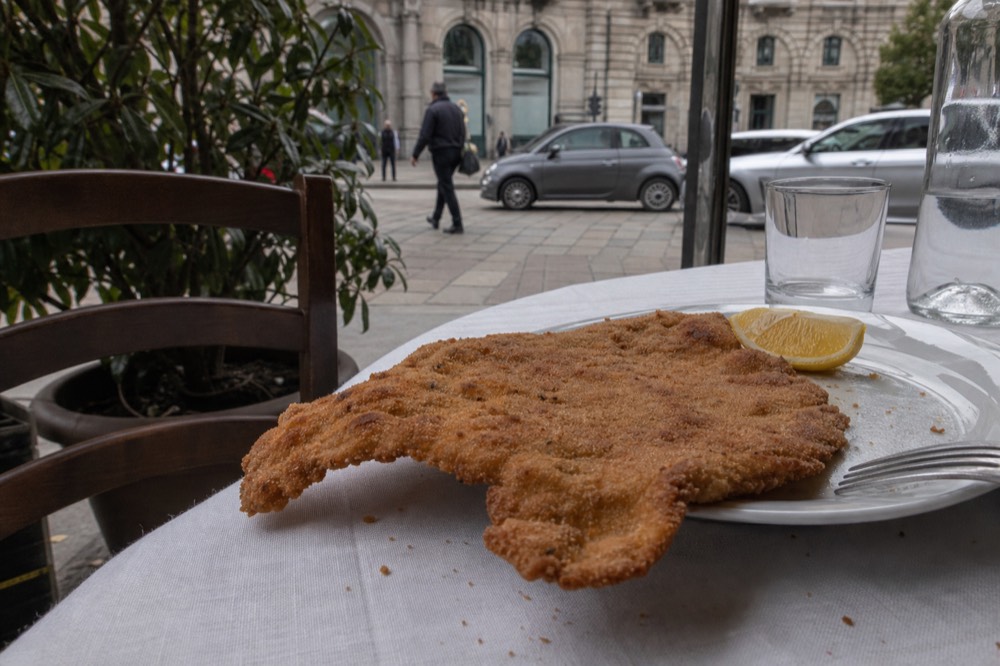
The practical advice is simple. A cotoletta is large, frequently 30 centimetres or more across the bone, and Milanese restaurants are used to two people sharing one with a contorno. Ordering it at the same meal as a full risotto is a mistake most visitors make exactly once. If you have two restaurant meals in the city, give one to the risotto and one to the cotoletta, and let the panzerotto and michetta fill the gaps between them.
There is also a thinner, deboned variant called the orecchia di elefante, elephant's ear, which some Milanese consider the more refined version. Both are legitimate; the bone-in original is what the De.Co. register names.
Panzerotto And Michetta, The Two Street-Level Must Eats
Panzerotto is a small folded pocket of pizza dough, fried, with tomato and mozzarella inside, and it costs roughly EUR 3 to EUR 6 from a fry-shop. Michetta is Milan's own hollow bread roll, recognised by the Comune in 2007, sold for a euro or two and best eaten warm from a morning bakery or filled as a lunch sandwich. Neither needs a restaurant, a reservation or a table.
These two are the reason a food walk in Milan can outperform a restaurant meal. The panzerotto is closest thing Milan has to Naples street food culture: Luini, near the Duomo, is the name most Milanese will give you first, and the queue outside it is part of the experience. The michetta, meanwhile, is the city's defining bread, a light, almost hollow roll that Milanese bakers make and that barely travels outside Lombardy.
The michetta's texture is the point. Because it is mostly air, it is eaten the day it is baked, and the classic Milanese lunch is a michetta filled with salame or prosciutto and eaten standing at a bar counter. If your breakfast is a cappuccino and a cornetto, the michetta is your lunch upgrade, and it is the cheapest item on this entire list.
A guided street food walk is one efficient way to hit several of these without map work. The 2.5-Hour Street Food Walk by Pink Umbrella Tours runs from $57 per person, is rated 4.7 across 934 reviews, and covers tastings across the centre in two and a half hours, with free cancellation up to 24 hours before. It meets in front of the Church of San Maurizio, by the stairs.
For a longer, more substantial version of the same idea, the 7 Tastings walk by Secret Food Tours runs three hours from $116 per person, is rated 5 across 19 reviews, and builds a full route around risotto and wine among its seven stops, starting from the Porta Genova station forecourt. It suits visitors who want the walk to replace a meal rather than bridge two.
Panettone, The Must Eat That Is Only A Must Eat In Season
Panettone is a naturally leavened Christmas cake defined by Italian ministerial decree since 2005, requiring at least 16% butter, 4% egg yolk and 20% raisins and candied citrus peel, and Milan recognised it on the De.Co. register in 2007. Artisan loaves in Milan ran above EUR 50 per kilo in the 2025 season, with Marchesi and Gattullo both at EUR 50 per kilo. In December, it belongs on the list; in July, it does not.
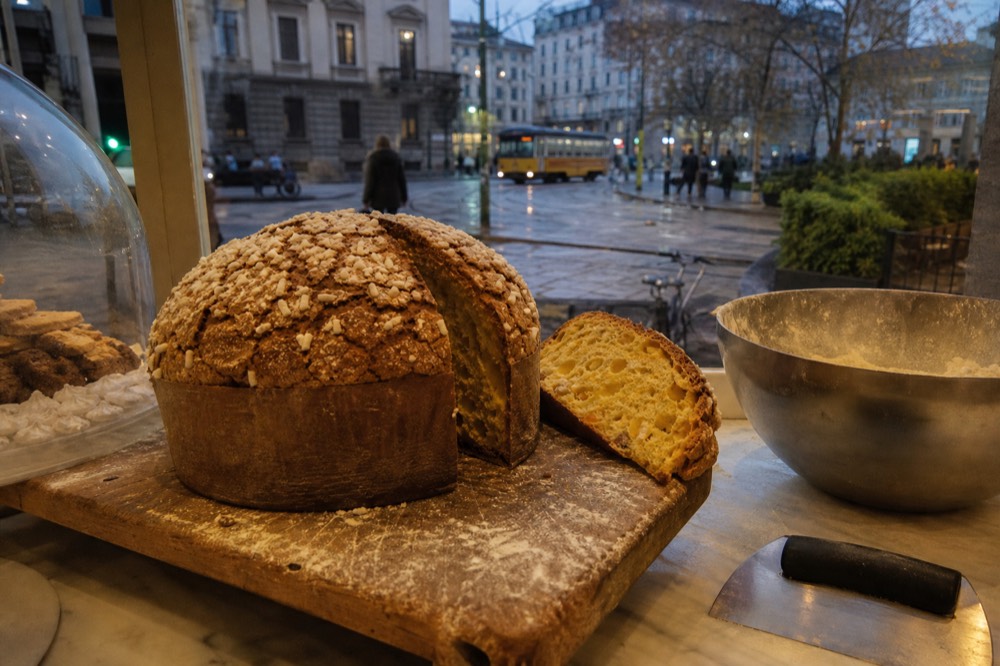
The decree matters more than most food law. What can legally be sold as panettone in Italy is fixed by the Decreto 22 luglio 2005, published in Gazzetta Ufficiale n. 177 of 1 August 2005: a naturally leavened sourdough product, round-based, with the characteristic cracked top crust, and those minimum percentages of butter, yolk and fruit. The industrial loaves that appear in supermarkets worldwide are made to that legal floor; the artisan Milanese version, leavened over days by a living mother dough, is a different object entirely.
The price fact worth knowing before you shop: a Resmart analysis reported by Food Affairs put artisan panettone in Milan above EUR 50 per kilo for the 2025 season, naming Marchesi and Gattullo both at EUR 50 per kilo, and headlining a 55% rise over five years. A one-kilo artisan loaf is therefore a EUR 50 purchase, not a souvenir snack. It is also, in the weeks before Christmas, the single most Milanese thing you can carry home.
If you are visiting outside the season, skip it. The year-round panettone in tourist windows is the industrial version, and eating it in September teaches you nothing about why the dish is on this list. Our longer piece on panettone in Milan covers the season, the bakers and the correct way to serve it.
One wider piece of context that changes how you should treat all five of these dishes: Italian cuisine as a whole, the entire national tradition of cooking, rituals and transmission, was inscribed on UNESCO's Intangible Cultural Heritage list on 10 December 2025, the first entire national cuisine to receive the designation. Milan's shortlist is a small, sharp corner of that tradition, and the coincidence of the inscription date with panettone season is a nice one.
Which Of These Dishes Has Milan Formally Claimed?
Four of the five shortlist dishes sit on the Comune di Milano's De.Co. register: panettone, michetta and risotto alla milanese from 2007, and cotoletta alla milanese from 2008. Panzerotto does not appear on the register, which is a statement about municipal pride rather than quality. De.Co. is a city-level designation, not an EU DOP, and no Milanese dish on this list holds EU protection.
This distinction is worth understanding because a lot of travel copy gets it wrong. De.Co., Denominazione Comunale, is the Comune's own register, established by resolutions in December 2007 and 2008, and the city describes it as an attestation of territorial belonging. It is not the EU system, and searching the national DOP and IGP lists finds no Milanese dish among them. When a menu or a blog calls risotto alla milanese "protected", it is overstating a municipal honour.
| Dish | De.Co. status | Year recognised |
|---|---|---|
| Risotto alla milanese | Yes, Comune di Milano | 2007 |
| Cotoletta alla milanese | Yes, Comune di Milano | 2008 |
| Panettone | Yes, Comune di Milano | 2007 |
| Michetta | Yes, Comune di Milano | 2007 |
| Panzerotto | No De.Co. entry | Not claimed |
The register is broader than the shortlist, and one fresh entry deserves a mention: in 2026 the Comune added Pan de Mej, a cornmeal sweet bread tied to the feast of San Giorgio on 23 April. It is the newest designation on the books and a genuinely seasonal one, so a spring visitor with a spare breakfast can chase a must eat that almost no tourist copy mentions.
For the cheese-adjacent reader, one neighbouring fact: Gorgonzola DOP, made across Piedmont and Lombardy, hit a record 5,421,517 wheels in 2025, and it pairs with the risotto rather than competing with it. Milan's own register, though, stays at the five above plus its other traditional entries.
How To Eat Several Of These In One Afternoon
The fastest honest route to several shortlist dishes in one afternoon is a guided food walk: the 2.5-Hour Street Food Walk from $57 covers street-level items in the centre, and the 3-hour 7 Tastings walk from $116 adds risotto and wine. Doing it solo means mapping a bakery, a fry-shop and a trattoria within walking distance of one another.
The DIY version is entirely possible and cheaper. Pick a morning bakery for a michetta, hit a panzerotto counter near the Duomo before the lunch queue builds, and book a trattoria for a 13:00 risotto. The constraint is geography: Milan's centre is compact, but the best versions of each dish are scattered, and a wrong choice of neighbourhood turns a food afternoon into a metro afternoon.
The guided versions solve that, at a price. Here is how the three compare on the things that actually decide the booking:
| Walk or class | Length | From price | Rating | What it covers |
|---|---|---|---|---|
| 2.5-Hour Street Food Walk | 2.5 hours | $57 | 4.7 across 934 reviews | Street-level tastings in the centre |
| 7 Tastings, Risotto and Wine | 3 hours | $116 | 5 across 19 reviews | Seven stops including risotto and wine |
| Gnocchi, Pasta, Tiramisu and Wine class | 3 hours | $70.55 | 5 across 1362 reviews | Hands-on cooking with wine, at a home kitchen |
The cooking class deserves a word because it is the odd one out: rather than eating the tradition, you make pasta and tiramisu under instruction and drink wine while doing it, in a three-hour session from $70.55 per person, rated 5 across 1362 reviews, with free cancellation up to 24 hours. It is the best fit for families and for anyone whose second Milan afternoon is rainy. It meets at Via Cerano 12, and the current price sits under a timed discount that can change.
Whichever route you take, the ordering logic of the day is the same: street items between meals, one restaurant plate as the anchor, and panettone only if the calendar says December. That is the whole strategy, and it fits into a single afternoon or a whole weekend depending on how much of the list you want to finish.
If you want the deeper background on any single dish, our guides on risotto alla milanese, Milan street food and what to eat in Milan take each one further, and Milan Food Tours keeps the full roster of walks and classes if the shortlist has convinced you to book one.
The shortlist is risotto alla milanese first, then cotoletta, panzerotto, michetta and seasonal panettone, with prices from a couple of euros at a bakery counter to EUR 50 for an artisan loaf. The questions below cover the ones readers ask most, including what is legally protected and what a food tour should cost.
Common Questions About Must Eats In Milan
What Is A Must Eat In Milan?
Risotto alla milanese is the single must eat, followed by cotoletta alla milanese, panzerotto, michetta and, in December, artisan panettone. The risotto is the pick because it is the dish Milan owns outright, it carries the city's own 2007 De.Co. designation, and a proper portion costs roughly EUR 15 to EUR 25 in a traditional trattoria.
Is Panettone Worth Buying Outside Christmas?
Not really. Panettone is a Christmas product tied to the festive calendar, and the year-round loaves in tourist windows are the industrial version made to the legal minimums of the 2005 decree. Artisan panettone in Milan ran above EUR 50 per kilo in the 2025 season, and that quality is a December phenomenon.
What Is The Difference Between Cotoletta Alla Milanese And Schnitzel?
The Milanese version is a bone-in veal cutlet, breaded and fried in butter, recognised by the Comune in 2008. The Viennese schnitzel is typically deboned, thinner and larger. The Milan-Vienna priority dispute has never been settled, but only Milan has put its version on a municipal register.
How Much Does A Food Tour In Milan Cost?
On this site's roster, guided food walks start from $49.69 per person for a 2.5-hour walk with city sightseeing and run up to about $116 for a three-hour, seven-tasting route with risotto and wine. Cooking classes run from about $39 to $128 depending on format. Most carry free cancellation up to 24 hours before.
Can I Eat The Must Eats Without A Restaurant Reservation?
Three of the five, yes: panzerotto and michetta are counter foods eaten standing, and panettone is a bakery purchase. The risotto and the cotoletta are restaurant plates, and a traditional trattoria at lunch is often walk-in where the same room at dinner is not.
Are Milan's Classic Dishes Legally Protected?
Only at city level. Risotto alla milanese, cotoletta, panettone and michetta all sit on the Comune di Milano's De.Co. register, granted in 2007 and 2008, which the city describes as a statement of territorial belonging. None of them holds an EU DOP or IGP, so treat any claim of legal protection as an exaggeration.