Milan Street Food: What To Eat Standing Up, And Where
Milan eats fast at lunch, standing up, and that is a real cultural fact rather than a listicle premise. Here is what the city actually eats on its feet, what it costs, and how the five guided street food walks compare.
Short answer
Milan's street food is panzerotto, the hollow michetta roll, pizza al trancio and bakery-counter classics. A guided street food walk runs from $49.69 to $115 per person for 2.5 to 3 hours; the cheapest 2.5-hour walk costs from $57 and is rated 4.7 across 934 reviews.
Milan does not treat lunch as an event. Office workers in the Quadrilatero, students near the Colonne di San Lorenzo, market vendors at Porta Romana: for a large share of the city, midday food is bought at a counter, eaten in a few minutes, and washed down standing at a bar. That habit produced a specific repertoire of foods, from the fried panzerotto to the hollow michetta roll, and it explains why Milan's street food is genuinely different from the southern Italian street food most guidebooks import wholesale.
This guide covers the foods themselves, what they cost, and then something almost nobody else prints: the five guided street food walks on the market placed side by side, with duration, price, rating and meeting point, including the one that publishes no meeting point at all.
What Street Food Is Milan Known For?
Milan is known for panzerotto, a small fried pocket of dough filled with tomato and mozzarella; the michetta, a hollow five-lobed bread roll that carries its own municipal designation; pizza al trancio, a thick slab cut from a sheet; and the bakery-counter culture that sells them all fast and cheap. None of it is DOP-protected. The michetta and panettone both sit on the Comune di Milano's De.Co. register, a municipal recognition rather than an EU one.
The De.Co. register matters here because it is the only official status any of this food holds. The Comune established it with resolutions in December 2007 and 2008, and the michetta was on the first list, alongside panettone, cassoeula and risotto alla milanese. The Comune describes the designation as a statement of territorial belonging, not a quality guarantee in the EU sense. So when a menu or a tour blurb calls the michetta "protected," it is stretching a municipal honorific into something it is not.
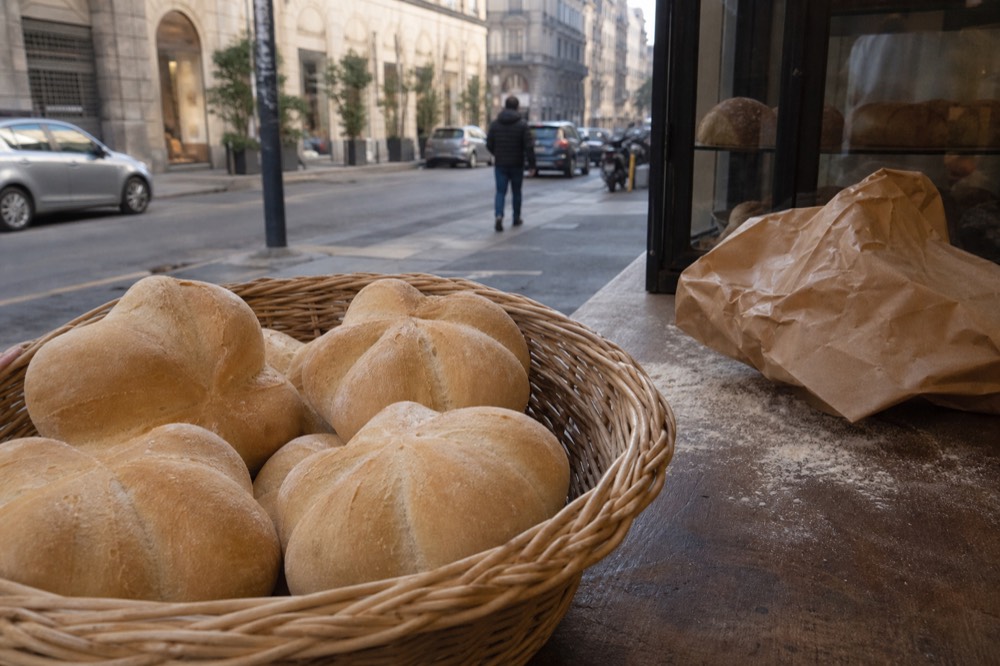
What the michetta actually is: a light, almost hollow roll with five points, designed so that it puffs up and leaves an empty interior. That emptiness is functional. A Milanese sandwich is traditionally built inside a michetta precisely because the cavity holds salami or prosciutto without compressing it, and because the roll itself weighs almost nothing. It is bread engineered for a fast lunch, and the city put it on its food register in its own right.
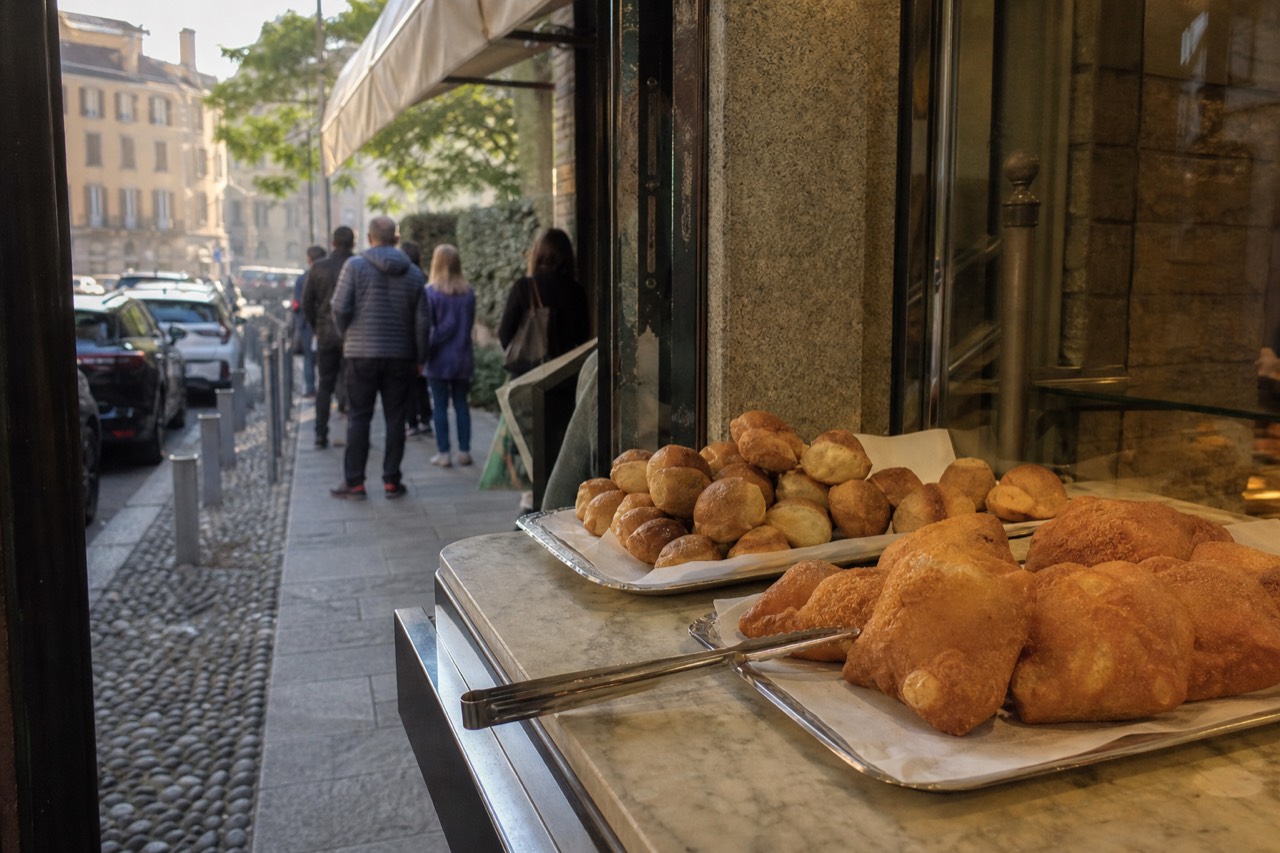
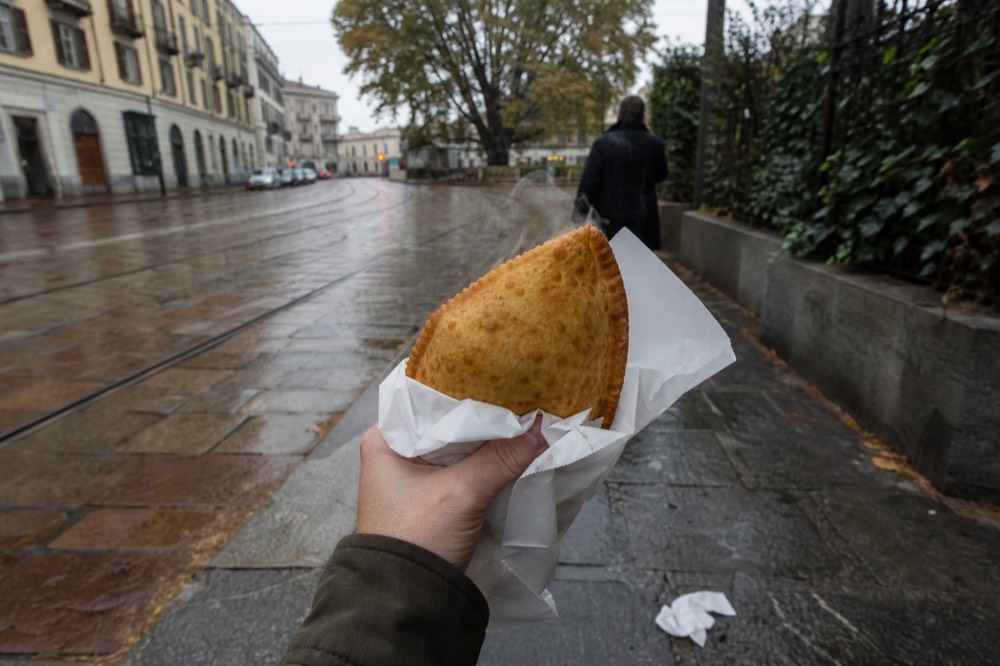
The panzerotto is the other pillar. It is a small disc of dough folded over a filling, classically tomato and mozzarella, then deep fried so it blisters and puffs. It is not a calzone; it is smaller, fried rather than baked, and it belongs to the friggitoria tradition of southern Italy that Milan absorbed through migration and then made its own at counters across the centre. Luini, near the Duomo, is the name most Milanese will give you, and the queue outside it at lunchtime is the single best demonstration that this food culture is real and not a tourist construct.
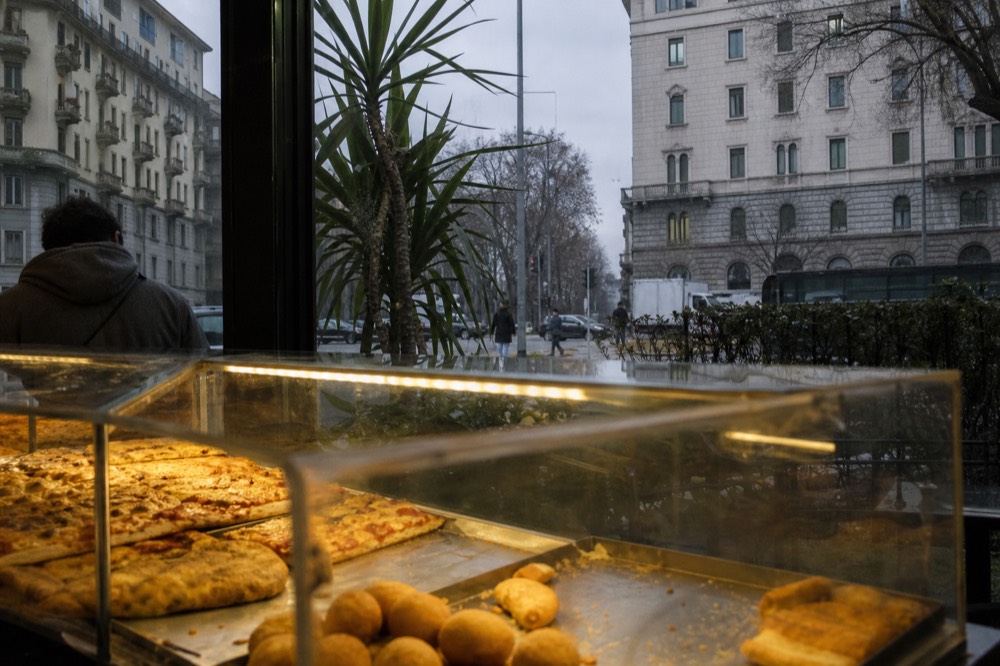
Pizza al trancio closes the trio. This is not Neapolitan pizza: it is a thick, airy rectangular or square slab, baked in a sheet pan, cut with scissors and sold by weight or by the piece. It sits behind glass in bakeries and pizza al taglio shops all over the city, reheated on request, and it is standard weekday fuel rather than a destination dish.
Where Each Item Belongs: Counter, Friggitoria Or Bar
Each Milan street food has a native venue, and knowing it changes how you eat. The panzerotto belongs to the friggitoria or bakery fryer, the michetta to the bread counter, pizza al trancio to the taglio shop, and the espresso-plus-cornetto ritual to the bar. Ordering a panzerotto at a sit-down restaurant is possible but misses the point: these foods were built for speed and eaten standing.
The format is the culture. A bar in Milan is not a pub; it is a counter where you order a coffee, drink it in two minutes at the bar itself, and pay less than you would sitting at a table. The same logic governs lunch. The bakery counter, the friggitoria window and the taglio display are all variations on one idea: food delivered in under a minute, eaten within sight of where it was made.
Here is the format map, with rough cost bands drawn from what these items typically sell for across central Milan. Treat the prices as planning ranges and check the board at the counter: bakery pricing moves with ingredient costs, and a panzerotto near the Duomo will not match one in Niguarda.
| Item | What it is | Where the format belongs | Typical cost |
|---|---|---|---|
| Panzerotto | Fried dough pocket, tomato and mozzarella filling | Friggitoria, bakery fryer | Roughly EUR 2-4 each |
| Michetta | Hollow five-lobed roll, usually filled to order | Bread counter, salumeria | Roughly EUR 3-6 filled |
| Pizza al trancio | Thick slab cut from a sheet, sold by piece or weight | Pizza al taglio shop | Roughly EUR 3-5 a slice |
| Focaccia / schiacciata | Flat, oily, salted bread, sometimes topped | Bakery counter | Roughly EUR 2-4 a piece |
| Arancino / supplì | Fried rice ball, meat or cheese filling | Friggitoria, Sicilian counters | Roughly EUR 2-4 each |
| Cornetto and espresso | Breakfast pastry plus coffee at the bar | Bar, standing | Roughly EUR 2-3 total |
One more note on the bread: the panettone decree of 22 July 2005, published in the Gazzetta Ufficiale, is the closest thing Milan's baked goods have to national law, and it is instructive for what it does not cover. The decree reserves the name panettone to a naturally leavened product with minimum percentages of butter, yolk and candied fruit, but the michetta and the everyday bread counter are governed by nothing except habit. Habit, in Milan, is strong enough.
If you would rather have the counter culture decoded for you than work it out alone, a guided walk is the efficient route, and these three are the strongest starting points on the market.
The Michetta: A Bread Roll With Its Own Municipal Designation
The michetta received its De.Co. designation from the Comune di Milano in 2007, in the first wave of the register, alongside panettone and cassoeula. It is a municipal recognition, not an EU one: no Milanese dish, bread or otherwise, holds a DOP, IGP or STG. The roll's defining feature is its hollowness, produced by a long proof and a shape that lets the crumb collapse inward as it bakes.
The register itself is worth reading, because it corrects a lot of loose copy. The Comune's food policy pages list the michetta, panettone, cassoeula, risotto alla milanese and ossobuco from 2007, then minestrone, cotoletta, mondeghili, rostin negaa and barbajada from 2008. In 2026 the register added Pan de Mej, a cornmeal sweet bread tied to the feast of San Giorgio on 23 April, which is the freshest designation on the books and a genuine seasonal hook for a spring visit. The full list sits on the Comune's own food policy pages at the Comune di Milano food policy site.
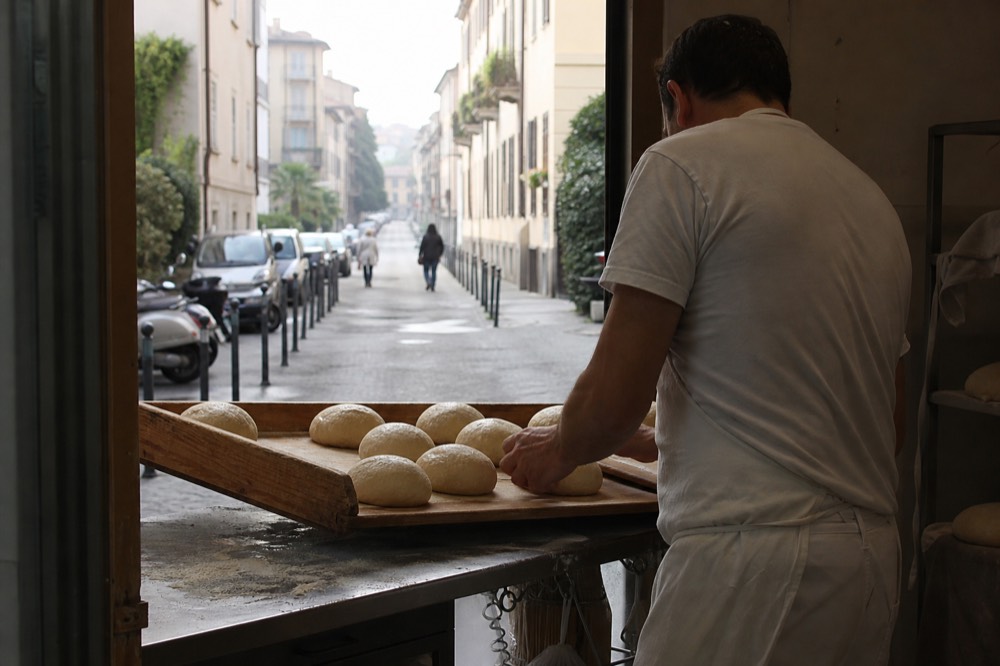
Why does the hollowness matter to a visitor? Because it dictates the sandwich. A michetta filled with salame or, in the old working-class version, with nothing but a scrape of lardo or a few anchovies, is a complete Milanese lunch format that predates every panini chain in the city. The roll weighs next to nothing; the filling is the entire payload. Ask for a michetta ripiena at a bread counter and you are eating the same construct Milanese workers have eaten for generations.
The 2.5-Hour Street Food Walk from Pink Umbrella Tours is the natural companion to this section, because it is built around exactly these formats: tastings at multiple stops, from $57 per person, rated 4.7 across 934 reviews, meeting in front of the Church of San Maurizio by the stairs. Free cancellation runs up to 24 hours before.
How Much Does Milan Street Food Cost?
A street food lunch in Milan runs roughly EUR 3 to EUR 8 per person at a bakery or friggitoria, and a bar breakfast of cornetto and espresso roughly EUR 2 to EUR 3. A guided street food walk costs between $49.69 and $115 per person from price, over 2.5 to 3 hours, with tastings included. The gap between self-guided and guided is the guide, not the food.
That price spread on the tours is worth dwelling on, because it is wider than most people expect. The cheapest option, the Food Walk With City Sightseeing from Tours of Milan, costs from $49.69 and lasts 2 hours 30 minutes. The most expensive of the five, the History Walk, Wine Tasting from Hili srl, costs from $115 for 3 hours and folds a wine tasting into the street food. Between them sit three walks in the $57 to $113.58 band. What you are paying for at the top end is not better panzerotti; it is a second format, wine, layered on top.
For context on what the city itself costs: named venue prices from Corriere della Sera's own reporting put a spritz at EUR 3.50 at Picchio and EUR 4 with a mini buffet at Rondo in the Nolo area, against EUR 9 at Montalcino Caffe on the Naviglio Grande and EUR 21 at Terrazza Aperol by the Duomo. The same geography governs street food. Two euros of distance from the centre changes the price of everything you eat standing up.
| Cost band | What it buys you | Where |
|---|---|---|
| EUR 2-4 | One panzerotto or one pizza al trancio slice | Friggitoria, taglio shop |
| EUR 4-8 | A filled michetta plus a drink, or two items | Bakery counter, bar |
| EUR 8-12 | A multi-stop self-guided crawl of three or four counters | Anywhere in the centre |
| $49.69-$115 | A guided walk with tastings and a local guide | Five tours, compared below |
The Five Street Food Walks Compared
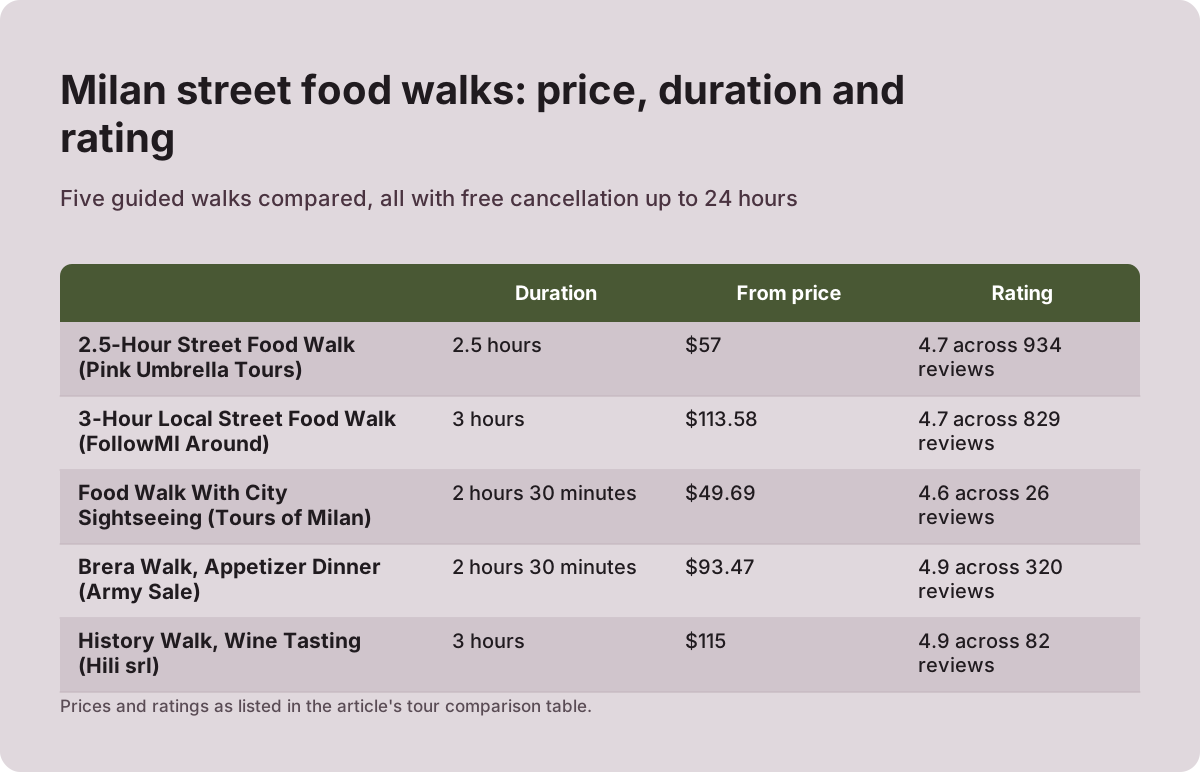
Five guided street food walks cover Milan, ranging from $49.69 to $115 per person and from 2 hours 30 minutes to 3 hours. All five offer free cancellation up to 24 hours. Four publish a specific meeting point; the 3-Hour Local Street Food Walk from FollowMI Around sends its host address only after booking. Ratings run from 4.6 to 4.9 across review counts from 26 to 934.
This is the comparison nobody else prints, so here it is in full, using each operator's own listed figures. The decision names are the ones the site uses on comparison surfaces; the prices are per person, from price, in USD.
| Walk | Operator | Duration | From price | Rating | Meeting point |
|---|---|---|---|---|---|
| 2.5-Hour Street Food Walk | Pink Umbrella Tours | 2.5 hours | $57 | 4.7 across 934 reviews | In front of the Church of San Maurizio, by the stairs |
| 3-Hour Local Street Food Walk | FollowMI Around | 3 hours | $113.58 | 4.7 across 829 reviews | No meeting point published; host address sent after booking |
| Food Walk With City Sightseeing | Tours of Milan | 2 hours 30 minutes | $49.69 | 4.6 across 26 reviews | Chiesa di San Maurizio al Monastero Maggiore, Corso Magenta 15 |
| Brera Walk, Appetizer Dinner | Army Sale | 2 hours 30 minutes | $93.47 | 4.9 across 320 reviews | Piazza della Scala 1 |
| History Walk, Wine Tasting | Hili srl | 3 hours | $115 | 4.9 across 82 reviews | Piazza dei Mercanti, in front of the Bialetti store |
Read the table with your own priorities in mind. If price is the constraint, the Tours of Milan walk is the entry point, though its 26 reviews mean the sample is small and its 4.6 is the lowest of the five. If review volume is your trust signal, the Pink Umbrella walk's 934 reviews at 4.7 is the strongest base. If you want the highest rated experiences, the Brera walk at 4.9 across 320 reviews balances quality and sample size better than the Hili walk's 4.9 across 82.
The Brera Walk, Appetizer Dinner from Army Sale deserves a solo mention because it solves a real problem: it converts the street food crawl into an appetizer dinner, which suits anyone whose evening is otherwise unbooked. It runs 2 hours 30 minutes, from $93.47, and the listing shows it is booked 58 days ahead on average, which is the strongest demand signal on the whole table. It meets at Piazza della Scala 1.
Which Street Food Walk Should You Pick For A First Visit?
For a first visit, the 2.5-Hour Street Food Walk from Pink Umbrella Tours is the default pick: from $57, rated 4.7 across 934 reviews, 2.5 hours, free cancellation up to 24 hours, meeting at the Church of San Maurizio. If you want a deeper, more local three hours and are comfortable receiving the address only after booking, the FollowMI Around walk at from $113.58 is the upgrade.
The reasoning is straightforward. A first-time visitor usually wants three things from a food walk: enough tastings to count as lunch, a guide who can explain what a michetta is and why it is hollow, and a central meeting point that is easy to find. The Pink Umbrella walk delivers all three at the second-lowest price on the table, and its 934 reviews make it the most battle-tested option in the category. The meeting point at the Church of San Maurizio sits beside the Cadorna metro hub and directly on the M2 line.
The upgrade case for the FollowMI Around walk is real but conditional. It is the only one of the five framed explicitly around local and Milanese eating rather than a general tasting circuit, it runs a full three hours, and its 829 reviews at 4.7 give it the second-largest sample. The trade-off is the meeting point: none is published, and the host address is sent after booking. That is not a red flag, it is how home-based and small-operator experiences work, but it does mean you should book early enough to receive the address calmly rather than the night before. The listing also shows 10 or more bookings in the past week, so it moves.
When To Eat: The Standing Lunch And The Evening Rules
Milan's street food runs all day, but the native rhythm is the 12:00 to 14:00 standing lunch, when bakery queues are longest and counters turn over fastest. In the evening, a 2026 city ordinance restricts alcohol takeaway from midnight and outdoor seating from 01:00 on weekdays in twelve zones including Brera, Navigli and Isola, which matters for any food walk that ends late.
The ordinance, published by the Comune di Milano on 9 June 2026 and running 11 June to 2 November 2026, bans retail alcohol sales from 22:00, takeaway of alcoholic drinks from midnight, and dehors and outdoor table use from 01:00 on weekdays and 02:00 at weekends, across twelve zones: Nolo, Isola, Sarpi, Cesariano, Arco della Pace, Como/Gae Aulenti, Garibaldi, Brera, Ticinese, Darsena/Navigli, Cinque Vie and Bicocca. The details are on the Comune di Milano's official announcement. None of this touches a bakery lunch; it shapes where a sunset food and drinks tour can linger.
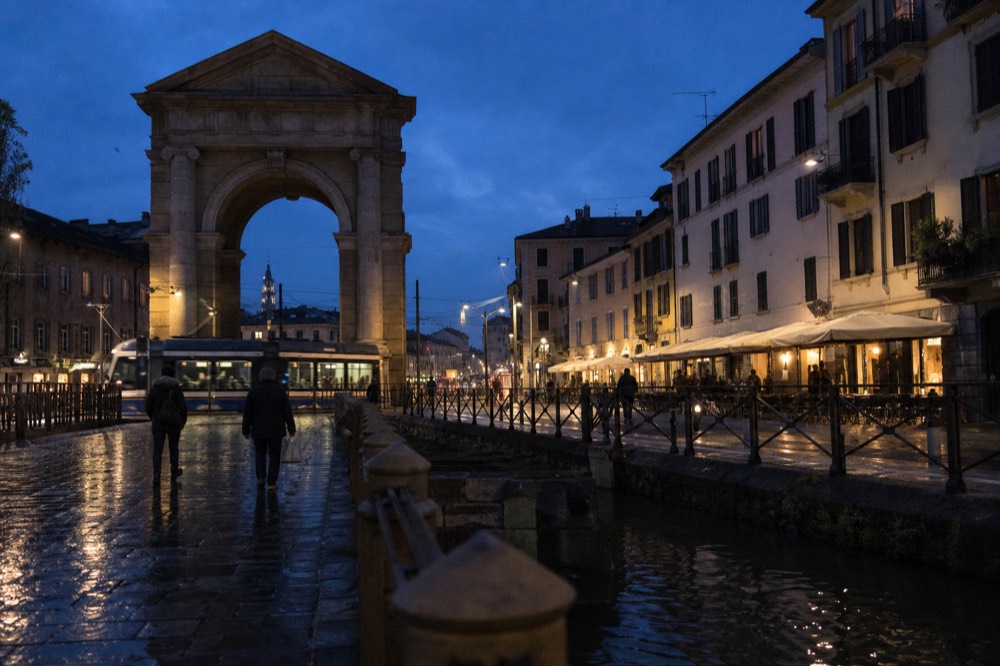
For the evening version of the format, the Sunset Aperitivo and Street Food walk from Do Eat Better Experience bridges the two worlds: 3 hours 30 minutes, from $105.3, rated 4.7 across 634 reviews, meeting near the Quercia Storica by Piazza XXIV Maggio at the top of the Navigli. It is not one of the five core street food walks in the table above, it sits in the aperitivo family, but it is the natural pick if your interest in street food is really an interest in the evening canals.
A One-Day Self-Guided Street Food Route
A workable self-guided day starts at a bar for cornetto and espresso, moves to a bakery counter for a filled michetta at lunch, hits a friggitoria for panzerotto mid-afternoon, and finishes with pizza al trancio before aperitivo hour. Total food spend runs roughly EUR 10 to EUR 15 per person. Add the Duomo-area stops on foot and the whole route fits inside the centre without a metro ticket.
Geography helps here. The Church of San Maurizio meeting point used by two of the walks, on Corso Magenta, is itself a street food corridor: the bakery and friggitoria density between Cadorna, the Duomo and the Brera edge is the highest in the city, and Luini's panzerotto counter sits inside it. Walking from Piazza della Scala through the Galleria to the Duomo and looping back through Via Torino covers the classic slab of it in an afternoon.
For background reading before you go, the guide to what to eat in Milan covers the sit-down classics, and the Milan street food and pizza traditions overlap is unpacked in the pizza guide. If you are deciding between a walk and a class, the cooking classes in Milan guide covers the hands-on alternative, where a three-hour pasta and tiramisu class starts from $39. On this site, Milan Food Tours, the full roster of walks, classes and tastings is compared the same way as the table above.
If a guided walk still looks like the right call after all of this, these three remain the strongest combination of price, format and track record.
The short answers: Milan's street food identity rests on panzerotto, the michetta and pizza al trancio, with a standing lunch culture that runs roughly 12:00 to 14:00. A guided walk costs from $49.69 to $115 per person, and a self-guided crawl runs about EUR 10 to EUR 15. The questions below cover the specifics, including the cheapest tour and whether a walk replaces a meal.
Common Questions About Milan Street Food
What Street Food Is Milan Known For?
Milan is known for panzerotto, the fried dough pocket with tomato and mozzarella; the michetta, a hollow five-lobed bread roll on the Comune di Milano's De.Co. register since 2007; pizza al trancio, the thick slab sold by the piece; and the bakery-counter lunch culture that ties them together. None of it holds an EU designation; the michetta's status is municipal.
How Much Does Street Food Cost In Milan?
Roughly EUR 2 to EUR 4 for a panzerotto or a pizza al trancio slice, and EUR 3 to EUR 6 for a filled michetta at a bread counter. A full self-guided multi-stop crawl runs about EUR 10 to EUR 15 per person. A guided street food walk costs from $49.69 to $115 per person depending on the operator and format.
Is Milan Street Food Different From Southern Italian Street Food?
Yes. The core Milan formats are bakery-based: the michetta roll, the panzerotto fryer and the pizza al trancio slab. Southern classics like arancini and supplì are present in Milan through migration, but the native Milanese repertoire is bread-counter food built for a fast standing lunch, not the fried-fish and focaccia traditions of Palermo or Naples.
Which Street Food Tour In Milan Is The Cheapest?
The Food Walk With City Sightseeing from Tours of Milan, at from $49.69 per person for 2 hours 30 minutes, rated 4.6 across 26 reviews. It meets at the Chiesa di San Maurizio al Monastero Maggiore on Corso Magenta 15 and offers free cancellation up to 24 hours.
Do Milan Street Food Tours Include Enough Food For Lunch?
Generally yes. The walks are structured as multi-stop tastings across 2.5 to 3 hours, which operators design to add up to a substantial snack or a light lunch. If you want the walk to replace dinner outright, the Brera Walk, Appetizer Dinner format from Army Sale is explicitly built for that, at from $93.47.
What Time Do Milanese Eat Street Food?
The peak is the standing lunch, roughly 12:00 to 14:00, when bakery and friggitoria queues are longest. The formats run all day, but the native rhythm is midday. In the evening, note that the 2026 city ordinance restricts alcohol takeaway from midnight and outdoor seating from 01:00 on weekdays in twelve central zones.