What To Eat In Milan: The Dishes That Actually Define The City
Milan's cooking is butter, rice, saffron, and veal, not the tomato-and-basil shorthand many travelers expect. This guide walks through each dish, its real legal status, and which tasting tours actually feed you a proper plate.
Short answer
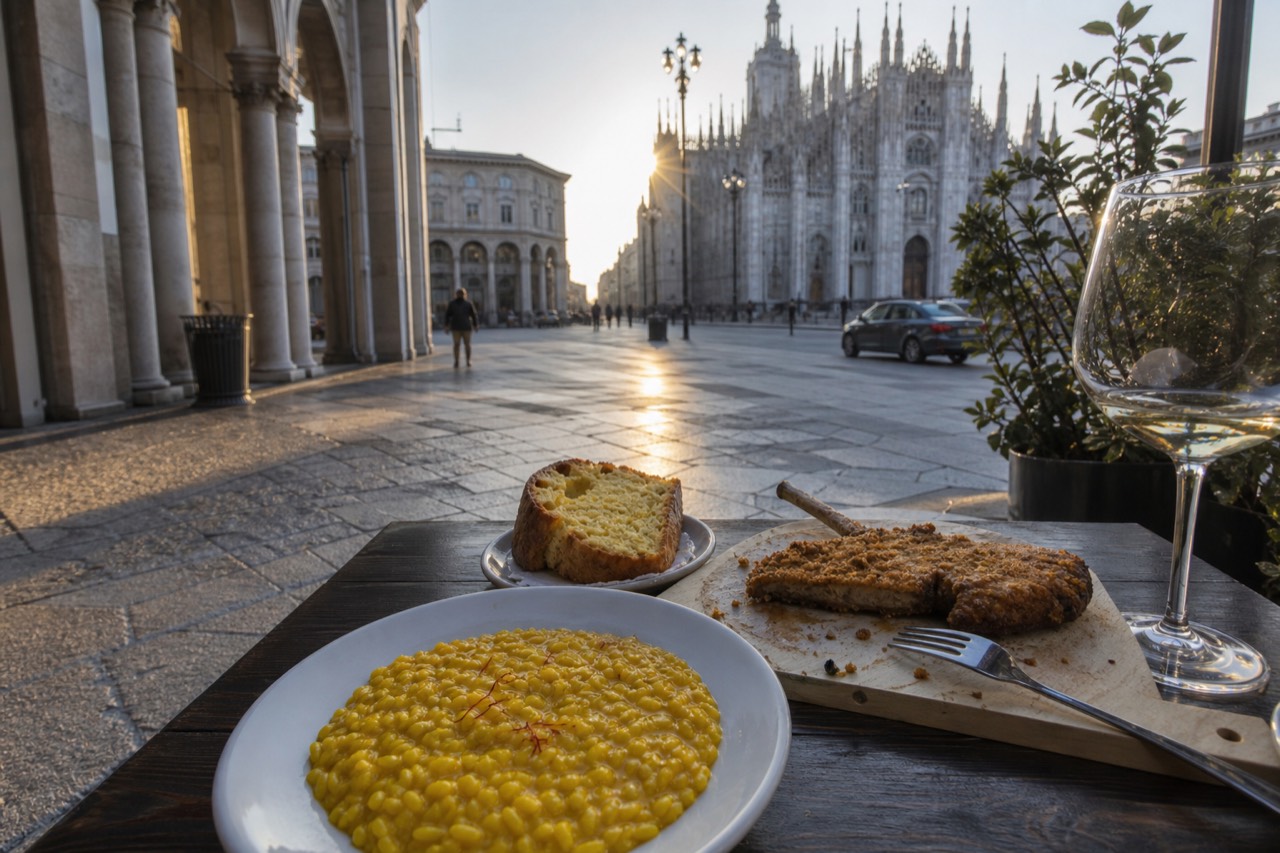
Milan's defining plates are risotto alla milanese, cotoletta alla milanese, ossobuco, cassoeula, mondeghili, michetta, and panettone. All carry the Comune di Milano's De.Co. municipal recognition, but none holds an EU DOP, IGP, or STG designation. Tasting tours like the 3-hour downtown walk start from $116 per person and cover several of these dishes.
Risotto alla milanese got its municipal recognition from the Comune di Milano in 2007, but the dish carries no EU quality label. That distinction matters more than most visitors realize. Before planning your meals, understand that Milan Food Tours is built on this correction: Milan's cooking is butter, rice, saffron, and veal, not the tomato-and-basil shorthand many travelers expect.
A visitor landing in Milan with a southern Italian mental map will struggle to order well. This is the northern half of the country, where butter replaces olive oil, rice replaces pasta as the first-course staple, and long braises replace quick tomato sauces. The dishes below are not an exhaustive list of everything you can eat, but they are the ones that define the city's identity and appear most often on local menus. Learning them before you sit down is the difference between a meal that tells you where you are and one that could have been served anywhere.
What Food Is Milan Famous For?
Milan is famous for risotto alla milanese, a saffron-infused rice dish, and cotoletta alla milanese, a breaded veal chop. Also essential are ossobuco, a braised veal shank with marrow, cassoeula, a slow-cooked cabbage and pork stew, mondeghili, fried meatballs, michetta, the airy local roll, and panettone, the sweet Christmas bread. All are municipal De.Co. designations but none holds an EU label.
The core of this list reflects Lombardy's geography and climate. Rice grows in the Po Valley, butter and cheese come from dairy country, and veal is a staple protein. Saffron, once a luxury spice, gives risotto its deep yellow color and distinctive flavor. Unlike southern Italian cooking built on olive oil and tomatoes, Milan's repertoire leans on braising, slow simmering, and rich, filling combinations meant for colder weather.
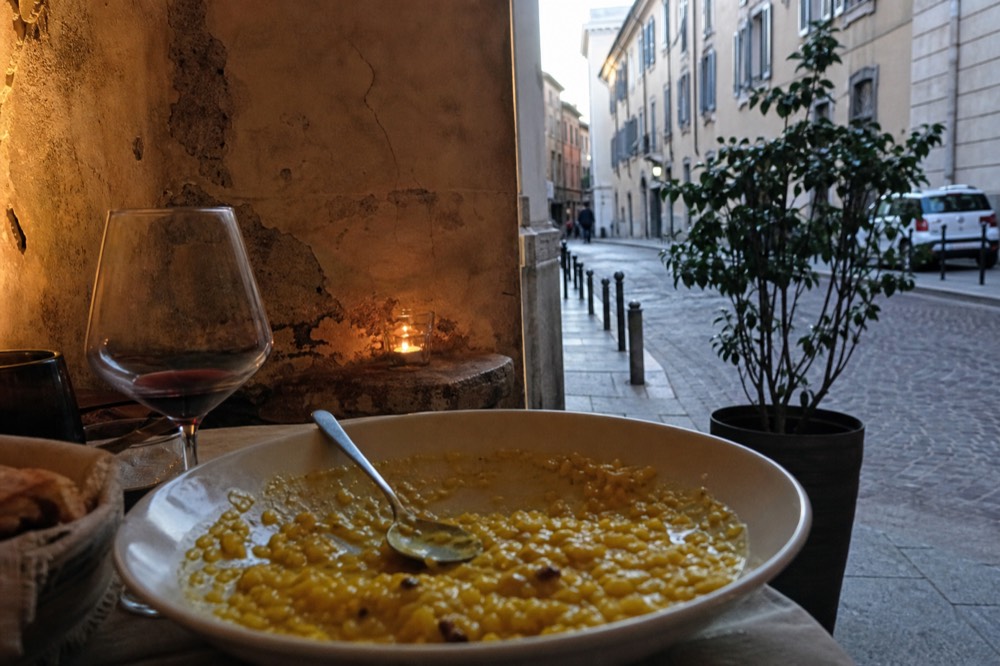
What surprises many visitors is that Milan's most famous dishes are also everyday food. Risotto appears on home tables, michetta is sold in every bakery, and mondeghili turn leftovers into a proper second course. The fame comes not from rarity but from how completely the city's ingredients and climate shaped its cooking. Every dish on this list ties back to the Po Valley and the northern Italian larder.
What Is A Common Dish In Milan?
A common dish in Milan is risotto alla milanese, often served as a first course with ossobuco or on its own. For everyday eating, michetta is the standard bread roll, and mondeghili are the fried meatballs made from leftovers. Cotoletta alla milanese appears as a main course, and panettone is reserved for the Christmas season.
The most common plate on a Milanese table is still risotto, but everyday eating also means michetta at breakfast or lunch and leftover meat transformed into mondeghili. These are not festival dishes; they are the routine food that kept working families fed. Cotoletta is more of a restaurant or Sunday dish because it uses a thick veal chop, while panettone is strictly seasonal. The table below maps each staple to its usual role.
| Dish | Common context | Typical season |
|---|---|---|
| Risotto alla milanese | First course, often with ossobuco | Year-round |
| Michetta | Bread at meals | Year-round |
| Mondeghili | Appetizer or second course | Year-round, more in cold months |
| Cotoletta alla milanese | Main course | Year-round |
| Panettone | Dessert, Christmas | November to January |
Because these dishes are so central, a tasting tour that skips risotto and only serves pizza or gelato is not giving you Milan. The 7 Tastings, Risotto and Wine tour names risotto in its title and builds the route around it. That specificity is useful when you are picking among the many generic food walks in the city.
The De.Co. Register: The Municipal Recognition Nobody Mentions
The Comune di Milano created its De.Co. (Denominazione Comunale) register through Giunta resolutions 3057 of 14 December 2007 and 620 of 2008. It lists panettone, michetta, cassoeula, risotto alla milanese, ossobuco, minestrone alla milanese, cotoletta alla milanese, mondeghili, rostin negaa, and barbajada. In 2026, pan de Mej joined the register, tied to San Giorgio on 23 April.
De.Co. is a municipal recognition of territorial belonging, not an EU quality guarantee. That is the error almost every competitor makes: calling these dishes "protected" or "DOP" when no Milanese classic holds any EU designation. The De.Co. register simply says a dish belongs to Milan, a statement of local identity backed by two city resolutions. You can read the full register on the Comune di Milano's food policy page.
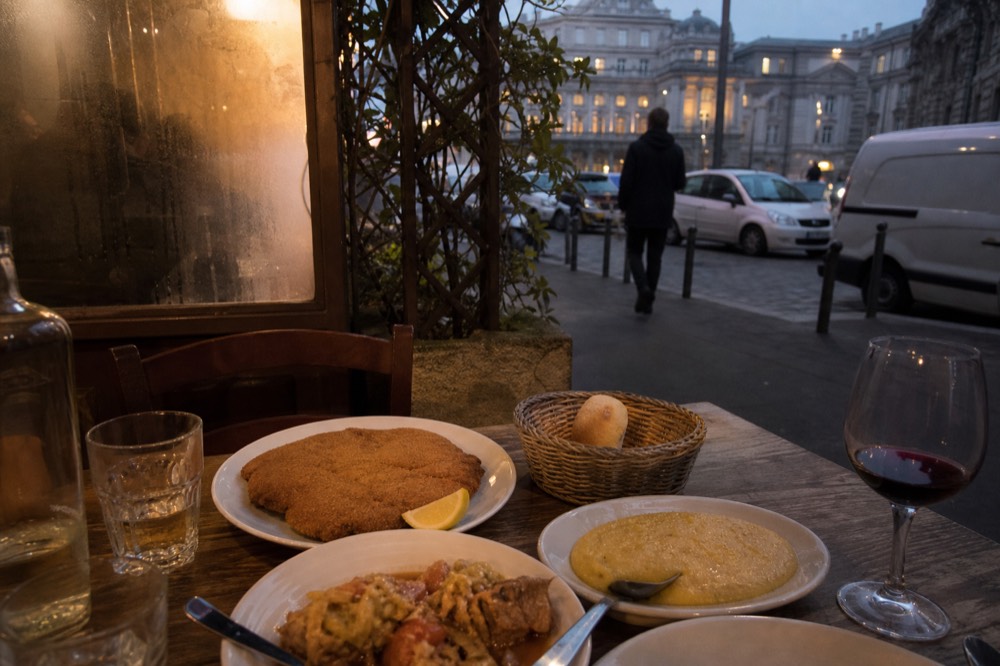
Here is the complete De.Co. table with the year each product was recognized:
| Product | De.Co. year |
|---|---|
| Panettone | 2007 |
| Michetta | 2007 |
| Cassoeula | 2007 |
| Risotto alla milanese | 2007 |
| Ossobuco | 2007 |
| Minestrone alla milanese | 2008 |
| Cotoletta alla milanese | 2008 |
| Mondeghili | 2008 |
| Rostin Negaa | 2008 |
| Barbajada | 2008 |
| Pan de Mej | 2026 |
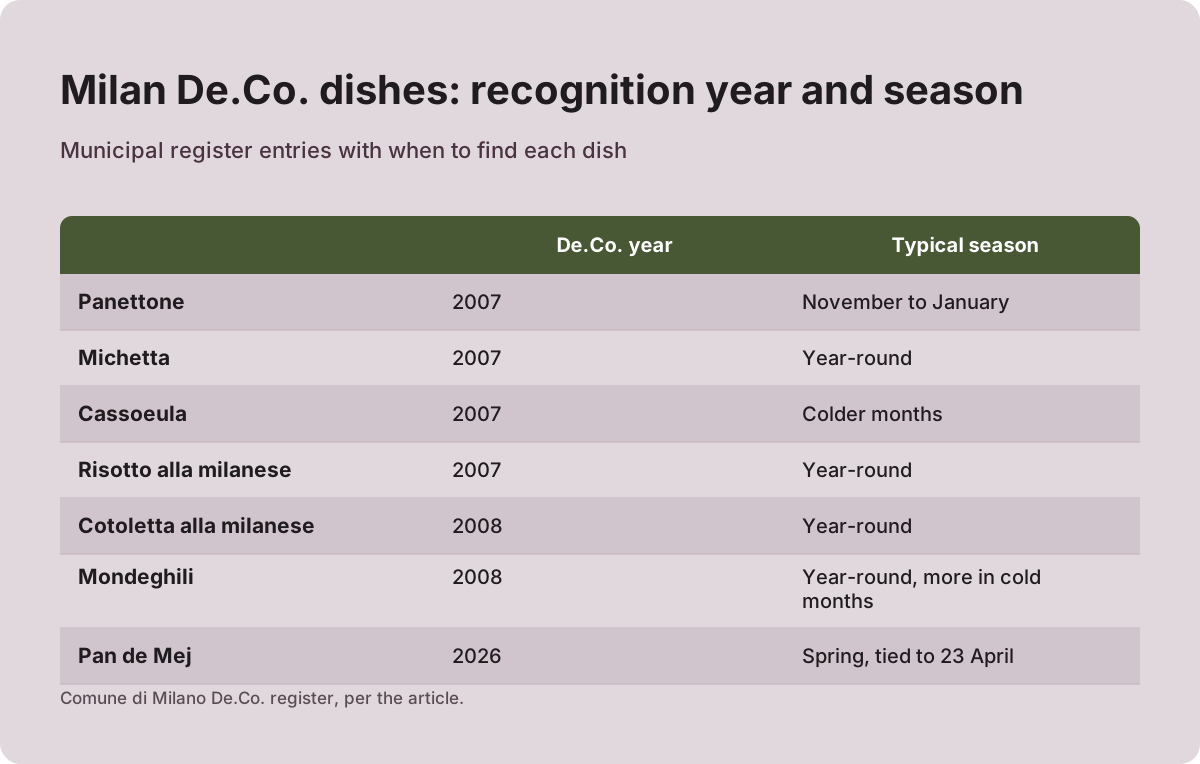
Pan de Mej is the freshest fact on this page. The Comune tied its 2026 De.Co. recognition to the feast of San Giorgio on 23 April, a fixed spring date almost no visitor guide mentions. That date is a real seasonal hook for anyone planning a spring food trip, and it shows the register is still active, not a closed museum list.
For a single walk that gives you risotto, wine, and several other Milan plates, the downtown tasting tour below covers the essentials in three hours. It starts from $116 per person and holds free cancellation up to 24 hours before departure.
Each product on the register carries a precise, if informal, recipe framework that Milanese cooks recognize. Panettone, for instance, is a tall, dome-shaped sweet bread leavened naturally over days, studded with candied orange, citron, and raisins. Michetta, the city’s star-shaped roll, is defined by its hollow, airy interior and crisp crust, a structure that makes it ideal for sopping up sauces but useless for sandwiches. Cassoeula, a winter dish, marries pork ribs, rind, trotter, and sometimes snout with savoy cabbage, cooked slowly until the meat falls apart. Risotto alla milanese owes its golden hue to saffron threads steeped in hot broth, added at the end to preserve their aroma. Ossobuco, a cross-cut veal shank braised with white wine and vegetables, is its natural companion, the marrow spooned from the bone a prized gesture. Minestrone alla milanese is a thick vegetable soup enriched with rice and often a Parmesan rind, while cotoletta alla milanese is a bone-in veal chop, breaded and fried in butter, a cousin to the Viennese version but notably thicker. Mondeghili are spiced meatballs born from leftover roasts, bound with bread and milk, then fried; rostin negaa (“drowned roasts”) take similar meatballs and simmer them in a tomato and butter sauce. Barbajada, a warming drink of whipped coffee and chocolate, was a 19th-century café staple. Pan de Mej, the newest entry, is a soft, yellow cake made from cornmeal and elderflower, traditionally eaten on St. George’s day with a glass of milk.
The De.Co. recognition does not impose rigid production specifications. Instead, the Comune’s food policy office, working with local associations, documents the historical recipe and the dish’s ties to Milanese households, markets, and festivals. The register’s quiet expansion, from ten products in 2008 to eleven in 2026, reflects a deliberate pace: each addition requires evidence of long-standing local practice, not just commercial interest. That slow growth makes the list a reliable snapshot of what Milan actually eats, rather than a marketing catalogue.
Risotto Alla Milanese And Ossobuco: The Saffron And Veal Marrow Plate
Risotto alla milanese is a slow-stirred rice dish colored with saffron and finished with butter and grated Grana Padano, traditionally served as a bed for ossobuco. Ossobuco is a cross-cut veal shank braised with vegetables and white wine, valued for its marrow. The combination is the most complete expression of Milan's butter-and-rice cooking.
The saffron comes from the flower's dried stigmas, and it turns the rice a deep gold. A proper risotto alla milanese is not soupy or dry; it should spread slowly on the plate. The ossobuco sits beside or on top, its marrow spooned out and mixed into the rice for extra richness. In traditional kitchens the veal shank is cut crosswise to expose the bone and cooked until the meat starts to pull away.
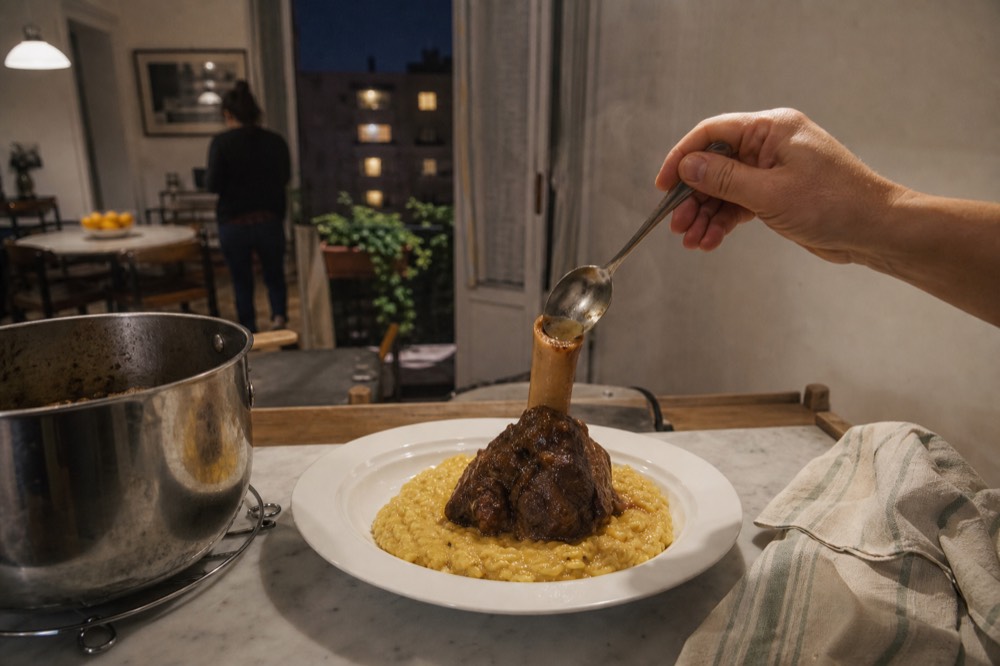
A plate of risotto in a normal Milanese trattoria costs more than a neighborhood pizzeria meal and less than a starred dining room, with menus posted at the door. The exact figure varies by room and season, but it is a first course or a shared starter, not a luxury by Milan standards. The 7 Tastings, Risotto and Wine tour covers this dish as one of its seven stops, pairing it with local wine across a three-hour downtown route. It is one of the few tours that names risotto explicitly in its listing rather than burying it under generic tastings.
For a deeper dive into how the saffron, rice, and broth come together, see our guide on making risotto alla milanese at home.
Cotoletta Alla Milanese: The Veal Chop That Confuses Visitors
Cotoletta alla milanese is a thick, bone-in veal chop coated in breadcrumbs and fried in butter, not a thin escalope. Milan's De.Co. register recognized it in 2008. Unlike Wiener schnitzel, the Milanese version is cooked on the bone and typically reaches the table pink at the center in traditional kitchens.
The most common mistake is assuming cotoletta alla milanese is just an Italian schnitzel. The Milanese version is cut from the rib or loin, kept on the bone, and fried with the bone in. The crumb is pressed on and the chop is cooked in clarified butter, which gives a different flavor from the neutral oil often used for schnitzel. Some local kitchens still serve it rare enough that the center stays pink, something a thin escalope could never do.
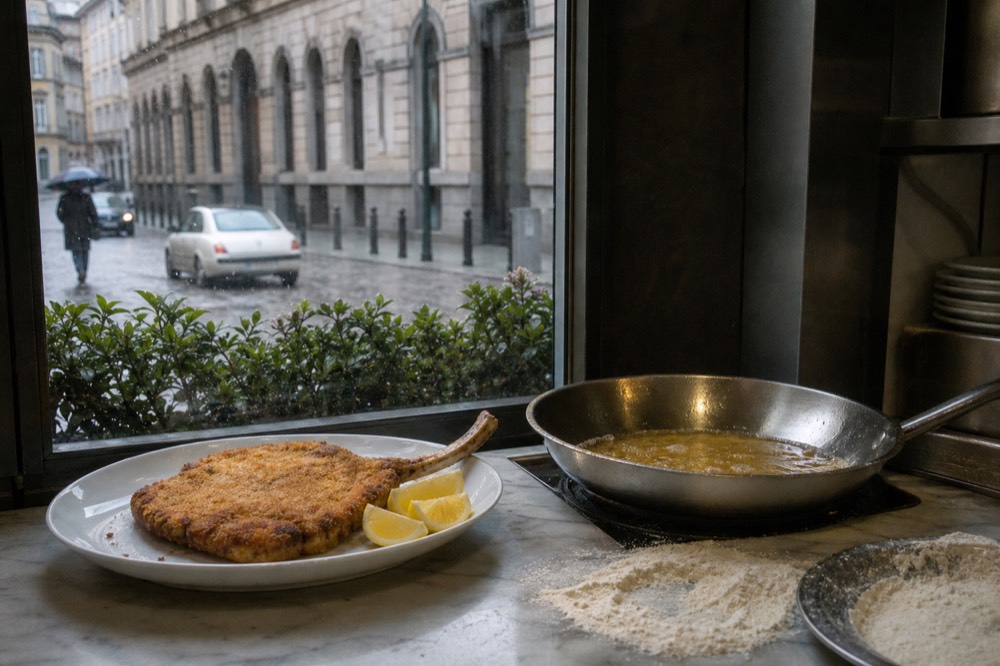
Because the cut is thick and on the bone, it is often ordered as a single main course rather than a starter. When you see cotoletta on a menu, ask whether it is bone-in and cooked in butter, because many tourist-targeted kitchens serve a thinner version. The De.Co. recognition does not enforce thickness or cooking method; it simply states that the dish belongs to Milan. A fixed-menu tasting tour can be a safer way to try the proper version than ordering blind in a random restaurant.
Cassoeula And Mondeghili: The Working-Class Classics
Cassoeula is a long-simmered cabbage and pork stew using cuts like ribs, rind, and sausage, recognized De.Co. in 2007. Mondeghili are fried meatballs made from leftover boiled or roasted meat, bread, egg, and cheese, added to the register in 2008. Both are winter dishes tied to Milan's colder months.
Cassoeula appears on menus from late autumn through winter because it depends on cabbage after the first frost, which softens the leaves. The stew uses the less expensive pork cuts: ribs, rind, trotters, and sometimes sausage. It cooks for hours until the cabbage breaks down and the pork fat melts into the broth. Mondeghili started as a way to use leftover meat, mixed with bread and egg, shaped into patties or balls, and fried until crisp.
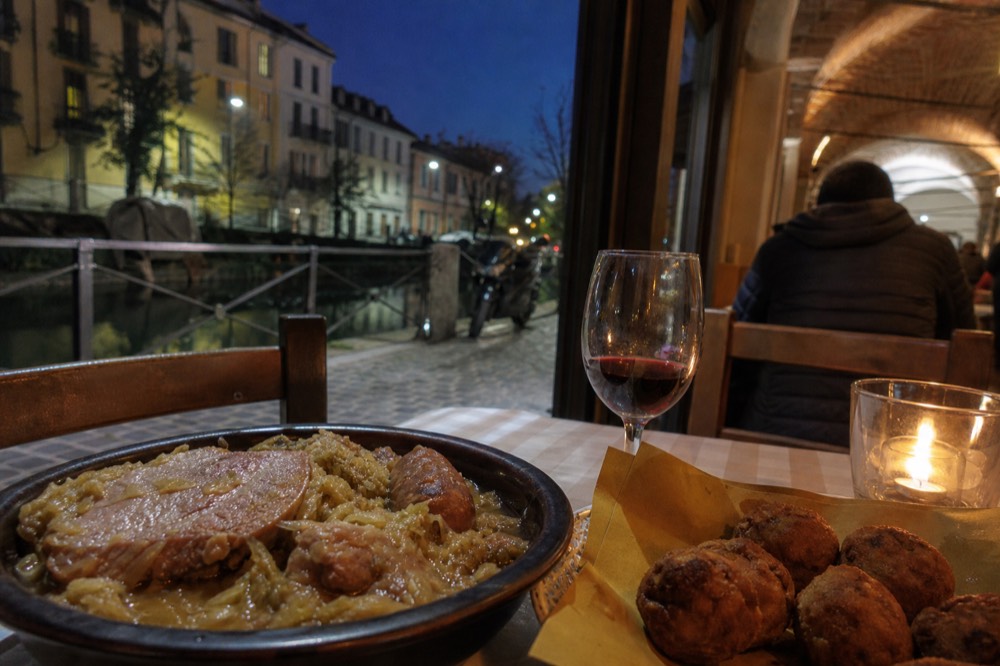
These two dishes rarely appear on the typical tourist tasting itinerary. The 7 Tastings tour focuses on risotto, wine, and central-market stops, not on long-braised cassoeula. If you want to try them, look for a traditional trattoria in the colder months and ask before ordering; many kitchens only prepare cassoeula on certain days. Mondeghili are easier to find year-round, often served as a fried appetizer.
Michetta And Panettone: The Bread And The Protected Christmas Cake
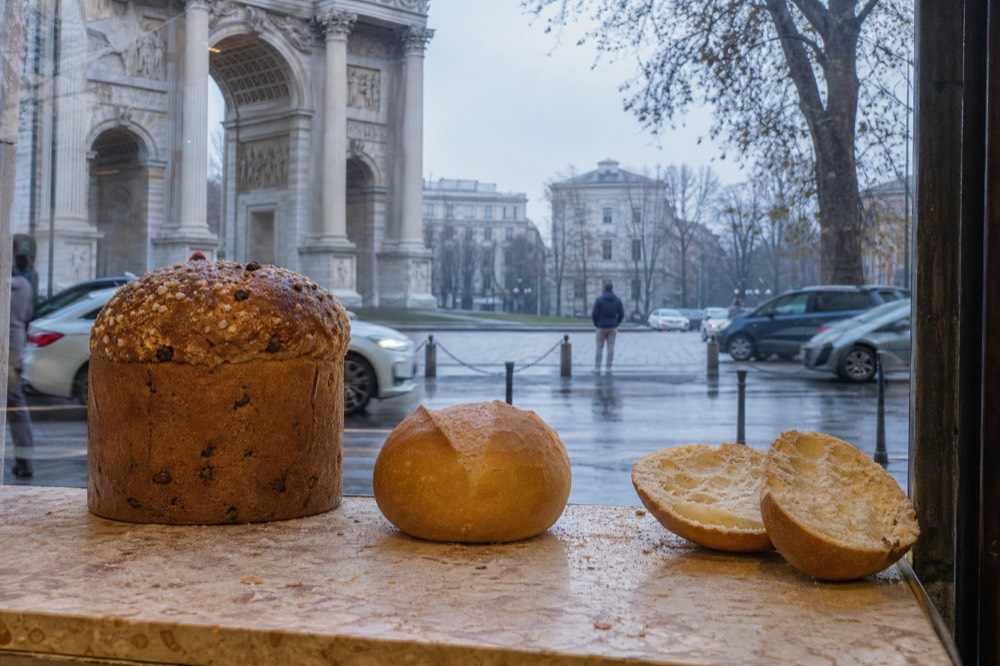
Michetta is Milan's airy, star-shaped bread roll with a hollow center, recognized De.Co. in 2007. Panettone, the sweet, dome-shaped Christmas bread, is not DOP or IGP but is defined by the Decreto Ministeriale 22 luglio 2005. The decree sets minimums of 16% butter, 4% egg yolk, and 20% raisins and candied citrus.
Michetta is the daily bread of Milan, distinct from a French baguette by its hollow center and crisp crust. Panettone is the city's most famous export, but it is legally defined not by an EU seal but by a national sale-name decree. The 2005 decree reserves the word "panettone" for a naturally leavened, round-based product with specific ingredient minimums and a characteristic cut top.
The full text of the decree is published in the Gazzetta Ufficiale of 1 August 2005. Its key minimums are:
| Ingredient | Minimum required |
|---|---|
| Butterfat | 16% |
| Egg yolk | 4% |
| Raisins and candied citrus | 20% |
Artisan panettone in Milan can cost more than EUR 50 per kilogram during the Christmas season, with Marchesi and Gattullo both listed at that level in 2025. A Resmart analysis reported by Food Affairs headlined a 55% rise over five years. The De.Co. recognition from 2007 is municipal; the production rules are national. Neither is an EU quality label, but both shape what can legally be sold as panettone. For the holiday context, the same 2005 decree also defines pandoro with at least 20% butterfat, a useful contrast if you are weighing the two sweets.
Which Tasting Tours Actually Feed You These Dishes?
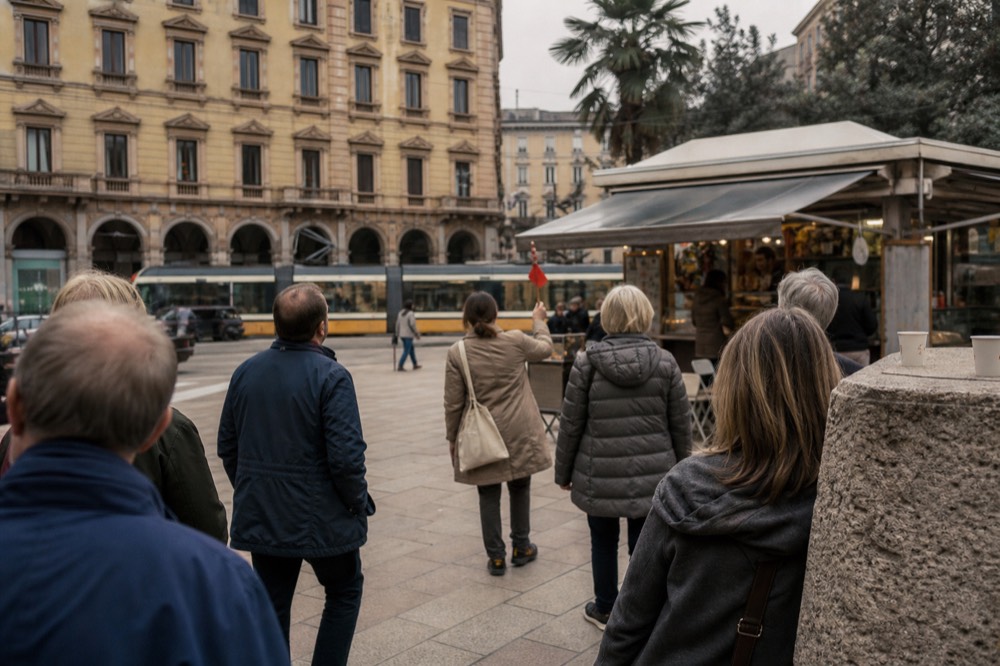
A well-chosen tasting tour can cover risotto, cotoletta, and other plates in a single walk, but each tour has a different focus. The 7 Tastings, Risotto and Wine tour includes risotto and wine and runs 3 hours from $116 per person. The Premium Tastings walk covers gourmet stops over 3.5 hours from $87.55, and the 2.5-Hour Street Food Walk starts at $57.
The 7 Tastings, Risotto and Wine tour is the only one on this roster that names risotto in its decision name. It is a small-group walk through the downtown area with seven food stops, including risotto and wine, and starts at $116 per person. The tour holds free cancellation up to 24 hours before departure.
The Premium Tastings, Do Eat Better tour runs 3.5 hours and covers gourmet stops with a broader range of small plates. It starts from $87.55 per person and has a rating of 4.9 across 288 reviews. It is less about a single signature dish and more about the overall quality of Milan's food scene.
The 2.5-Hour Street Food Walk is the budget-friendly option at $57 per person, covering street food rather than sit-down risotto or ossobuco. It holds 4.7 across 934 reviews and is a good way to sample the faster side of Milan's food if you only have a short stay.
Here is how the three tours compare on price, duration, and focus:
| Tour | From price | Duration | Focus |
|---|---|---|---|
| 7 Tastings, Risotto and Wine | $116 | 3 hours | Signature dishes, risotto and wine |
| Premium Tastings, Do Eat Better | $87.55 | 3.5 hours | Gourmet small plates |
| 2.5-Hour Street Food Walk | $57 | 2.5 hours | Street food and quick bites |
For a broader look at how these fit into a full meal plan, see our guide to Milan street food.
How Does Milan's Food Calendar Shape A Visit?
Pan de Mej joined the De.Co. register in 2026 and is tied to San Giorgio on 23 April, a fixed spring date. Gorgonzola DOP production hit a record 5,421,517 wheels in 2025, and Italian cuisine was inscribed on UNESCO's Intangible Cultural Heritage list on 10 December 2025. White truffle season in Piedmont runs 1 October to 31 January for day-trip pairing.
Milan's food identity has a calendar, and it pays to know the dates. Pan de Mej's spring feast day gives visitors a reason to look for the sweet cornmeal cake in late April. The Gorgonzola DOP record from 2025, with production value above EUR 460 million, shows how central Lombardy's cheese economy remains.
The Gorgonzola consortium's own release reports the record and notes that Gorgonzola DOP production in 2025 rose 2.72% over the prior year. Piedmont made 3,962,282 wheels and Lombardy made 1,459,235. The spicy type fell 5.42% to 698,880 wheels, about 13% of the total.
White truffle season in Piedmont, from 1 October to 31 January, is relevant for anyone considering a day trip from Milan. The 96th Alba truffle fair runs 10 October to 6 December 2026. That is a separate culinary region from Milan, but it pairs well with a city stay focused on these northern dishes. The UNESCO inscription for Italian cuisine as a whole, decided unanimously in New Delhi, reinforces why a food-focused trip benefits from knowing the local context before you order.
Milan's essentials can be summed up in a handful of dishes, but each one carries a specific legal and seasonal context. The questions below cover what the city is famous for, what counts as a common dish, whether any Milanese classic holds EU protection, how cotoletta differs from schnitzel, and what actually goes into a proper panettone.
Common Questions About What To Eat In Milan
What Food Is Milan Famous For?
Milan is famous for risotto alla milanese, cotoletta alla milanese, ossobuco, cassoeula, mondeghili, michetta, and panettone. All are De.Co. municipal recognitions, and none holds an EU DOP, IGP, or STG designation.
What Is A Common Dish In Milan?
A common everyday dish is risotto alla milanese, a saffron rice dish often served with ossobuco. Michetta is the common bread roll, and mondeghili are a traditional fried meatball made from leftovers.
Is Risotto Alla Milanese DOP Protected?
No. Risotto alla milanese holds De.Co. municipal recognition from the Comune di Milano, but it has no EU DOP, IGP, or STG status. Calling it "protected" or "DOP" is incorrect.
Is Cotoletta Alla Milanese The Same As Wiener Schnitzel?
No. Cotoletta alla milanese is a thick, bone-in veal chop fried in butter, while Wiener schnitzel is typically a thin, boneless cut fried in oil. The Milanese version is often served pink at the center.
What Is Panettone Made Of?
Panettone is a naturally leavened sweet bread with minimums set by the 2005 decree: at least 16% butter, 4% egg yolk, and 20% raisins and candied citrus.