What Is The Difference Between Cotoletta And Schnitzel?
Milan's cotoletta alla milanese and Vienna's schnitzel share a breaded look but differ on the bone, the fat, and the legal record.
What Is The Difference Between Cotoletta And Schnitzel?
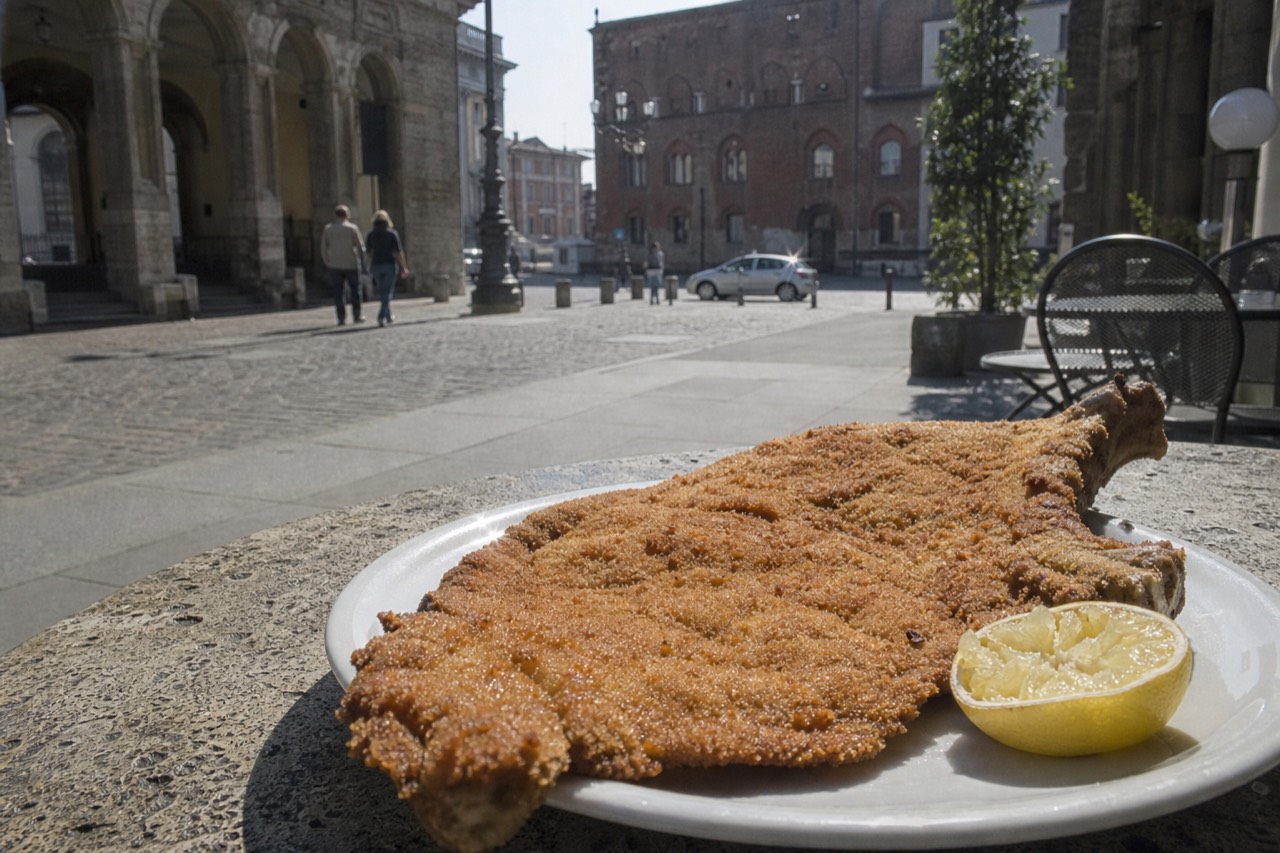
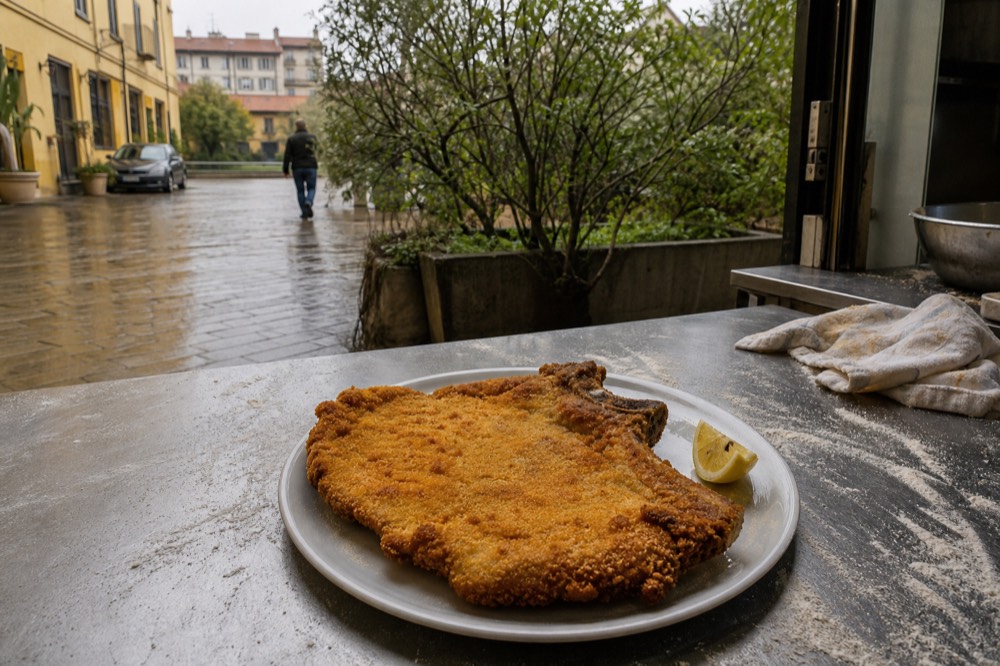
Cotoletta alla milanese is a thick, bone-in veal cutlet fried in butter, while schnitzel is a boneless cutlet typically made from veal or pork and cooked in oil or lard, which changes the crust, the moisture, and the way the meat sits on the plate.
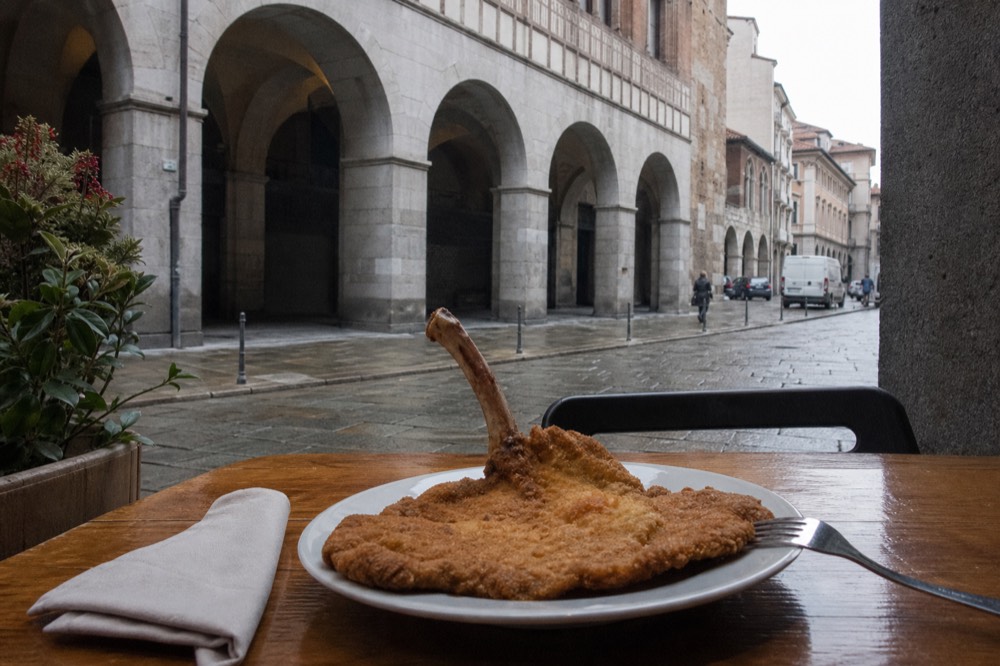
The visual shorthand is enough: both are breaded, golden, and served with a wedge of lemon, often beside a simple green salad. But the first bite tells the difference. A cotoletta alla milanese keeps the rib bone attached, and the meat stays closer to a chop, which means it can be thicker and juicier in the centre. Schnitzel, by contrast, is pounded thin, so the crust covers a wider surface and the meat is more uniform. The fat matters too. Milan's version is typically fried in butter, while schnitzel is usually cooked in oil or lard.
Visitors often come to Milan Food Tours looking for exactly this comparison before they book a tasting walk. On a plate, the two dishes can pass as cousins, but in a Milanese kitchen they are treated differently. A cotoletta alla milanese is not a schnitzel with the bone left in. The cut, the thickness, and the cooking fat all pull in different directions.
The name also carries weight. Cotoletta alla milanese appears on the Comune di Milano's De.Co. register, a local list of traditional products. Schnitzel has no such municipal recognition in Milan, and neither dish sits on the EU's protected designation lists. That legal gap is one of the most misunderstood parts of the comparison: De.Co. is not an EU label and does not work like DOP. It is an attestation of territorial belonging.
| Attribute | Cotoletta alla Milanese | Schnitzel |
|---|---|---|
| Cut | Thick veal chop | Thin boneless cutlet |
| Bone | Bone in | Bone out |
| Meat | Veal | Veal or pork |
| Cooking fat | Butter | Oil or lard |
| Milan municipal status | De.Co. since 2008 | None |
| EU protection | None | None |
A guided tasting walk through the centre is a practical way to meet the dish in its own city.
Does Cotoletta Alla Milanese Have A Protected EU Status?
Cotoletta alla milanese sits on the Comune di Milano's De.Co. register, a municipal list of traditional local products, since 2008, but it has no EU DOP, IGP or STG protection, so the label is about local identity, not a quality or origin guarantee.
The De.Co. entry is real and dated. The Comune di Milano's food policy page lists cotoletta among the products recognised under the municipal system. The designation came through a delibera of the Comune, and the year attached to it is 2008. It is not a European classification, and no EU DOP, IGP or STG entry exists for the dish. The MASAF DOP/IGP list does not include cotoletta alla milanese.
This matters because menus and travel blogs sometimes imply the dish is protected. It is not. De.Co. is a municipal attestation: it says the product belongs to the local tradition, full stop. It does not limit where or how cotoletta can be made, and it does not stop a kitchen outside Milan from using the name. For schnitzel, the legal record is even thinner. There is no comparable Milanese designation, and the EU lists do not treat it as a protected regional product either.
The practical takeaway for a food lover is that cotoletta alla milanese is a named local specialty with a paper trail in the municipality, but it is not a controlled-term dish in the same way as Parmigiano Reggiano or Gorgonzola. The dish sits on a local register, not a European one. The distinction is useful when you see a menu that prints "DOP" next to the cutlet: that claim is wrong, because no EU designation applies to cotoletta, and the De.Co. label does not convert into DOP status.
"De.Co." stands for Denominazione Comunale, a municipal label used by Italian towns to highlight foods tied to local history. Milan’s register carries no regulatory power beyond the city limits: it is an inventory, not a certification. The 2008 delibera for cotoletta records the traditional preparation (thick veal chop, bone-in, breaded and fried in butter) and the dish’s historic link to the city, but it sets no mandatory ingredient list, defined production area, or inspection requirements of the kind needed for EU protection. Alongside cotoletta, the same register includes pan de mej, a traditional sweet bread, added in 2026, showing the list is still active. Yet none of these entries stop a kitchen outside Milan from using the name.
The UNESCO inscription of Italian cuisine in December 2025 added another layer of confusion. Some menus now cite it as if it gives individual dishes protected status. In fact, the listing celebrates the whole social and ritual fabric of Italian home cooking, not a single recipe. It offers no legal protection for cotoletta, and a “cucina italiana” mention on a menu is a cultural nod, not a designation that restricts the use of “Milanese” cutlets elsewhere.
For a visitor, the practical difference is clear. If a menu prints “cotoletta alla milanese DOP,” it is a marketing flourish; no EU designation applies. The only official home for the name is the municipal De.Co. register, a local nod that asks nothing of cooks outside Milan. When you see “De.Co.” on a menu, you’re looking at a claim of belonging, not a promise of regulated origin, and certainly not a mark that would survive a legal challenge beyond the Comune di Milano.
Which Food Tours Let You Eat Cotoletta In Milan?
A guided gourmet tasting tour is the most direct way to meet cotoletta alla milanese in the context of a broader Milanese spread, because most food walks either include a cutlet course or stop at the specialty shops that define the dish.
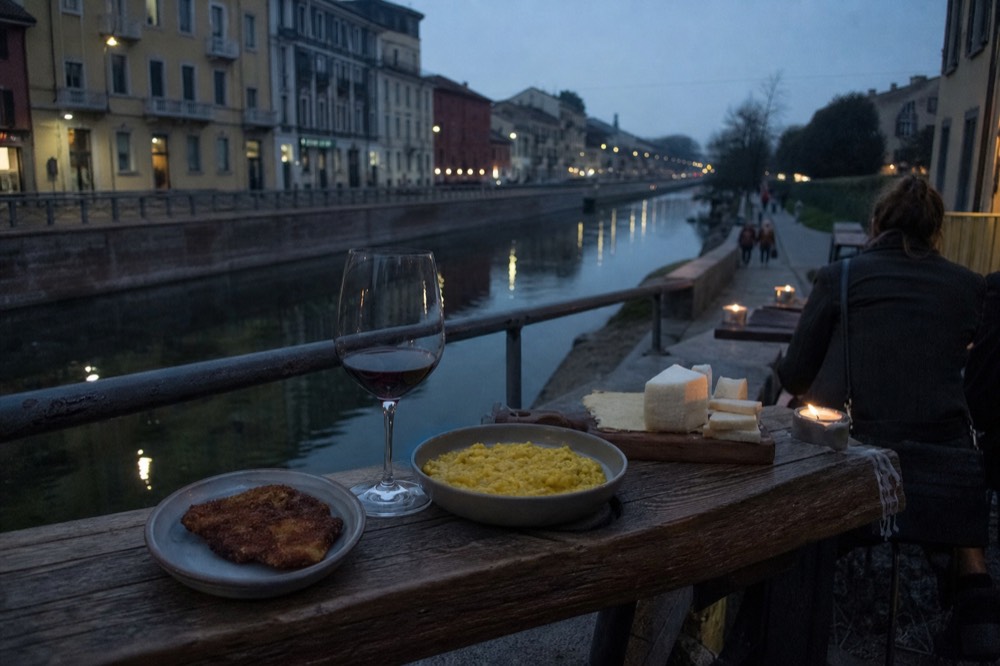
The roster of tasting tours on this site includes several small-group options that touch the classic dishes. The what to eat in Milan guide covers the full list, but for cutlet hunters the relevant tours usually pause at a salumeria, a wine bar, or a restaurant that serves the dish. Cotoletta rarely gets its own tour; it appears as one course inside a wider tasting menu of risotto, cheese, and wine.
| Tour decision name | Duration | Price | Rating |
|---|---|---|---|
| Premium Tastings, Do Eat Better | 3.5 hours | From $87.55 per person | 4.9 across 288 reviews |
| 7 Tastings, Risotto and Wine | 3 hours | From $116 per person | 5 across 19 reviews |
| History Walk, Wine Tasting | 3 hours | From $115 per person | 4.9 across 82 reviews |
The Premium Tastings, Do Eat Better walk is the closest match for readers who want the cutlet inside a curated Milanese sequence. It runs three and a half hours and stops at specialty shops rather than a single dining room.
A second option for readers who want more context is a small-group walk that builds a full meal around seven tastings, including risotto and wine. That format lets you compare cotoletta with the rest of the Milanese repertoire in a single sitting.
The History Walk, Wine Tasting pairs the dish with a broader historical loop through the centre, which is useful if you want to understand how the cutlet fits into Milanese dining culture rather than just tasting it. The three hour walk starts at $115 per person and carries a 4.9 rating across 82 reviews, with free cancellation up to 24 hours before departure. Each of these three tours handles the classic dishes differently, so the right pick depends on whether you want a specialty-shop crawl, a full meal structure, or a historical lens.
How Do Chefs Cook And Serve The Two Dishes?
The cooking difference starts with the cut: a cotoletta alla milanese is cut from the rib and keeps the bone, then it is fried in butter so the crust browns around the meat, while schnitzel is pounded thin, boned, and usually fried in oil or lard.
The serving logic changes too. A bone-in chop takes longer to cook through if it is thick, so Milanese cooks often use a hot pan and baste the cutlet in foaming butter. The bone also gives the diner a handle and keeps the meat attached to the rib, which some Milanese cooks argue protects the juices. Schnitzel, with no bone, is easier to flatten and cooks quickly, which is why it is often served across the whole plate. The crust on a thin cutlet covers more area, so the contrast between crunch and meat is more even.
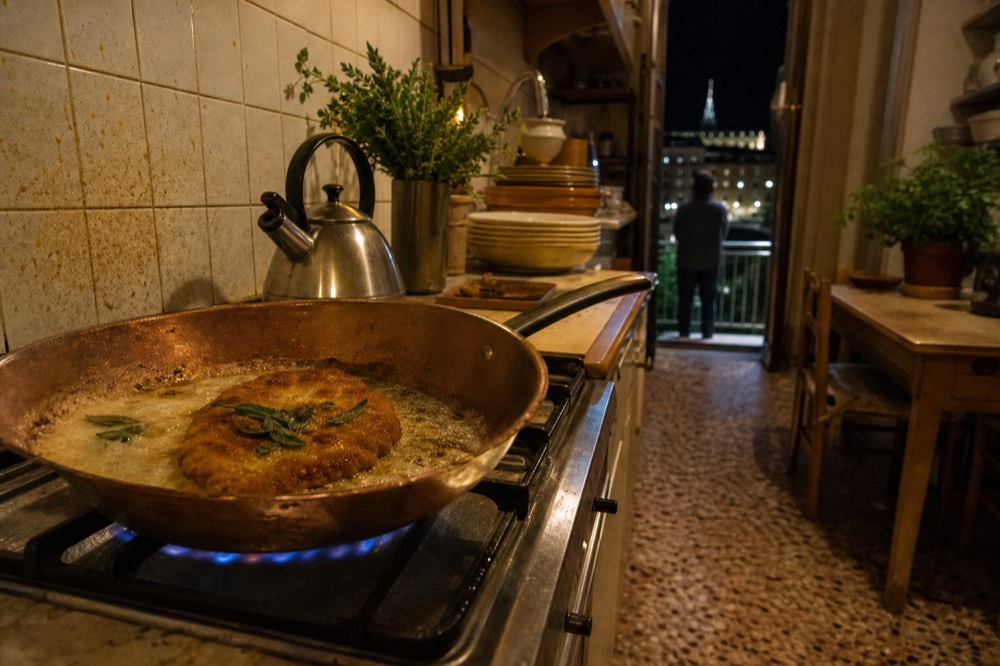
When you see a tour description promise a cotoletta course, it usually means the kitchen is serving the Milanese version: a thicker chop with a visible bone, golden from butter. If a menu offers a schnitzel, expect a boneless cutlet, sometimes pork, with a more uniform crust. The choice is not just about the name. It predicts the texture and the fat you will taste. The side dish also shifts: a Milanese plate tends to keep the garnish simple, often just lemon and a dressed green salad, while schnitzel appears with potato salad, cucumber, or lingonberry in the broader Austrian tradition. That difference is part of what makes a side-by-side tasting on a food tour so instructive.
This is the point where the related gourmet tour earns its place. The Premium Tastings, Do Eat Better walk is built around specialty shops rather than a single restaurant, so it frames cotoletta inside the wider code of Milanese eating. The three and a half hour walk starts at $87.55 per person and carries a 4.9 rating across 288 reviews.
Where Can You Find Each Dish In Milan?
Cotoletta alla milanese is found in traditional trattorias and old-school osterias throughout the city centre, especially in neighborhoods like Brera and Porta Romana, while schnitzel appears in Austrian-leaning restaurants and hotel dining rooms, often near the Central Station or in the city’s historic hotels.
Because cotoletta is not a controlled-term product, it appears on menus across the city in different cuts and qualities. The most reliable approach is to look for a restaurant that prints "cotoletta alla milanese" rather than a generic "breaded cutlet," because the De.Co. name signals an intention to follow the Milanese style. A schnitzel, by contrast, is often listed as "Wiener schnitzel" or simply "schnitzel," and the menu may specify pork or veal, which tells you the kitchen is following the Austrian template. Prices vary by neighbourhood and dining room, so check the menu before you order rather than assuming a fixed range. A food tour eliminates that guesswork by taking you to stops that already specialise in the classic formats.
| Setting | Dish served | What to expect |
|---|---|---|
| Traditional Milanese trattoria | Cotoletta alla milanese | Bone-in veal, butter-fried, often a daily special |
| Osteria con cucina | Cotoletta alla milanese | Thicker cutlet, simple lemon garnish |
| Austrian-style restaurant | Schnitzel | Boneless veal or pork, thin crust, potato or cucumber sides |
| Hotel restaurant | Schnitzel or cotoletta | Names may be used loosely; check the menu wording |
| Specialty food shop tasting stop | Cotoletta course | Small portion inside a larger Milanese spread |
For a guided route that already decides these choices for you, the three tasting tours listed earlier are the most efficient way to compare the dishes without spending several evenings testing restaurants one by one.
Does The Milan-Vienna Origin Argument Have A Clear Answer?
The Milan-Vienna dispute over which city first put a breaded cutlet on the plate is widely repeated, but the documents this site could verify settle only one fixed point: cotoletta alla milanese joined the Comune di Milano's De.Co. register in 2008.
No primary source gives an undisputed founding date for either dish. The claim that one city invented the breaded cutlet and the other copied it is not supported by the municipal paperwork. What is solid is the local recognition, and that is a different question from invention. A reader should treat the origin story as a culinary argument, not a documented fact. The bones and the butter are real; the first-city claim is not.
This is a useful lens for a food tour. When a guide or a menu says "the original cotoletta," ask what document the claim rests on. In most cases it rests on tradition, which is worth tasting but not the same as a date. The De.Co. register does not attempt to settle the origin. It simply records that the dish belongs to Milan's local culinary identity. The same healthy scepticism applies to the schnitzel side of the story, which often leans on an imperial legend that has no foundation in the sources available to this site.
For more on the city's classics beyond this dish, see our Milan street food guide.
Three tours in particular work well for readers who want to taste the difference without building the evening themselves.
The closing questions cover the most common confusions between the two cutlets: the bone, the cooking fat, the legal status, and where to taste each dish on a guided Milan food walk, plus the practical choices you face when a menu offers both.
Common Questions About Cotoletta And Schnitzel
What Is The Difference Between Cotoletta And Schnitzel?
Cotoletta alla milanese is a thick, bone-in veal cutlet fried in butter, while schnitzel is a boneless cutlet usually made from veal or pork and cooked in oil or lard. The Milan version keeps the rib bone and has a more irregular, juicy centre; schnitzel is pounded thin for an even crust.
Is Cotoletta Alla Milanese A Protected EU Food?
No. It sits on the Comune di Milano's De.Co. register, a municipal list, but it has no EU DOP, IGP or STG designation. De.Co. is a local attestation, not a quality guarantee.
Why Does Cotoletta Have The Bone In?
The bone is part of the chop cut, and many Milanese cooks leave it in because it helps the meat stay attached and provides a handle. It also slows the cooking slightly, which can keep the centre moist.
Can You Use Pork Instead Of Veal In Cotoletta?
Traditional cotoletta alla milanese uses veal. Schnitzel is more commonly made with pork or veal, which is one of the clearest differences between the two dishes.
Where Can You Try Cotoletta On A Food Tour In Milan?
The Premium Tastings, Do Eat Better walk and the 7 Tastings, Risotto and Wine tour both include classic Milanese courses in a guided format. Check the live listing for current prices and booking details.
Does The Milan-Vienna Origin Argument Have An Answer?
No. The only fixed date is the De.Co. recognition in 2008. The origin story remains a culinary argument, not a documented fact.