What Pizza Is Milan Known For?
Milan is known for pizza al trancio slabs sold by weight, a contemporary high-hydration dough scene, and strong Neapolitan imports: here is what each style actually is, and what changed in 2025 and 2026.
What Pizza Is Milan Known For?
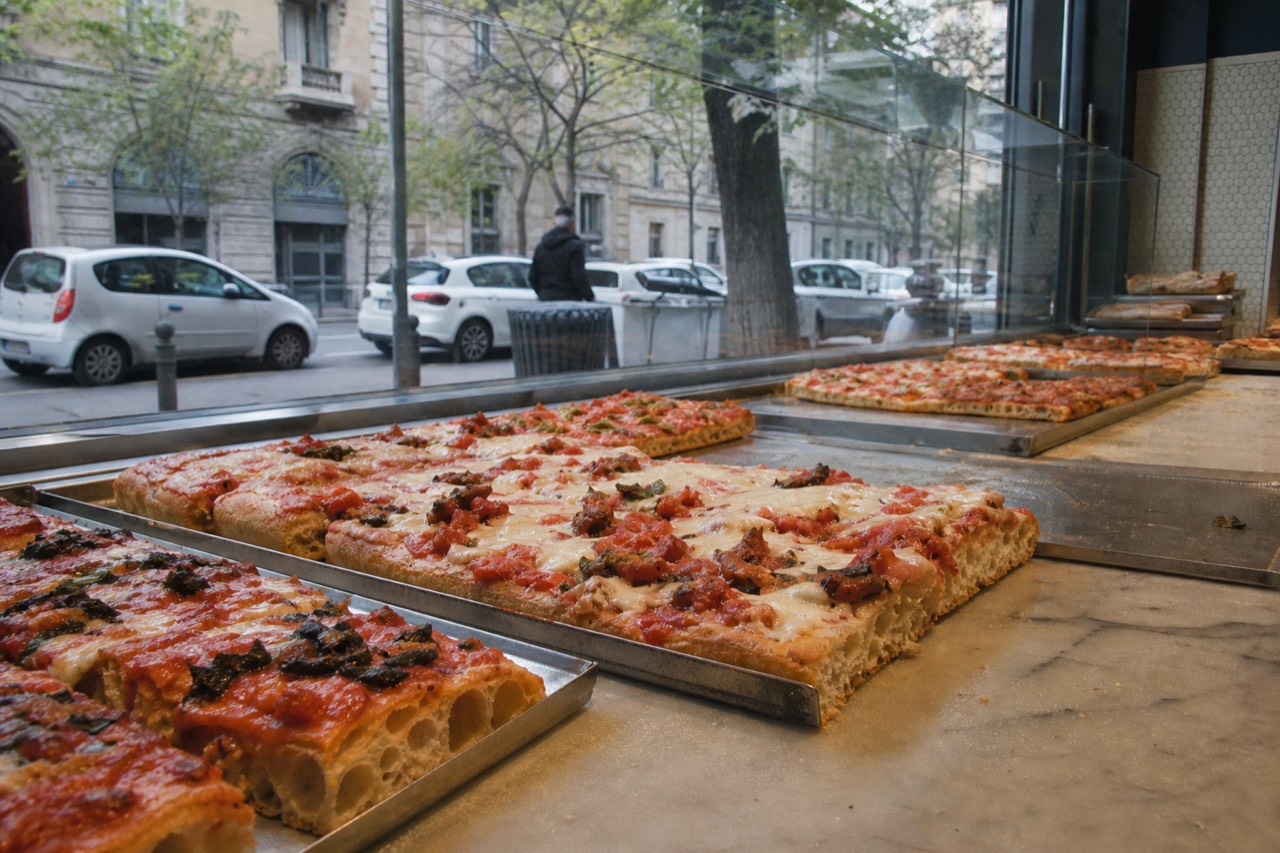
Milan is known for pizza al trancio, thick rectangular slabs sold by weight and eaten standing or on the go, plus a distinctly contemporary high-hydration dough scene that has given the city a pizza scene of its own, distinct from Naples and Rome. Alongside both sits a deep bench of Neapolitan imports. None of the three is the same argument as Naples, and understanding the difference is the whole point.
Naples has a rulebook: a protected style, a codified bake, an identity built on soft centres and blistered edges. Milan has never had one, and that is not a failure of authenticity but the character of the place. This is a city of bakeries, markets and lunch counters, where pizza competes with focaccia, michetta rolls and panini for the midday crowd. The trancio grew out of that bakery tradition: dough with olive oil in it, baked in deep rectangular pans, cut into slabs and priced by weight at the counter.
Around that foundation, the last decade has added a second Milanese identity, the contemporary pizzeria. These are rooms where the dough is the headline: long fermentation, high hydration, flour blends that read like a sommelier's list, bakes that sit somewhere between Naples and Rome and refuse to belong to either. And then there are the Neapolitan imports, pizzerias run by Neapolitan pizzaioli or trained in that tradition, which thrive in Milan precisely because the city has no style of its own to defend.
If you want to taste your way through all three, a guided walk is the most efficient introduction, and a class is the deepest dive.
The distinction matters for travellers because it changes what you should order and where. A visitor who arrives expecting Naples will be puzzled by a trancio counter, then delighted once they understand it. A visitor who only eats at Neapolitan rooms will leave having tasted a style they could have had in half of Europe. The Milanese answer is to eat across the whole spread, and this piece explains what each part of it actually is, dough and all. For where to eat each style, our full Milan pizza guide maps the rooms; this article is about the styles themselves.
What Is Pizza Al Trancio And Why Is It Milan's Own?
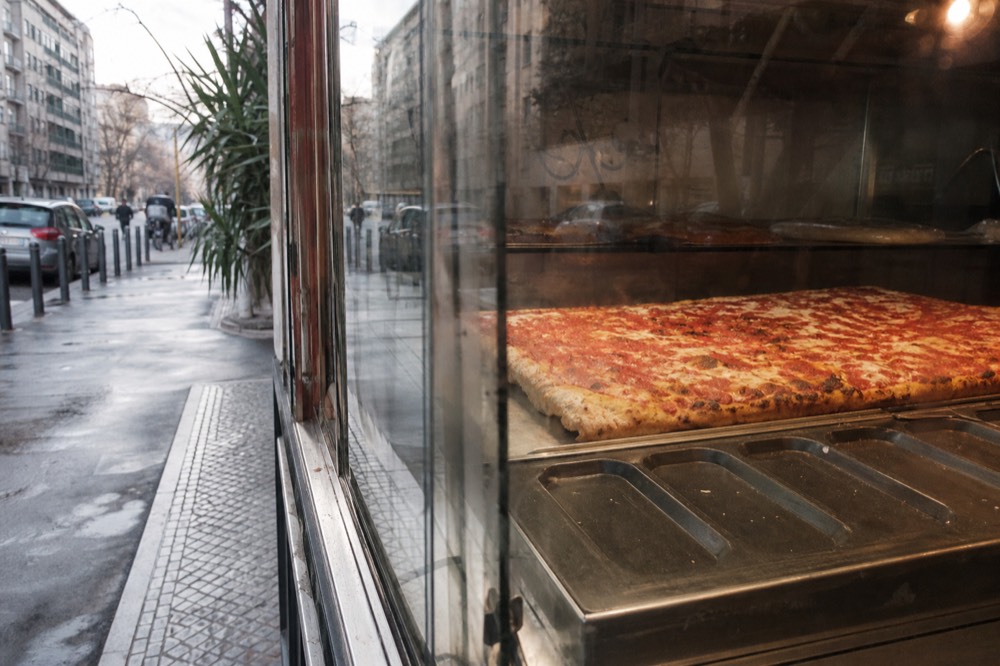
Pizza al trancio is a thick-crusted, rectangular pizza baked in oiled pans, cut into slabs and sold by weight, and it is the closest thing Milan has to a native pizza style. The dough is enriched with olive oil, the base is tall and airy with a crisp fried edge from the pan, and toppings are simple: tomato, mozzarella, maybe anchovies or wurstel. You order a slice, it goes on the scale, you pay per etto.
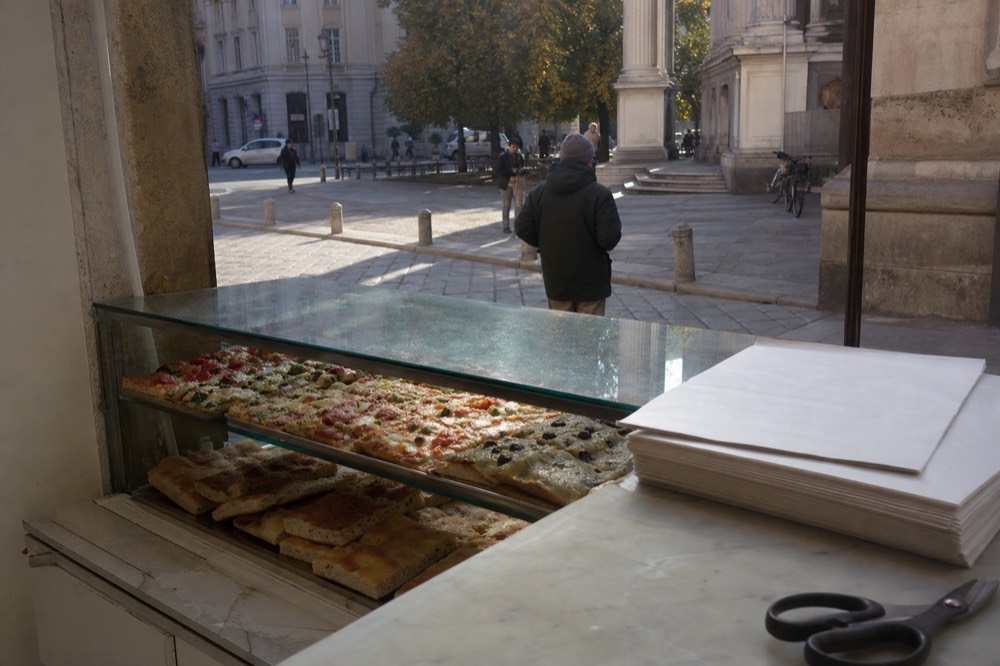
The trancio belongs to the bakery lineage, not the pizzeria lineage. It shares a family tree with focaccia and with the Ligurian pan-baked traditions, and in Milan it lives in the same shops that sell michetta rolls and morning pastries. That is why the format works so well for the city: Milan eats lunch fast, on foot, and often standing. A slab of trancio with a drink is a complete Milanese lunch in the time it takes to cross a piazza.
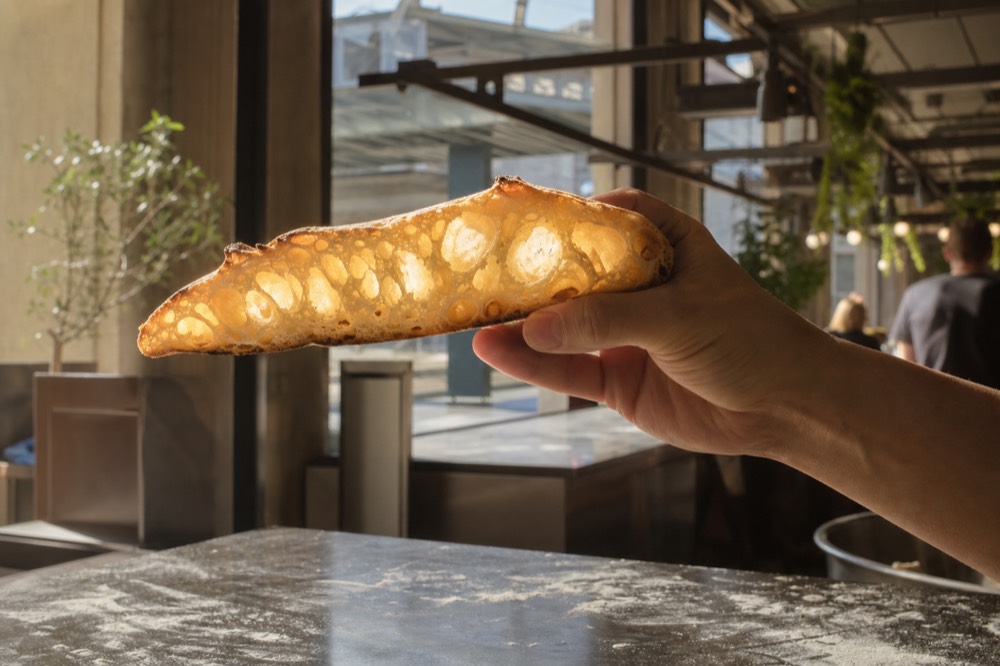
The texture is what surprises people. The base is soft and bread-like, sometimes an inch tall, with big irregular holes from a long rise. The edge, where the dough meets the oiled pan, crisps and fries into something closer to the crust of a Sicilian sfincione than to anything Neapolitan. Purists from Naples will tell you it is not pizza at all, and by their definition they are right. By Milan's definition it is the original article, the thing the city was eating long before the first Neapolitan pizzeria opened here.
Toppings stay conservative. Tomato and mozzarella is the standard, and the tomato is often laid on after the bake in some shops, so the base stays crisp. Potato and rosemary, zucchini, spicy salami: the counter tells you what the neighbourhood wants. What you will not usually find is the wet, soupy centre of a Neapolitan margherita, because trancio is built to be held, folded and eaten while walking.
The best way to meet the format in the wild is on a street food walk, since the guides know which counters turn over fastest. The 2.5-Hour Street Food Walk by Pink Umbrella Tours runs from $57 per person, is rated 4.7 across 934 reviews, and meets in front of the Church of San Maurizio by the stairs, with free cancellation up to 24 hours.
If you would rather understand the dough from the inside, the class route is the other face of the same coin.
How Does Contemporary Milanese Pizza Differ From Neapolitan?
Contemporary Milanese pizza is defined by the dough experiment: high hydration, very long fermentation, mixed stone-ground flours and bakes that borrow from several traditions at once, where Neapolitan pizza is fixed by a codified discipline of soft dough, 60 to 90 seconds at extreme heat and a wet centre. Milan's contemporary rooms treat pizza as a chef's medium. Naples treats it as a craft with rules.
The contemporary scene is the newest of the three styles and the one that has put Milan on the international pizza map. These pizzerias publish fermentation times the way wine lists publish vintages: 24, 48, 72 hours and beyond. Hydration, the ratio of water to flour in the dough, climbs well past what a Neapolitan base uses, which produces an open, lacquered crumb and a crust that shatters rather than folds. The flour is often a blend, part 00, part stone-ground whole wheat, sometimes ancient grains, and the bake lands in a middle zone: longer than Naples, hotter than a Roman pan pizza, frequently in electric ovens tuned by the gram.
Toppings follow the same experimental instinct. Where a Neapolitan room guards margherita and marinara as near-sacred, the Milanese contemporary rooms rotate: seasonal vegetables, cured fish, cheeses from small Lombardy producers, oils finished at the table. The pizza becomes a plate, and the menu reads closer to a bistrot's than a pizzeria's.
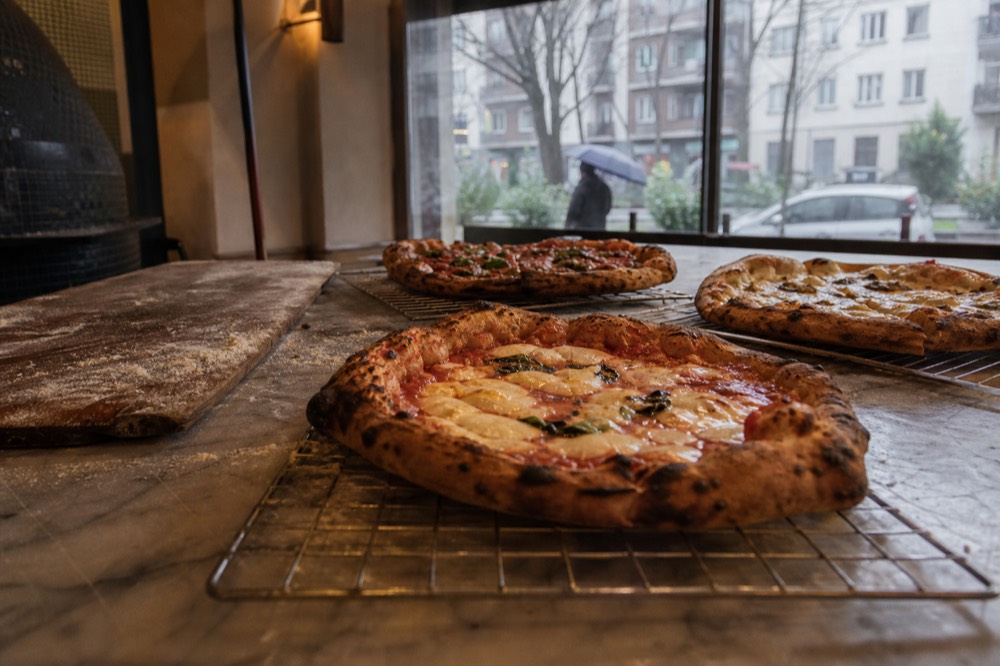
The Neapolitan imports, by contrast, are deliberately not experimental. Milan hosts a large population of Neapolitan pizzaioli, and their rooms reproduce the home style faithfully: soft, wet-centred, quick-baked pies meant to be eaten with knife and fork while the middle is still molten. They are extremely good, and they are not Milanese. Eating one tells you about Naples. Eating a trancio or a contemporary high-hydration pie tells you about Milan, a wealthy, design-driven city that treats even its most humble food as a place to innovate.
| Style | Dough | Bake | Format | Typical setting |
|---|---|---|---|---|
| Pizza al trancio | Enriched with olive oil, long rise, tall and airy | Pan-baked, moderate oven | Rectangular slabs sold by weight | Bakery or takeaway counter, eaten standing |
| Contemporary Milanese | High hydration, mixed flours, 24-72h+ fermentation | Electric or mixed heat, longer than Naples | Round or oval, plated, knife and fork | Design-led pizzeria, bistrot-style menu |
| Neapolitan import | Soft, low-density, short ferment | 60-90 seconds at extreme heat | Round, wet centre, plated quickly | Traditional pizzeria, Naples-trained pizzaiolo |
The one way to understand the difference that no amount of eating can match is to make the dough yourself. The Pizza With Unlimited Gelato Option class by Towns of Italy runs 3 hours from $65.28 per person, is rated 4.9 across 954 reviews, and includes the meal and a wine tasting after the work. It meets inside Mercato Centrale, at Via Giovanni Battista Sammartini 1, first floor, which is a neat detail: you learn dough inside the city's flagship food hall, with free cancellation up to 24 hours.
Where Did Milan's Pizza Scene Move In 2025 And 2026?
Milan's pizza and street food scene kept reshuffling through 2025 and 2026: a 101-year-old historic pizzeria in Ticinese closed, the food hall scene consolidated after a hygiene suspension at Mercato Centrale, and the Sarpi district registered more than a hundred new food businesses since early 2024, many of them selling pizza and street food. None of that broke the trancio tradition, but it moved where you will find the newest slices.
The headline closure is a real loss. Antica Pizzeria Da Giulio, opened in 1925 on Corso San Gottardo in the Ticinese district, closed in May 2026 after 101 years, its premises bought by an Asian restaurant, as Corriere della Sera reported. Rooms that old are the living link to the early twentieth-century pizzeria culture, and each one that closes narrows the historic base the newer styles grow from.
Mercato Centrale, the food hall at Milano Centrale station where the Towns of Italy cooking school meets, had its own turbulent year. In February 2026 a health inspection found a cockroach infestation and 17 of 27 activities were suspended; the site closed for extraordinary cleaning and reopened progressively, with vendors including Martesana, Bastianich and Pedol returning. The pizzeria Crosta had already departed earlier, as Scatti di Gusto documented. The hall is open daily again, but the episode is worth knowing about if your class or your slice run starts there.
The growth story is on Via Paolo Sarpi, the pedestrianised spine of Milan's Chinatown. Corriere della Sera counted 112 new food enterprises registered on or near the street since early 2024, many of them street food, with former clothing shops converting to food outlets. Pizza by the slice is a natural fit for that wave. The city also approved plans in July 2026 for a monumental Chinese paifang gateway at the street's entrance, which tells you the district's food economy is now a permanent fixture, not a phase.
| Development | District | What happened |
|---|---|---|
| Antica Pizzeria Da Giulio closes | Ticinese | Closed May 2026 after 101 years; premises taken by an Asian restaurant |
| Mercato Centrale suspension | Stazione Centrale | February 2026 inspection suspended 17 of 27 vendors; progressive reopening followed |
| Sarpi street food boom | Chinatown | 112+ new food businesses registered since early 2024, many selling slices |
| Paifang gateway approved | Chinatown | July 2026 design competition for a monumental Chinese gateway at Piazzale Baiamonti |
One more practical note for evening pizza runs: the city's movida ordinance, in force from 11 June to 2 November 2026 across 12 zones including Brera, Ticinese and the Darsena/Navigli area, bans takeaway alcohol sales from midnight and restricts outdoor tables after 1:00 on weekdays. Late-night pizzeria plans in those districts should factor it in.
How Much Does Pizza Cost In Milan?
A slab of trancio at a bakery counter is priced by weight and typically costs a few euro for a lunch-sized portion, while a whole pizza sitting down in a pizzeria commonly runs from around 8 to 15 euro for a simple pie in neighbourhood rooms and higher in the centre, with the contemporary dough rooms charging bistrot prices. These are planning ranges, not quotes: counters and menus vary, so check the board before you order.
The economics of the three styles explain the spread. Trancio is sold per etto, per hundred grams, so you pay for exactly what you take, and a modest slab plus a drink remains one of the cheapest proper lunches in the city. Neapolitan rooms price by the pie, and a margherita in a neighbourhood pizzeria sits at the accessible end. The contemporary rooms, with their long fermentations, blended flours and designed interiors, price like the bistrots they resemble, and a pie there can cost what a main course does elsewhere.
| Way to eat pizza | What you pay for | Planning range |
|---|---|---|
| Trancio slab at a bakery | Weight, per etto, plus a drink | A few euro for a lunch portion; check the scale |
| Whole pizza, neighbourhood pizzeria | One pie, seated service | Commonly around 8 to 15 euro; check the menu |
| Contemporary dough room | One pie, bistrot setting | Higher, mains-level pricing; check the menu |
| Make it yourself, class | 3-hour class, meal and wine included | From $65.28 per person, free cancellation up to 24 hours |
There is also a fourth column worth considering: the class. At from $65.28 per person, the Towns of Italy session costs more than any single pizza you will buy, but it returns three hours of instruction, the meal you made, a wine tasting and unlimited gelato, which reframes it as dinner plus entertainment rather than lunch. For families it often works out cheaper than a restaurant plus an activity booked separately. Our cooking classes in Milan guide breaks down the whole market, including how Milan prices compare with other Italian cities.
For the budget end of eating your way around, the free-and-cheap angle is covered in free food things to do in Milan, and the wider slice-and-counter culture sits inside our Milan street food guide.
Which Milan Pizza Style Should A Visitor Try First?
Try pizza al trancio first, because it is the style you cannot get in the same form elsewhere and it explains the city's whole lunch culture in one slab. Then, if you have time, one contemporary high-hydration room, to taste why Milan is talked about in pizza circles, and one Neapolitan import as the control, so you can feel the difference rather than read about it. Three stops, three arguments, one evening or two lunches.
The order matters less than the contrast. If you only have one meal, the trancio counter wins on distinctiveness: it is the style that grew from Milan's bakeries, priced for Milan's workers, cut for Milan's pace. If you have an evening and want the full arc, start at a contemporary room for a plated pie, finish at a takeaway counter for a slab, and notice how the same three ingredients, flour, water and tomato, produce two completely different foods.
For travellers who want the structure handled, a food walk stitches the stops together. The Food Walk With City Sightseeing by Tours of Milan runs 2 hours 30 minutes from $49.69 per person, is rated 4.6 across 26 reviews, and meets at the Church of San Maurizio al Monastero Maggiore on Corso Magenta, with free cancellation up to 24 hours. The listing shows 5 or more bookings in the past week, so it moves.
Whichever route you take, resist the instinct to rank the styles against each other. Naples wins the purity contest every time, because it invented the rules. Milan is not playing that game. It is playing the game it plays with everything, fashion, design, food: take a tradition, keep what works, experiment with the rest, and price it by the gram if that is what the lunch rush needs. That is what Milan pizza is, and it is why the honest answer to the question is three answers, not one. Mapping those three answers, from the bakery counter to the dough lab, is the work of Milan Food Tours, and it is a map worth walking.
Milan's pizza identity comes down to three styles: the trancio slab sold by weight at bakery counters, the contemporary high-hydration dough rooms that have made the city an innovation hub, and the faithful Neapolitan imports. Below, the questions travellers ask most, answered plainly, with prices stated as planning ranges and the class option included for anyone who wants to make the dough rather than just eat it.
Common Questions About Pizza In Milan
What Pizza Is Milan Known For?
Milan is known for pizza al trancio, thick rectangular slabs baked in oiled pans and sold by weight at bakery counters, alongside a contemporary high-hydration dough scene and a strong bench of Neapolitan imports. The trancio is the city's own contribution; the other two are the modern layer on top of it.
Is Pizza Al Trancio The Same As Roman Pizza Al Taglio?
They are cousins, not twins. Both are rectangular and cut to order, but the Milanese trancio is typically taller and softer, closer to a enriched bakery dough with a fried crisp edge, while the Roman taglio is flatter, crispier and often drier. Both are sold by weight.
Can You Get Real Neapolitan Pizza In Milan?
Yes. Milan has a large population of Naples-trained pizzaioli and faithful Neapolitan rooms across the city, producing the soft, quick-baked, wet-centred pies the style requires. They are excellent, but they represent Naples, not a Milanese tradition.
How Is Pizza Priced In Milan?
Trancio slabs are priced per etto at the counter, so you pay by weight. Whole pizzas in pizzerias are priced per pie, commonly in the 8 to 15 euro range for simple pies in neighbourhood rooms and more in the centre and in contemporary rooms. Treat these as planning ranges and check the menu or the scale.
Where Can You Make Pizza Yourself In Milan?
The Pizza With Unlimited Gelato Option class by Towns of Italy runs 3 hours from $65.28 per person, rated 4.9 across 954 reviews, and meets inside Mercato Centrale at Via Giovanni Battista Sammartini 1, first floor. It includes the meal, a wine tasting and unlimited gelato, with free cancellation up to 24 hours.