Vegetarian And Gluten-Free Milan: Eating Well Without The Veal
The Milanese canon runs on veal, butter, lard and cheese, which makes vegetarian and gluten-free Milan a genuine planning problem rather than a virtue-signal page. Here is what is already safe, what never will be, and which formats actually cook around a restriction.
Short answer
Risotto alla milanese, panettone and most pizza are already vegetarian; cotoletta, cassoeula and mondeghili never will be. Gluten-free eating works best at dedicated venues like Rosticceria Anomala and at cooking classes, where a private kitchen adapts in a way a fixed-route tasting walk usually cannot. A 3-hour pasta class runs from $39 to $128 per person.
Milan's kitchen is not a naturally forgiving one for anyone avoiding meat or wheat. The city's protected-recipe register, the De.Co. list kept by the Comune di Milano, is heavy with veal cutlets, pork casseroles and breaded everything. Yet the same register also holds dishes a vegetarian can eat without changing a thing, and the city's cooking-class scene has become one of the more adaptable in Italy. This guide takes the restriction seriously as a planning problem: what is safe, what is hopeless, what to say, and which of the experiences worth paying for will actually flex.
The honest starting point is that Italian cuisine as a whole was inscribed on UNESCO's Intangible Cultural Heritage list on 10 December 2025, the first entire national cuisine to receive the designation. That heritage is regional and specific, and Milan's corner of it leans harder on meat and butter than almost anywhere else in the country. Planning around that, rather than pretending it away, is the whole job.
Is Milan Actually Difficult For Vegetarians?
Yes, at the traditional end of the menu, more than most Italian cities. The canon the Comune itself protects includes cotoletta alla milanese, a breaded veal cutlet, cassoeula, a pork and cabbage stew, mondeghili, fried meatballs born as leftover-meat salvage, and rostin negaa, braised veal. Butter and lard are structural, not optional. The saving grace is that pizza, risotto, polenta and vegetable antipasti are everywhere and genuinely central.
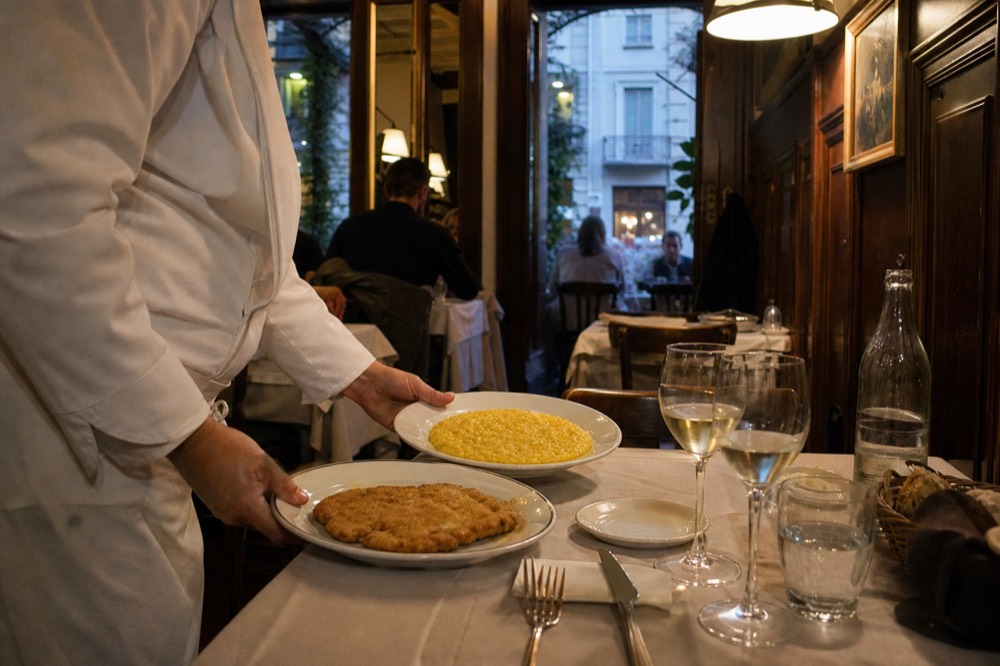
The De.Co. register, established by the Comune with resolutions of December 2007 and 2008, is the closest thing Milan has to an official dish list. It makes the problem visible at a glance. Alongside the meat dishes sit risotto alla milanese (2007), panettone (2007), michetta, the city's characteristic bread roll (2007), minestrone alla milanese (2008), barbajada, the historic chocolate-and-coffee drink (2008), and, as of 2026, pan de Mej, a cornmeal cake tied to the feast of San Giorgio on 23 April. A vegetarian can eat the risotto, the minestrone, the pan de Mej and the barbajada without asking for a single change. The gluten-free diner can eat the risotto and the minestrone. Nobody avoiding gluten eats the michetta or the panettone.
One caveat belongs here and nowhere else, because it recurs through this guide: risotto alla milanese is vegetarian only if the cooking liquid is not a meat brodo. Traditional recipes often call for meat stock, and a restaurant will not always flag it. Asking is the whole game, and the phrases below do it in words a Milanese counter actually understands.
The register itself is on the Comune's food policy pages, alongside the reasoning behind each designation: the Comune di Milano De.Co. materials. It is worth ten minutes of any restricted diner's planning time, because it tells you exactly which dishes are canon and therefore which substitutions will raise an eyebrow.
Which Milanese Classics Are Already Vegetarian Or Gluten-Free?
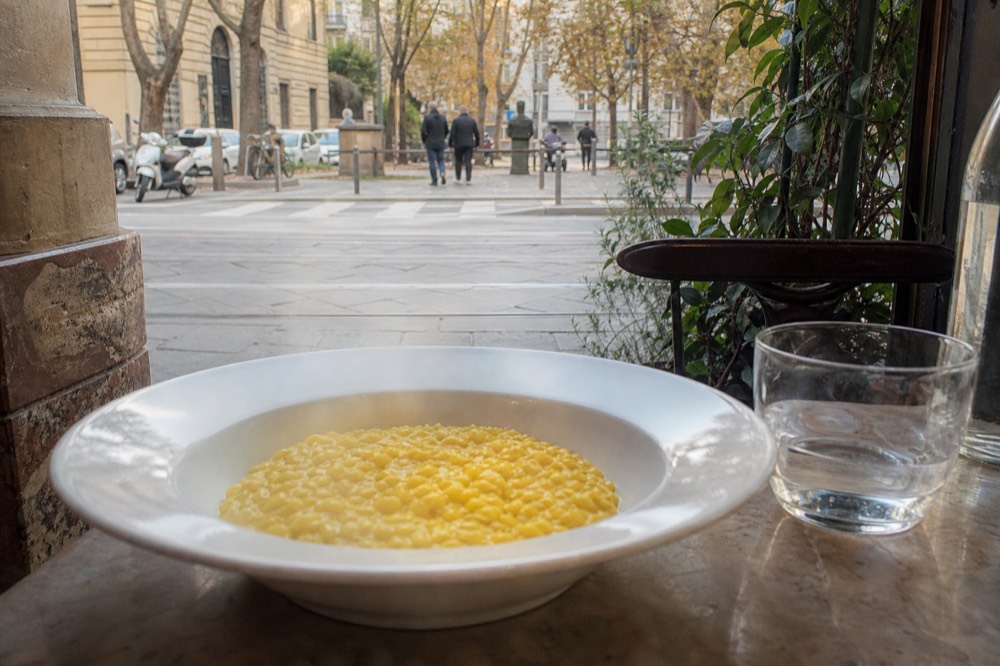
Risotto alla milanese is vegetarian when the stock is vegetable-based, and it is naturally gluten-free. Minestrone alla milanese is vegetarian and gluten-free. Panettone and pan de Mej are vegetarian but not gluten-free. Cotoletta, cassoeula, mondeghili, rostin negaa and ossobuco are meat dishes with no vegetarian version worth the name. Polenta, where you find it, is gluten-free and usually vegetarian.
The dish-by-dish table below is the one to screenshot. It covers the De.Co. canon plus the dishes you will actually meet on menus every day, and it separates the two questions that get conflated: is it vegetarian, and does it contain gluten.
| Dish | Vegetarian? | Gluten? | What to ask for instead |
|---|---|---|---|
| Risotto alla milanese | Yes, if no meat brodo | No gluten | Ask "il brodo è vegetale?" |
| Minestrone alla milanese | Yes | No gluten | Nothing, it is already safe |
| Cotoletta alla milanese | No | Yes | A melanzane alla parmigiana, usually available |
| Cassoeula | No | No gluten in principle | No substitute; skip it |
| Mondeghili | No | Yes (bread in the mix) | No substitute |
| Ossobuco | No | No | No substitute |
| Panettone | Yes | Yes | Flourless chocolate desserts in most pasticcerie |
| Pan de Mej | Yes | Yes (wheat and cornmeal) | Same as above |
| Michetta bread | Yes | Yes | Gluten-free bread in larger venues only |
| Pizza margherita | Yes | Yes | Gluten-free bases are common in Milan pizzerias |
| Polenta dishes | Usually | No gluten | Confirm the sauce is meat-free |
| Gelato (fruit flavours) | Usually | Often no gluten | Ask about the cone; take a cup |
Two details sharpen the picture. Panettone is legally defined by a 2005 ministerial decree, which mandates minimum 16% butter, 4% yolk and 20% raisins and candied citrus in anything sold under the name, so it is reliably vegetarian but reliably full of wheat. And the pan de Mej designation is brand new for 2026, tied to 23 April: it is a seasonal, vegetarian sweet worth hunting down if wheat is not your problem.
If you want the deeper background on the saffron dish, the site's own risotto alla milanese guide covers the recipe and its history, and the panettone in Milan guide does the same for the city's most famous export.
For travellers who would rather cook than interrogate a menu, a class solves the problem at the source. These three formats each handle restrictions differently.
Which Food Experiences In Milan Adapt To Dietary Restrictions?
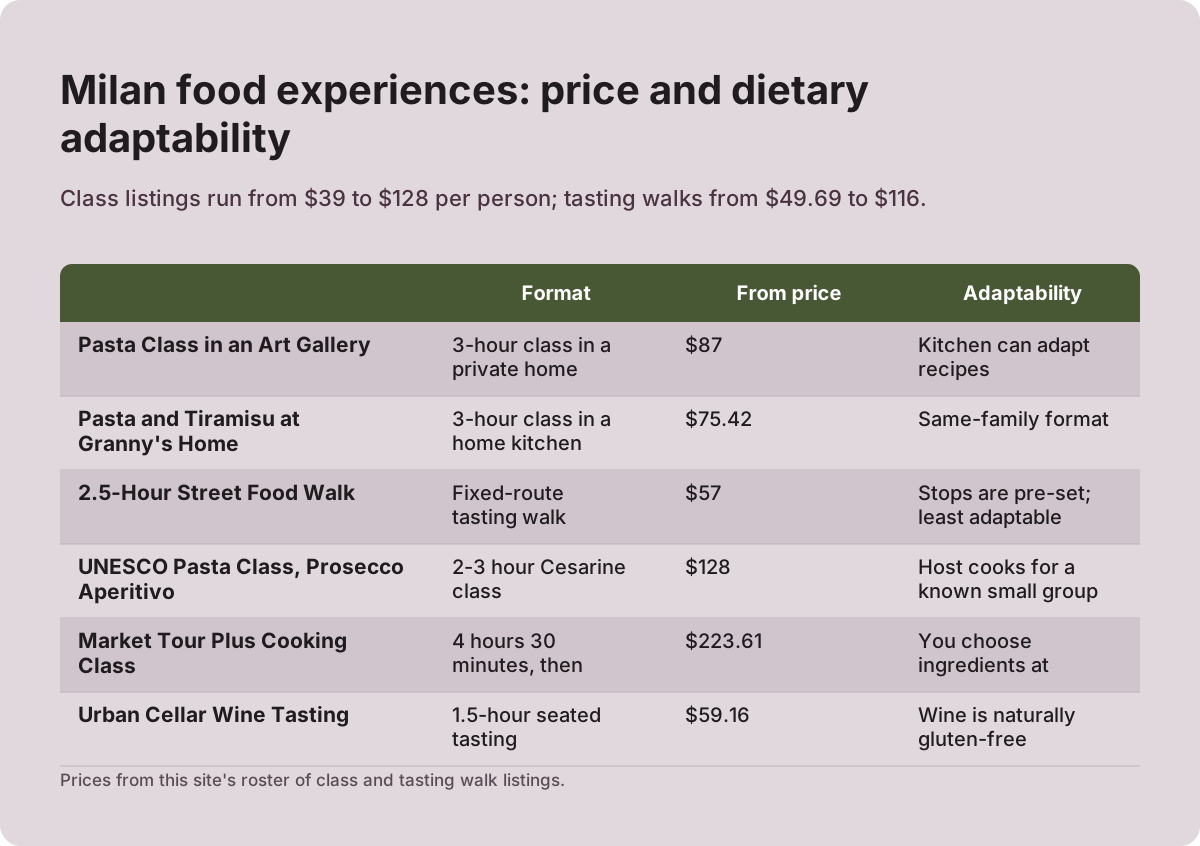
Cooking classes adapt best, because a private kitchen can change a recipe on the day. Home dining through platforms like Cesarine adapts well, since the host cooks for a known group. Fixed-route tasting walks adapt least: the stops are pre-arranged and the tastings are whatever each stop serves. On this site's roster, the class listings run from $39 to $128 per person, and the tasting walks from $49.69 to $116.
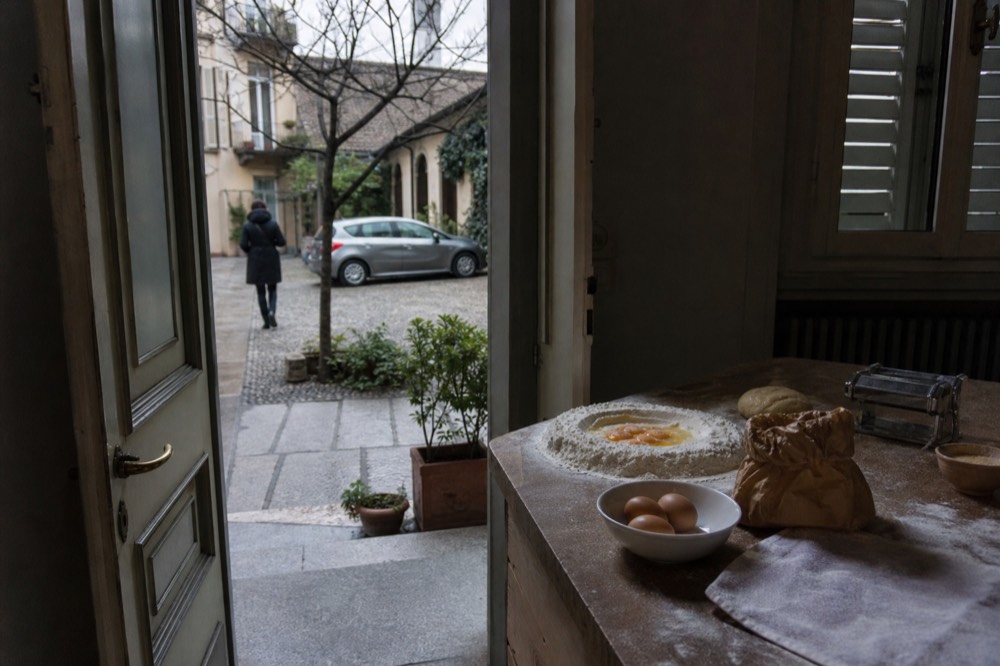
The table below is deliberately honest about what each format can and cannot do. Where a listing says nothing about dietary accommodation, this table says nothing too: never assume a specific tour can handle an allergy unless the listing states it. Check the operator's live listing and message them before booking.
| Experience | Format | From price | How adaptable |
|---|---|---|---|
| Pasta Class in an Art Gallery | 3-hour class in a private home | $87 | Kitchen can adapt recipes; confirm with the host |
| Pasta and Tiramisu at Granny's Home | 3-hour class in a home kitchen | $75.42 | Same-family format; confirm on the live listing |
| 2.5-Hour Street Food Walk | Fixed-route tasting walk | $57 | Stops are pre-set; least adaptable |
| UNESCO Pasta Class, Prosecco Aperitivo | 2-3 hour Cesarine class | $128 | Host cooks for a known small group |
| Market Tour Plus Cooking Class | 4 hours 30 minutes, market then kitchen | $223.61 | You choose ingredients at the market |
| Urban Cellar Wine Tasting | 1.5-hour seated tasting | $59.16 | Wine is naturally gluten-free; ask about the accompaniments |
The pattern is structural, not a matter of goodwill. A guide leading eight people along a fixed route cannot ask a fry cook to change the oil; a host expecting four guests in their own kitchen can simply not put pancetta in the sauce. The Cesarine network, which runs home dining and classes across Italy, requires its hosts to hold HACCP certification and food-handler training, which is the hygiene baseline that makes home kitchens a legitimate option for restricted diners. The network publishes its own rules for joining, including the certification requirements, on the Cesarine membership page.
The Pasta Class in an Art Gallery deserves its own word. It runs in a private home near the Coni Zugna metro stop, three hours, from $87 per person, rated 4.9 across 622 reviews, and the listing carries a likely-to-sell-out flag. The format, a small group in one kitchen, is exactly the shape that adapts to a restriction, but the honest instruction stands: message the host through the operator's live listing and confirm before you book, because the listing itself makes no allergy promise.
The budget end of the class market is also the most interesting for restricted eaters, because the cheapest class on the roster is a full cooking class with wine included: the 3-Hour Cooking Class, Wine Included at from $39 per person, rated 4.7 across 578 reviews, run from a street-level school on Via Laura Ciceri Visconti. A class at that price still gives you a kitchen and a chef, which is more adaptation than any walking tour offers.
What Italian Phrases Actually Work At A Milanese Counter?
Say "sono vegetariano" or "sono vegetariana" for vegetarian, "senza glutine" for gluten-free, and "sono celiaco/celiaca" for coeliac, which is taken more seriously than a preference. The critical follow-up for risotto is "il brodo è di carne o vegetale?" Ask "c'è il lardo?" about anything fried. Avoid the word "allergy" unless it is one: Italians distinguish allergies from preferences, and precision gets better results.
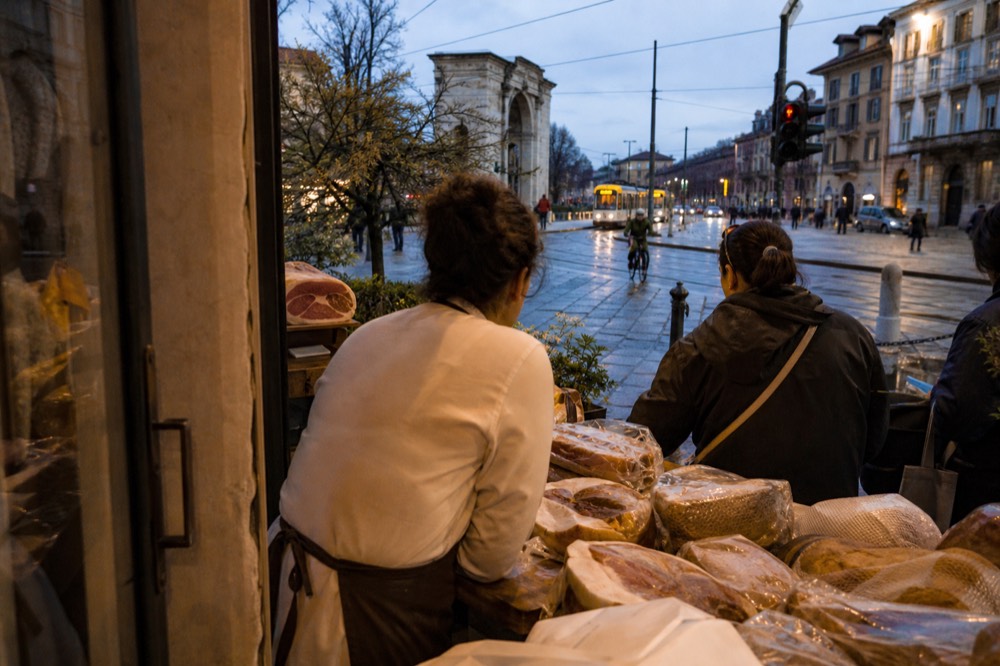
The single most useful phrase for a vegetarian in Milan is the stock question. Risotto alla milanese looks vegetarian on every menu in the city and frequently is not, because the liquid is often a meat brodo. "Il brodo è vegetale?" takes two seconds and prevents the most common letdown in the city.
The second most useful is the lardo question. Milanese frying traditions use pork fat, and a vegetable fritto or a polenta dish can carry animal fat without any menu mention. "C'è il lardo?" or, for butter, "c'è il burro?" covers it. Vegans should add "niente formaggio e niente burro, per favore" and expect a sympathetic but sometimes baffled response: the canon really does run on butter and cheese, as the De.Co. list makes plain.
Coeliac diners should use the word celiaco. Italy has a strong cultural and regulatory understanding of coeliac disease, and the word triggers a different level of care than a lifestyle preference. A pizzeria that would shrug at "senza glutine" as a fad will often have a separate preparation area for a declared celiaco.
| Situation | Phrase | What it does |
|---|---|---|
| Declaring vegetarianism | "Sono vegetariano/a" | Filters the obvious meat dishes |
| Declaring coeliac disease | "Sono celiaco/a" | Triggers serious kitchen protocol |
| Risotto check | "Il brodo è di carne o vegetale?" | Catches hidden meat stock |
| Frying fat check | "C'è il lardo?" | Catches pork fat in fried dishes |
| Dairy refusal | "Niente formaggio e niente burro" | The vegan baseline |
| Cross-contamination | "Avete una preparazione separata?" | Asks about separate prep |
For a fuller sense of how the eating-out culture works around these conversations, the site's guide to eating near the Duomo covers the central restaurants where a tourist is most likely to need the phrases, and the vegetarian and gluten-free planning angle sits inside the broader what-to-eat overview.
Where Can Gluten-Free Diners Actually Eat In Milan?
Dedicated gluten-free venues exist and are growing: Rosticceria Anomala in Porta Romana is a fully gluten-free gastronomia that opened in September 2025, and the Festival Senza Glutine ran at BASE Milano in early September 2026 with free entry. Mainstream pizzerias widely offer gluten-free bases. The De.Co. canon offers almost nothing: of the register's dishes, only the risotto and minestrone are naturally gluten-free.
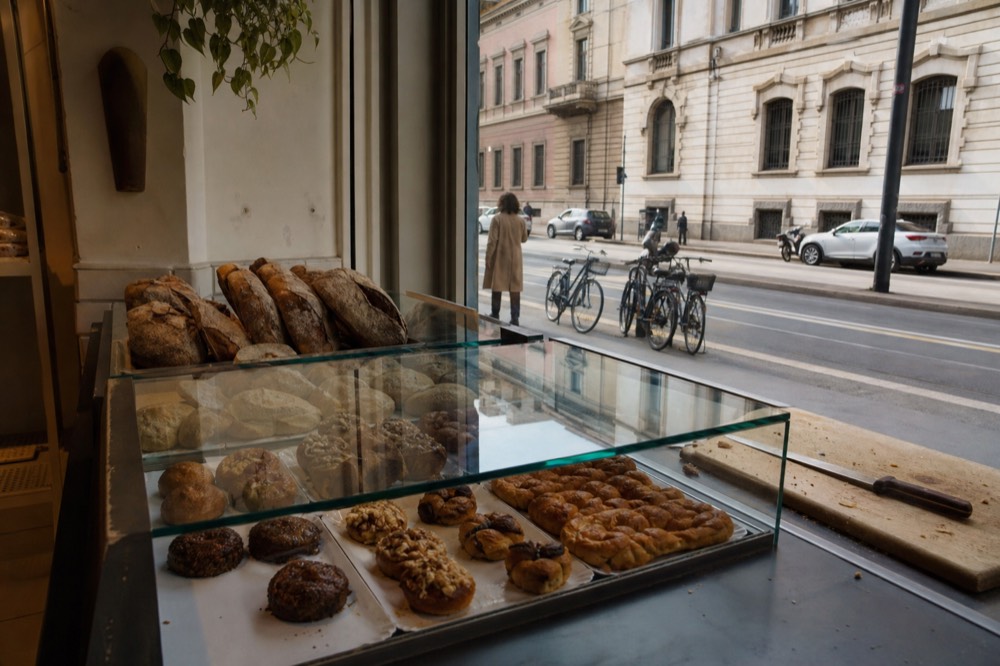
Rosticceria Anomala is the standout fact for coeliac visitors: a 100% gluten-free gastronomia in Porta Romana, opened September 2025, meaning a restricted diner can order anything in the case without a single question. Porta Romana more broadly has been highlighted as one of the city's transforming food neighbourhoods, with independent restaurants, wine bars and bakeries raising the everyday standard.
The festival is a second, timeable fact. Festival Senza Glutine ran 3 to 6 September 2026 at BASE Milano on Via Ambrogio Bergognone, free entry, with food trucks, showcooking and talks. If your trip falls in early September, it is worth checking whether a further edition is scheduled.
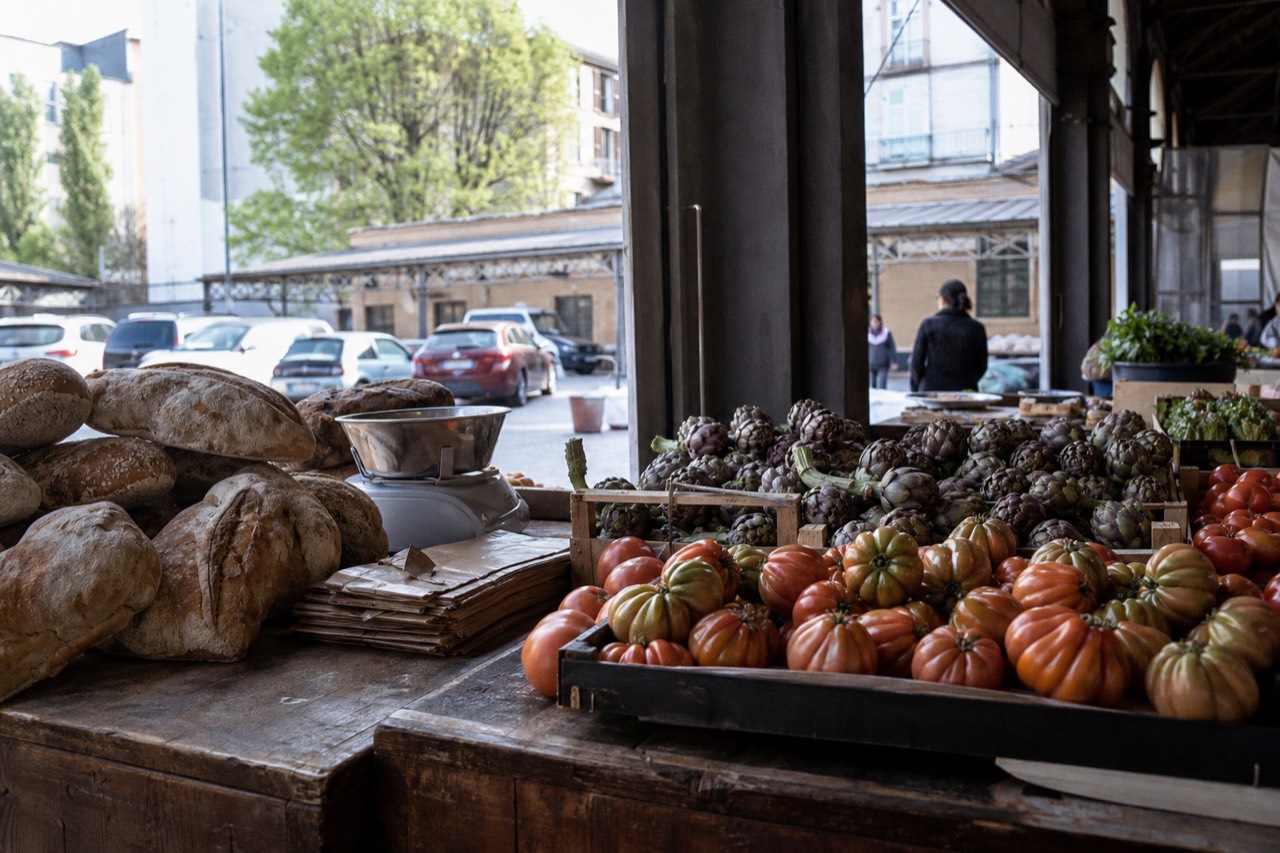
Beyond the dedicated venues, the reliable plays are the ones any Italian city does well: risotto (with the brodo question), polenta, grilled vegetables, cheese, and fruit gelato taken in a cup rather than a cone. Milan's covered markets, covered in the site's Milan food markets guide, are strong on cheese and produce for self-catering, and the Wagner market, the city's oldest covered market, opened in 1929, carries a long-standing fish counter and a growing dining side.
Do Milan's Food Tours Work For Restricted Eaters?
Some do, with advance notice. Cooking classes work best because the kitchen controls the menu. Tasting walks are the weakest fit, since the route and the stops are fixed. The street food walk from $57 per person is the cheapest way to test the format, but a fixed route is the least adaptable product on the site. Always message the operator through the live listing before booking.
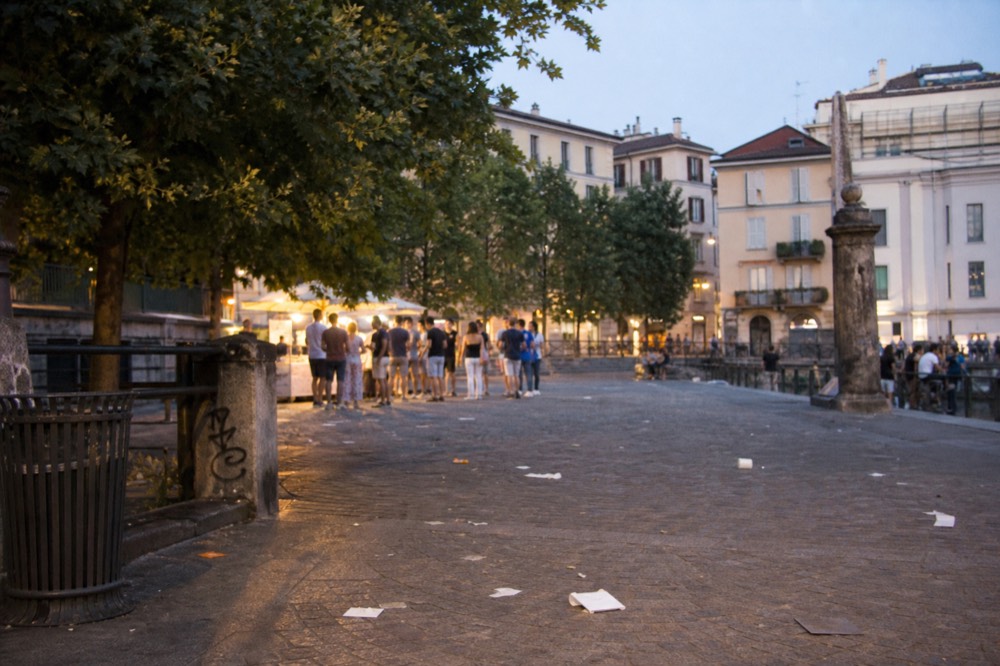
The 2.5-Hour Street Food Walk, run by Pink Umbrella Tours, is the roster's entry-level tasting walk: from $57 per person, rated 4.7 across 934 reviews, meeting in front of the Church of San Maurizio, with free cancellation up to 24 hours. It is a good product and a poor fit for a strict restriction, because street food in Milan means panzerotti, fried bread pockets, and breaded cutlets more often than it means anything wheat-free or meat-free. Vegetarians with flexibility will find something at most stops; coeliacs should expect to skip several tastings and should say so before paying.
The class market is where the money is better spent. The Pasta and Tiramisu at Granny's Home class, from $75.42 per person and rated 4.9 across 1,303 reviews, runs three hours in a home kitchen on Via Giuseppe Dezza. The listing carries the current from-price of $75.42 per person. Like every class in this format, the kitchen can adapt, and like every listing on the roster, the accommodation is confirmed with the host rather than assumed from an article.
For context on what classes cost across Italy, and how Milan compares, the site's piece on cooking class costs in Italy breaks the pricing down, and the Milan cooking classes guide ranks the local options in full.
How Should You Plan The Week Around Closures And Seasons?
Plan around three calendars: the movida ordinance running 11 June to 2 November 2026 restricts late-night service in twelve zones including Navigli and Brera; August sees individual venues close for one to three weeks, though no aggregate figure exists; and seasonal products like pan de Mej appear only around 23 April. Peck, the historic delicatessen, opens Monday afternoons only and closes Sundays, which rules out a Monday-morning visit.
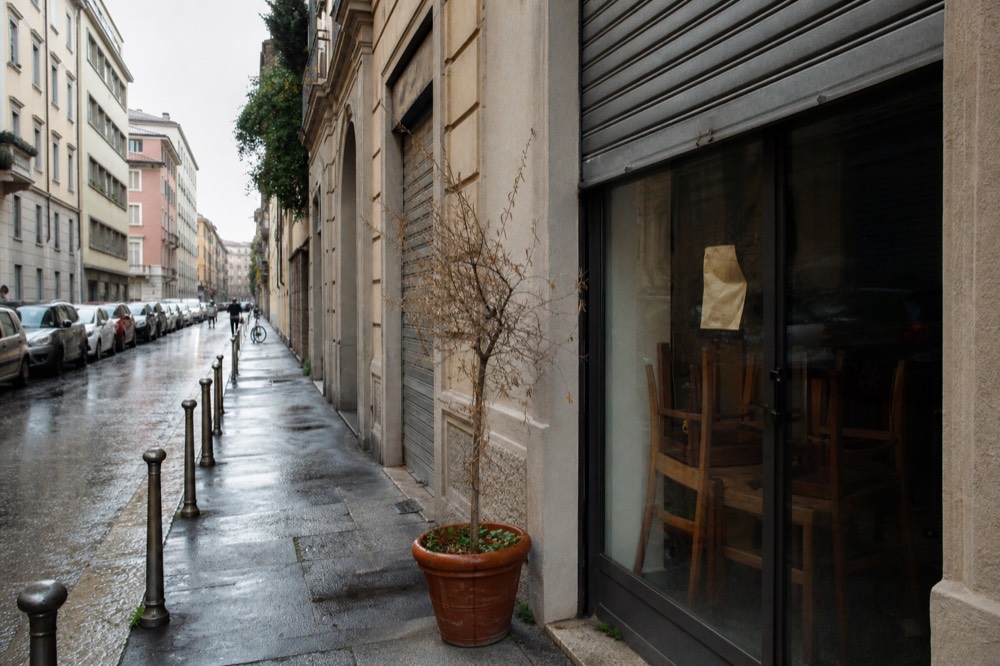
The Monday point matters more than visitors expect. Peck at Via Spadari 9, the city's reference delicatessen since 1912 and a safe haven for vegetarians who can eat gluten, keeps hours of Monday 15:00 to 19:30, Tuesday to Saturday 09:00 to 19:30, closed Sunday. A food itinerary that assumes every classic venue opens daily will fail on a Monday morning. The venue's own shops page prints the hours: Peck's official shop information.
The movida ordinance, published 9 June 2026 and in force 11 June to 2 November across twelve zones, bans takeaway alcohol sales from midnight and restricts outdoor table use in the small hours. It will not affect a dinner reservation, but it shapes the late-evening street scene in exactly the neighbourhoods, Navigli, Brera, Isola, where restricted diners are most likely to be finishing a meal and looking for a final stop.
August deserves honesty rather than a number. No verified aggregate figure exists for how many Milan restaurants close in August, so none is offered here. What is documented is that individual venues close for one to three weeks, typically in the second half of the month. The practical rule for a restricted diner is stricter than for anyone else: a venue that is open but running a reduced summer crew is the least likely to accommodate a special preparation, so confirm everything in writing in high summer.
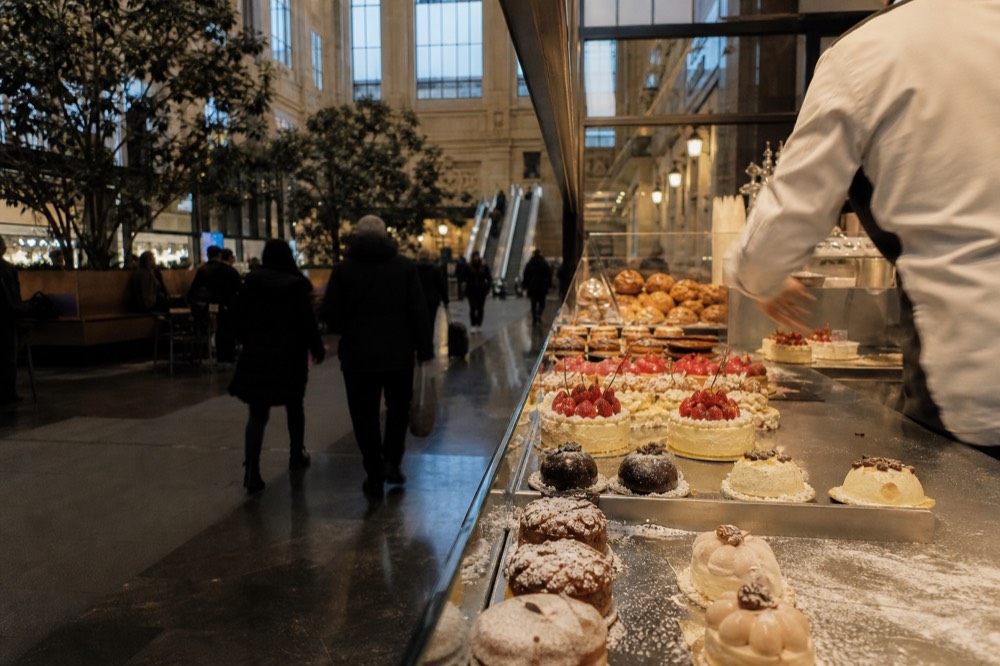
Seasonality cuts both ways. Pan de Mej, the cornmeal cake newly added to the De.Co. register for 2026 and tied to 23 April, is a vegetarian sweet with a fixed calendar: miss the feast of San Giorgio and you miss the cake. Artisan panettone, vegetarian but not gluten-free, ran above EUR 50 per kilo at named Milan pastry shops in the 2025 season, with Marchesi and Gattullo both listed at EUR 50 per kilo, so budget accordingly if December is your month. For more on the city's broader food landscape, Milan Food Tours covers the neighbourhoods, dishes and bookable experiences in depth.
Before the final questions, one last look at the three formats that handle restrictions best.
The short answers: risotto is vegetarian when the stock is, gluten-free eating works best at dedicated venues and in class kitchens, cooking classes adapt where tasting walks cannot, and every accommodation must be confirmed with the operator before booking. The details below cover each question in full.
Common Questions About Vegetarian And Gluten-Free Milan
Is Risotto Alla Milanese Vegetarian?
Usually, but not always. The dish is rice, saffron, butter and cheese, all vegetarian, but traditional recipes often cook the rice in a meat brodo. Ask "il brodo è vegetale?" before ordering. When the stock is vegetable-based, the dish is both vegetarian and gluten-free.
Is Milan Good For Gluten-Free Eating?
Yes, with planning. Dedicated venues exist, including the fully gluten-free Rosticceria Anomala in Porta Romana, and mainstream pizzerias widely offer gluten-free bases. The traditional canon is weaker: of the city's officially designated De.Co. dishes, only risotto and minestrone are naturally gluten-free. Declaring "sono celiaco" gets the most serious kitchen response.
Can A Food Tour Accommodate Dietary Restrictions?
It depends on the format. Cooking classes adapt best because one kitchen controls the menu; home dining through networks like Cesarine adapts well for the same reason. Fixed-route tasting walks adapt least, since the stops and tastings are pre-arranged. Message the operator through the live listing before booking, and never assume an accommodation the listing does not state.
What Milanese Dishes Can Vegetarians Actually Eat?
Risotto alla milanese with vegetable stock, minestrone alla milanese, polenta dishes with meat-free sauces, panettone, pan de Mej (around 23 April), barbajada, and pizza. The meat dishes on the city's De.Co. register, including cotoletta, cassoeula, mondeghili, ossobuco and rostin negaa, have no meaningful vegetarian substitute.
Is The Michetta Bread Roll Gluten-Free?
No. The michetta is a wheat bread roll, designated by the Comune in 2007, and it is as gluten-full as bread gets. Gluten-free diners should skip it entirely and look for dedicated gluten-free bakeries or the gluten-free bases offered in many Milan pizzerias.
Are Cooking Classes In Milan Suitable For Coeliacs?
Often, but only the host can confirm it. A small class in a private kitchen can substitute flours and control cross-contamination in a way a restaurant kitchen on a busy night cannot, and the class listings on this site run from $39 to $128 per person. The rule is absolute: contact the operator through the live listing and get the accommodation confirmed in writing before you book.