Best Gelato In Milan: How To Read A Gelateria In Ten Seconds
Anyone can rank gelaterias; nobody can verify a stranger's top ten. What you can verify is the counter in front of you. Here is how to read a Milan gelateria in ten seconds, plus the formats, prices and official sweet designations that make the choice easier.
Short answer
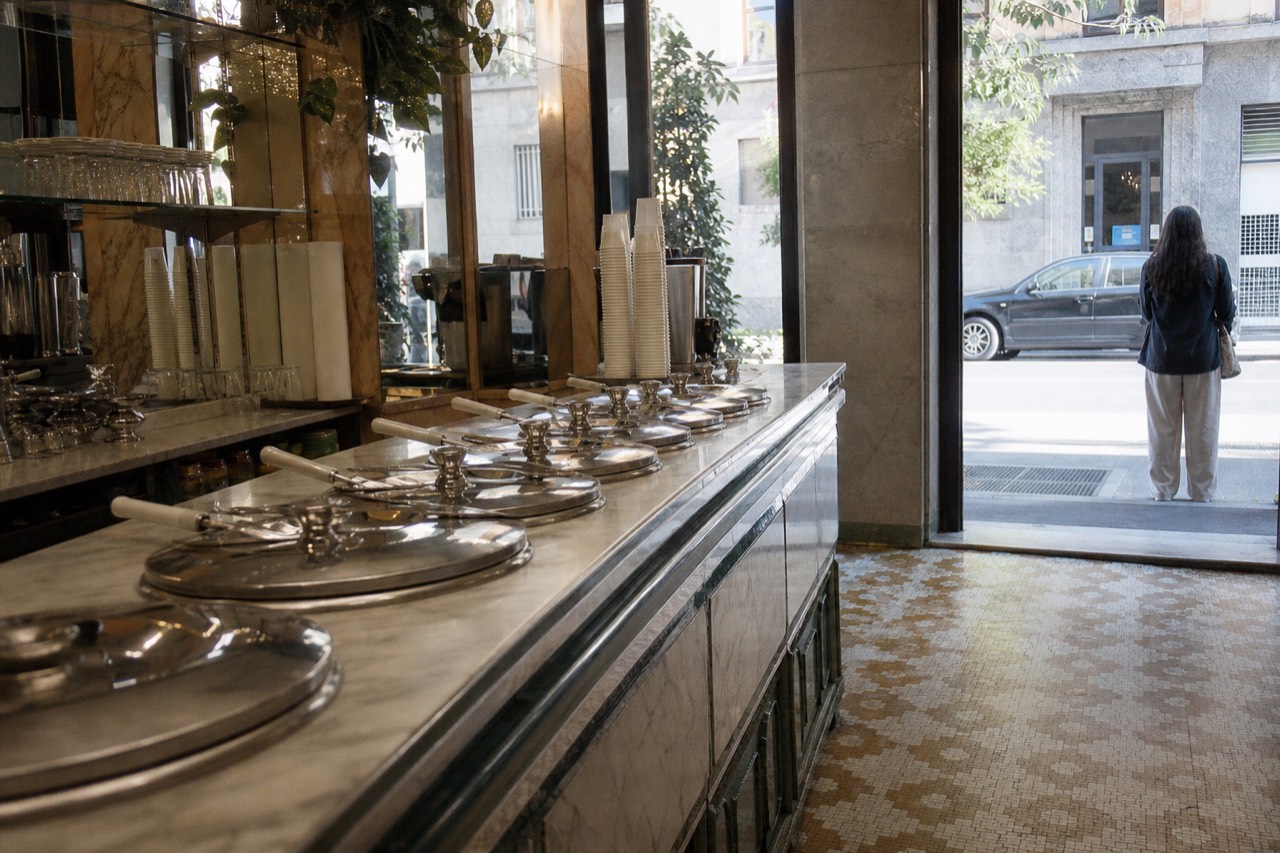
Good Milan gelato hides under metal lids, not under mounded neon peaks. Look for covered pozzetti, a short seasonal flavour list, muted natural colours and a base made on site. The sweet-focused walks and classes on this site run from $35 for a chocolate factory tasting to $65.07 for a patisserie tour.
The best gelato in Milan is not a fixed list of shops. It is a skill, and it takes about ten seconds to apply once you know what you are looking at. A ranking you find online is someone else's palate, someone else's month, someone else's neighbourhood. The display case in front of you is verifiable right now: the lids, the colours, the length of the flavour list, the price board. This guide teaches the signals, then maps them onto the formats and prices you will actually meet, and onto the wider world of Milanese sweets, from panettone to the chocolate factory of Enrico Rizzi.
One piece of context worth carrying: Italian cuisine as a whole was inscribed on UNESCO's Intangible Cultural Heritage list on 10 December 2025, the first entire national cuisine to receive the designation. That does not certify any individual gelateria, but it explains why the sweet counter in Milan is taken seriously by the people who live here, and why the difference between artisan product and industrial product is treated as a real distinction rather than snobbery. For the broader eating landscape, start with Milan Food Tours and our guide to what to eat in Milan, then work outward.
How Do You Read A Gelateria In Ten Seconds?
You read four things in order: the lids, the colours, the flavour list and the price board. Covered metal pozzetti mean the shop is protecting the gelato from air and temperature, muted colours mean real ingredients, a short list means small batches, and a price board that charges by size rather than by flavour means the product is the point. Any shop that fails two of the four is industrial product dressed up.
The single most reliable signal is the lid. Artisan gelato is held at a precise temperature and suffers when it is exposed, so serious shops keep it in covered stainless steel containers, the pozzetti, and lift the lid only to serve. Mounded tubs sculpted into tall peaks under a glass dome exist for one reason: visual marketing. Gelato does not naturally hold a peak. A peak means stabilisers and vegetable fats doing structural work that milk fat and sugar should be doing.
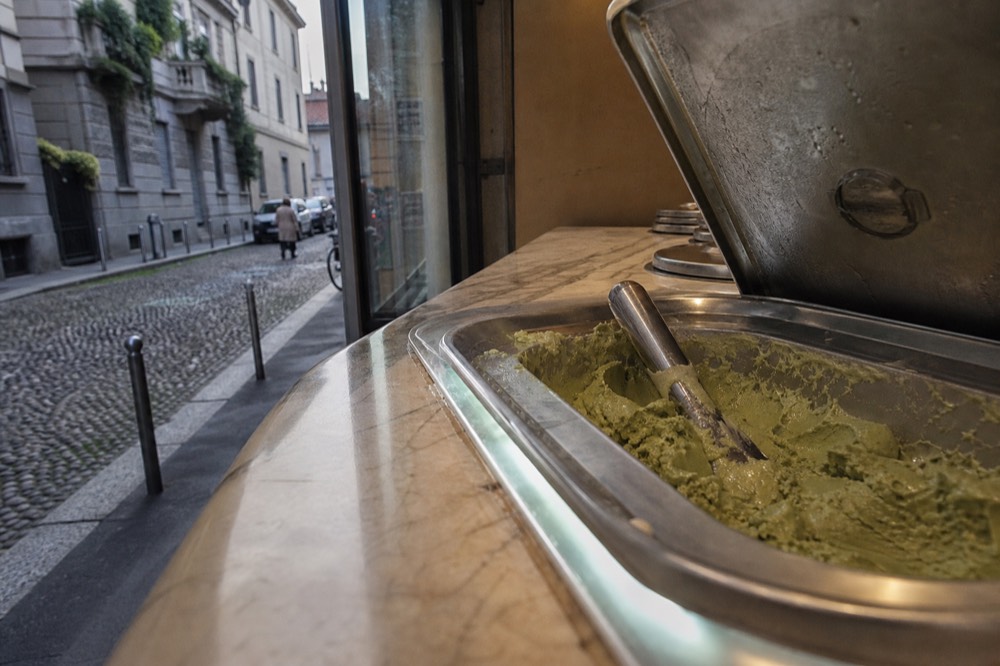
Colour is the second read. Pistachio should be a dull, brownish green, not vivid Kelly green. Banana should be grey, which unsettles people the first time they see it, and is exactly the sign you want. A grey banana flavour means real banana, which oxidises, rather than flavouring and dye. Bright blue "bubblegum" and neon yellow "lemon" are the same story told more honestly.
| Signal at the counter | What it usually means | What to do |
|---|---|---|
| Covered metal pozzetti | Temperature control, small batches, product protected from air | Strong positive sign |
| Mounded peaks under a glass dome | Stabilisers and vegetable fat holding a shape | Walk out |
| Grey or dull banana, brownish pistachio | Real fruit and nuts, no dye | Order it |
| Neon colours | Colouring standing in for ingredient | Skip |
| Short seasonal flavour list | Base made on site, rotation with the market | Strong positive sign |
| 40+ flavours year-round | Industrial base, delivered in tubs | Lower expectations |
| Prices by size, not by flavour | The product is the point, not the markup | Good sign |
| Gelato stored below the rim of the tub | Correct overrun and temperature | Good sign |
The fourth signal, the price board, deserves a sentence of explanation. A shop that charges one price for a small cone regardless of flavour, and prints it clearly, is selling gelato. A shop with a complicated flavour-tier pricing scheme is often selling theatre. None of this guarantees greatness, but it raises the floor fast, and in a city with hundreds of counters the floor is what you are buying with your ten seconds.
Which Display-Case Signs Separate Artisan From Industrial?
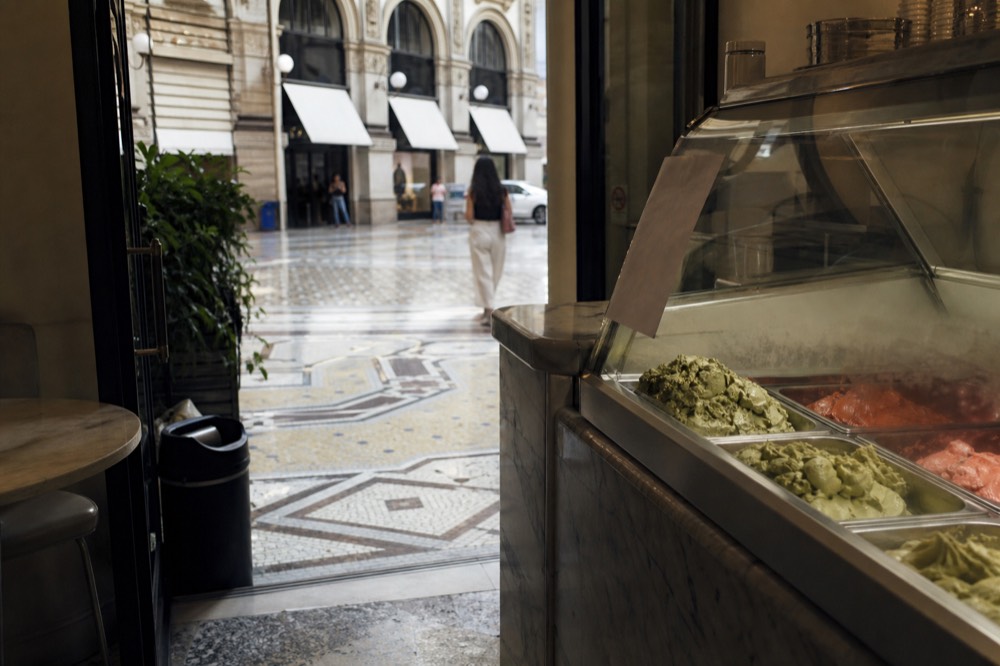
The strongest signs are covered pozzetti, gelato stored below the rim of the tub, a flavour list that changes with the season, and a kitchen or pasticceria behind the counter making the base on site. The strongest negative signs are tall sculpted mounds, vivid colouring, whipped-looking texture and a list of dozens of flavours that never changes. Trust the lids and the colours before you trust any review.
Overrun is the technical word worth knowing. Gelato is churned with air; industrial product is churned with a lot of it, sometimes doubling the volume, which is why it looks puffy and clouds slightly. Artisan gelato is denser, sits lower in the tub, and holds a clean edge when scooped. You can see this through the glass before anyone serves you, and it costs you nothing to check.
Seasonality is the other tell. Milan's fruit calendar moves: figs and melon in late summer, persimmon in autumn, citrus in winter, strawberry and cherry in spring. A shop whose list tracks that calendar is buying from a supply chain and making small batches. A shop with the same 40 flavours in January and July is holding frozen industrial base. The seasonal logic extends across the whole Milanese sweet landscape, which is why the panettone calendar, Christmas-bound by both tradition and the 2005 production decree, is such a useful contrast, and something we cover in detail in panettone in Milan.
If you would rather have a guide apply these filters for you on a route that hits several sweet counters in one walk, the sweet-focused tours below are the ones that fit the brief.
The patisserie walk is the closest match to this article's skill: it is the same counter literacy, applied to pastry. The pizza class with unlimited gelato is the format contrast, a hands-on session where the gelato is a bonus rather than the subject. The chocolate factory tour is the single-tasting option for a short visit.
How Much Does Gelato Cost In Milan, And What Formats Exist?
Gelato in Milan is sold by size at the counter, typically as a cono or coppetta in small, medium and large, with a granita, affogato or brioche filling out the menu. Artisan shops in central Milan price by size rather than by flavour, and the price board is displayed before you order. Treat any specific figure as a counter question, since prices move with the season and the neighbourhood.
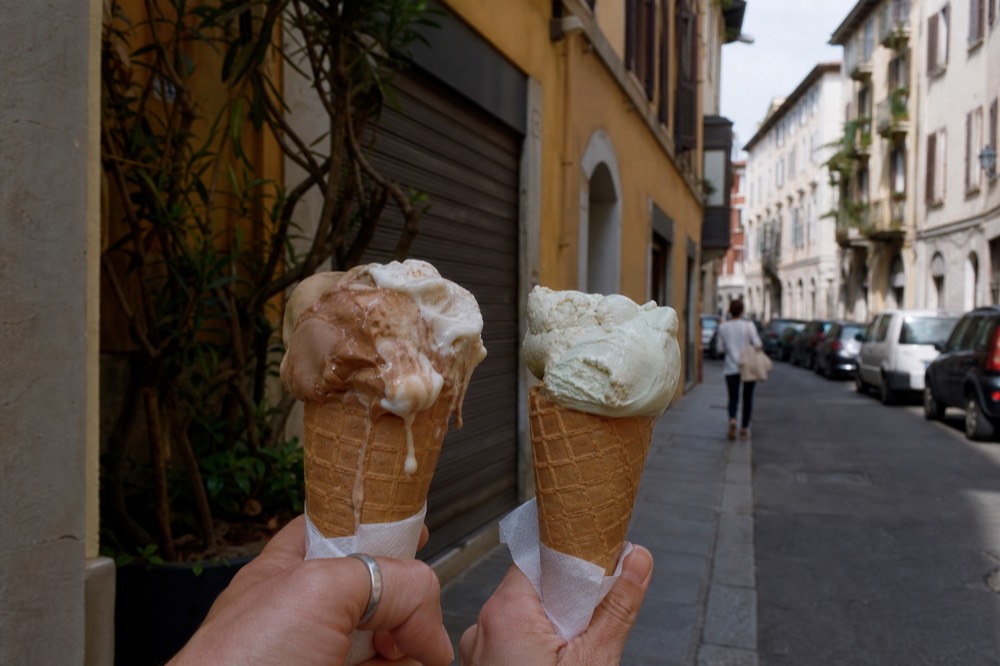
The formats matter more than visitors expect. A cono is a cone, a coppetta is a cup, and the cup is the better choice if you want to taste the texture before it melts into the wafer. A granita is a coarse, crystalline ice, usually lemon or coffee, and in Sicilian-influenced shops it comes with cream and a brioche for breakfast. An affogato is a scoop of fior di latte or vanilla drowned in a shot of hot espresso, and it is the correct answer to a Milan afternoon in July.
| Format | What it is | When to order it |
|---|---|---|
| Cono (small) | One or two flavours in a wafer cone | The standing benchmark order |
| Coppetta | Cup, same sizes, cleaner tasting | When texture matters to you |
| Granita | Coarse crystalline ice, lemon or coffee | Hot afternoons, breakfast in Sicilian shops |
| Affogato | Gelato drowned in hot espresso | After lunch, always |
| Brioche con gelato | Gelato in a sweet bun | A Sicilian summer habit, increasingly common in Milan |
| Takeaway tub | Half-litre or litre to take home | When you have found a shop worth revisiting |
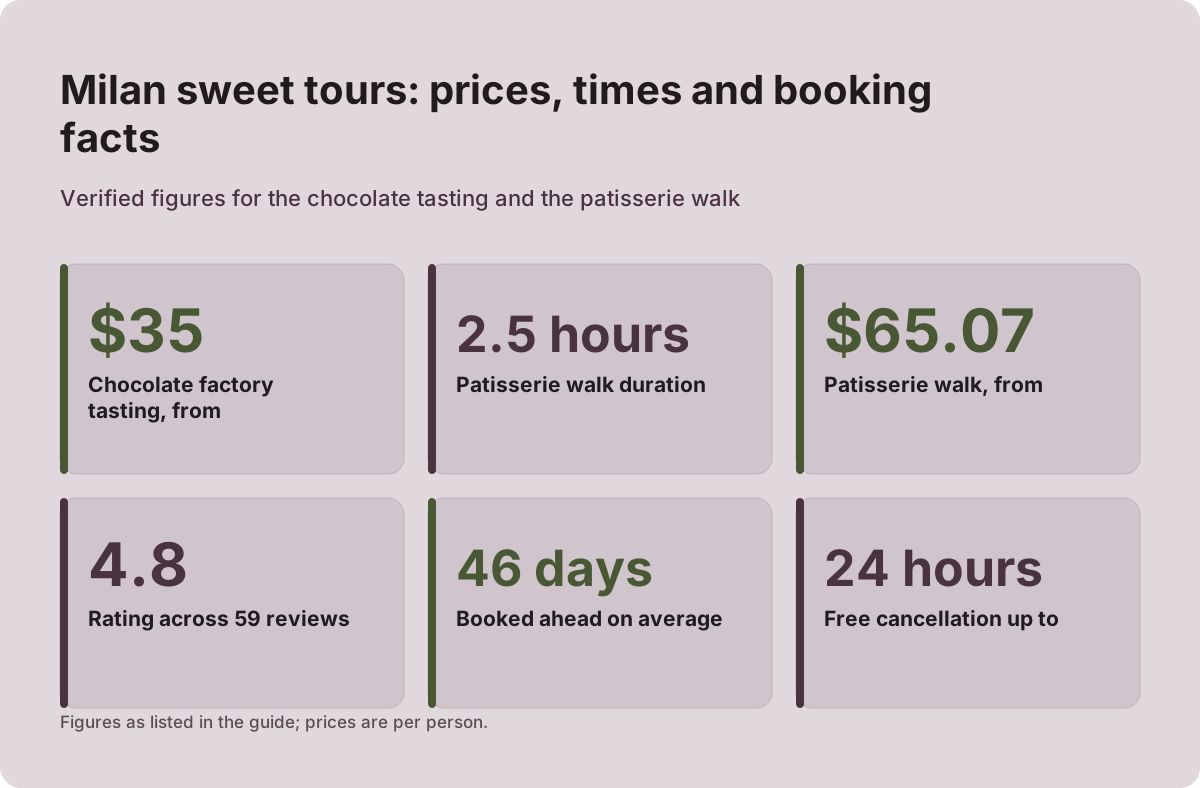
On price, be sceptical of any article that prints a precise figure for "a cone in Milan." Prices vary by neighbourhood, by season and by shop, and the honest advice is to read the board before ordering and expect artisan product to cost meaningfully more than the tourist counters near the Duomo. What is verifiable is the tour side of the sweet economy: the Enrico Rizzi chocolate factory tasting runs from $35 per person for one hour, the sweet delights patisserie walk from $65.07 for 2.5 hours, and the broader downtown tasting walk built around risotto and wine from $116. Those are the anchors that hold still.
How Does The Same Counter-Reading Skill Apply To Pastry?
The identical logic transfers: a short seasonal list, muted colour, visible production and pricing by the product rather than the spectacle. Milan's pastry counters reward the same scepticism as its gelaterias, and a guided patisserie walk applies the filters for you across several shops in one route, with tastings included and free cancellation up to 24 hours before.
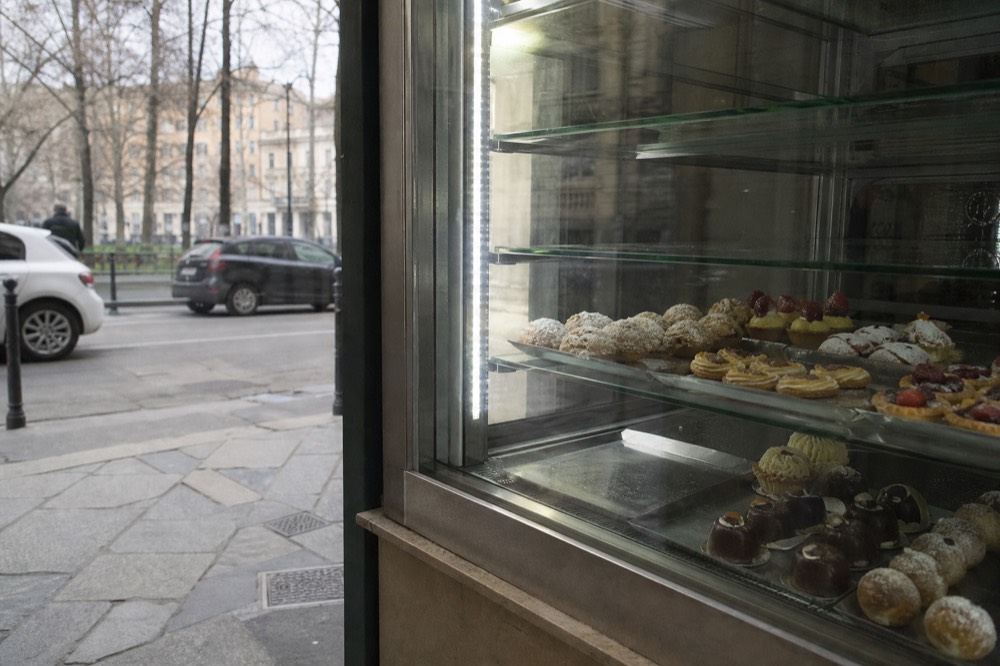
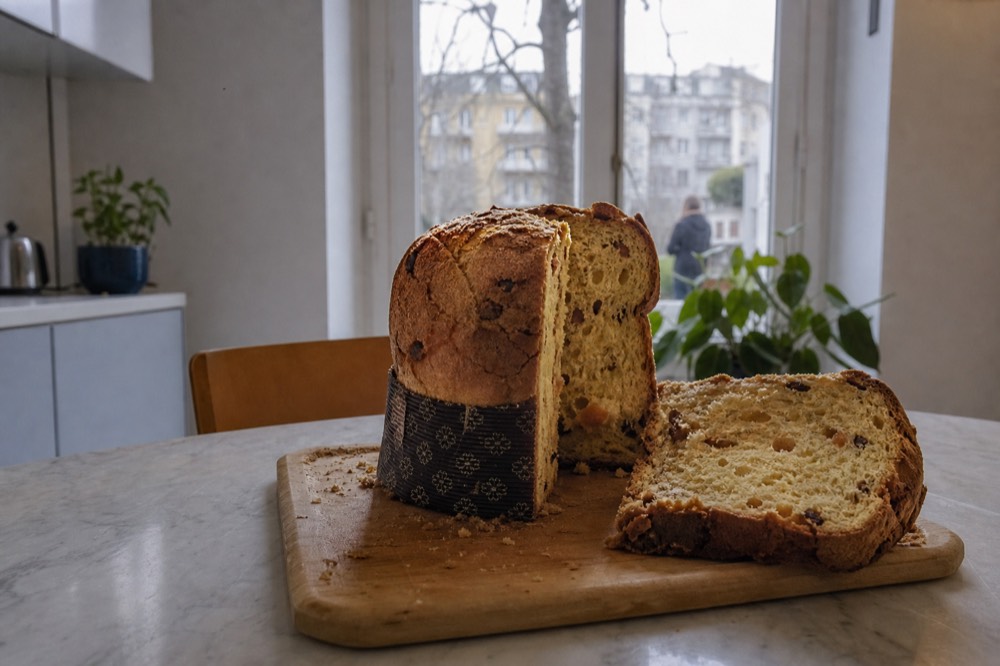
A pastry case tells you the same things a gelato case does. A pasticceria with six things done properly beats one with thirty done adequately. A panettone with a naturally cracked top crust, an open elongated crumb and a sourdough aroma is the real thing under Italian law; a uniform, soft, sweet dome is a different product wearing the name. The 2005 ministerial decree reserves the name panettone for a naturally leavened sourdough product with minimum 16 per cent butterfat, minimum 4 per cent yolk and at least 20 per cent raisins and candied citrus, as published in Gazzetta Ufficiale n. 177 of 1 August 2005. That is a legal floor you can apply at any counter in the city.
The sweet-delights patisserie walk is the featured pick here precisely because it teaches this literacy on the move. It runs 2.5 hours from $65.07 per person, is rated 4.8 across 59 reviews, and the listing shows it is booked 46 days ahead on average, so it rewards planning. The meeting point is Largo Guido Donegani 105, and it cancels free up to 24 hours before.
Because the walk covers several counters in a single route, it also works as a calibration session: after two hours of a guide explaining why one pasticceria's short list beats another's sprawling one, you are equipped to judge every shop you walk past for the rest of the trip. That is the real argument for booking it early in a stay rather than on the last day.
For the dessert landscape beyond the gelato counter, from tiramisu to the panettone economy, see what dessert Milan is famous for.
Which Milanese Sweets Are Officially Milanese?
None of Milan's classic sweets hold an EU DOP or IGP designation. What they hold is De.Co., a municipal recognition from the Comune di Milano, granted to panettone and michetta in 2007 and extended since. The freshest entry is Pan de Mej, added in 2026 and tied to the feast of San Giorgio on 23 April. De.Co. is a statement of belonging, not a quality guarantee, but it is the closest thing to an official list.
This distinction matters because the words get misused constantly. Gelato itself is not Milanese in any formal sense; it is a national craft with regional accents. Panettone is the sweet that carries Milan's name around the world, and its De.Co. status plus the 2005 production decree are the two real legal anchors. The Comune's food policy pages publish the register, and the De.Co. register on the Comune di Milano site is the primary source.
| Sweet or product | De.Co. year | Notes |
|---|---|---|
| Panettone | 2007 | Christmas-bound; production defined by the 2005 decree |
| Michetta | 2007 | The Milanese bread roll |
| Barbajada | 2008 | The historic chocolate-coffee drink |
| Pan de Mej | 2026 | Tied to the feast of San Giorgio, 23 April |
The Pan de Mej entry is the detail almost no visitor will have: a cornmeal and elderflower sweet tied by the Comune to a fixed April date, added to the register only in 2026. If you are in Milan in late April, it is the most findable genuinely seasonal sweet in the city. For the wider question of what the city's cuisine actually is, Milan street food covers the savoury side of the same register.
Where Does Chocolate Fit Into Milan's Sweet Scene?
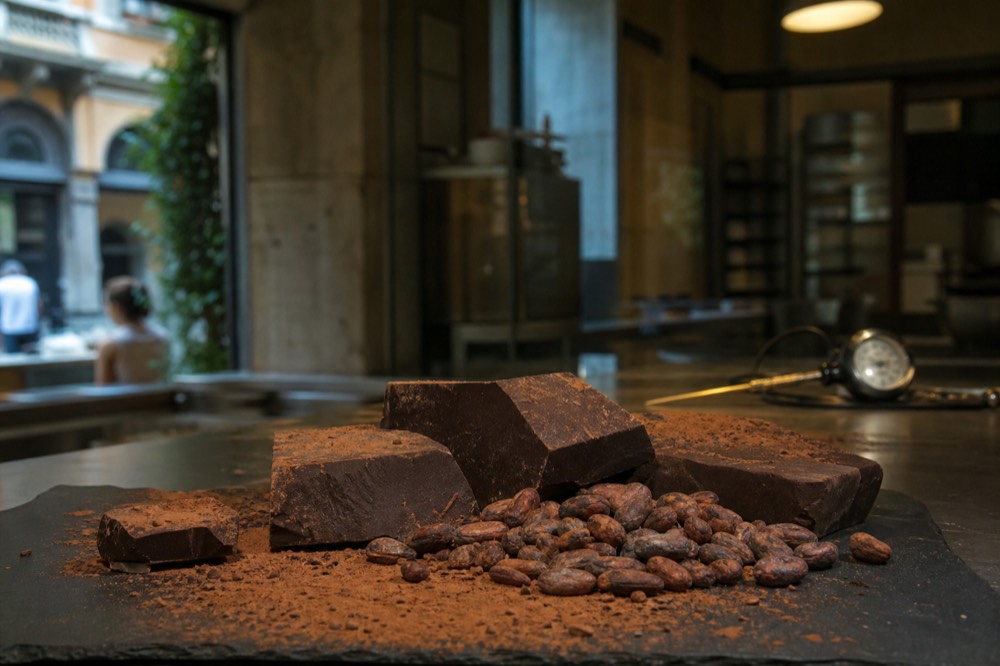
Chocolate is the third pillar of Milan's sweet economy, and the city's most accessible chocolate experience is a one-hour guided tasting at Enrico Rizzi's Fabbrica del Cioccolato, from $35 per person, rated 4.6 across 68 reviews. It is the shortest and cheapest of the sweet-focused products on this site, and it teaches the same ingredient literacy applied to cacao instead of milk and sugar.
The factory sits at Via Gian Giacomo Mora 18, with the M4 De Amicis metro stop given as the way in. An hour is enough to understand what a single-origin bean tastes like against a commercial blend, which is the chocolate equivalent of the grey banana test: once you can taste the difference, you cannot un-taste it. The tour cancels free up to 24 hours ahead, which makes it a low-commitment add-on to a day in the Navigli area.
Artisan panettone is the other price signal worth knowing. A 2025-season analysis reported by Food Affairs put artisan panettone in Milan above EUR 50 per kilo, naming Marchesi and Gattullo each at EUR 50 per kilo, against a headline rise of 55 per cent over five years. That is a live-search figure from named Italian reporting, not our own survey, but it sets honest expectations for anyone planning to carry a panettone home.
Can You Learn To Make The Sweets Yourself?
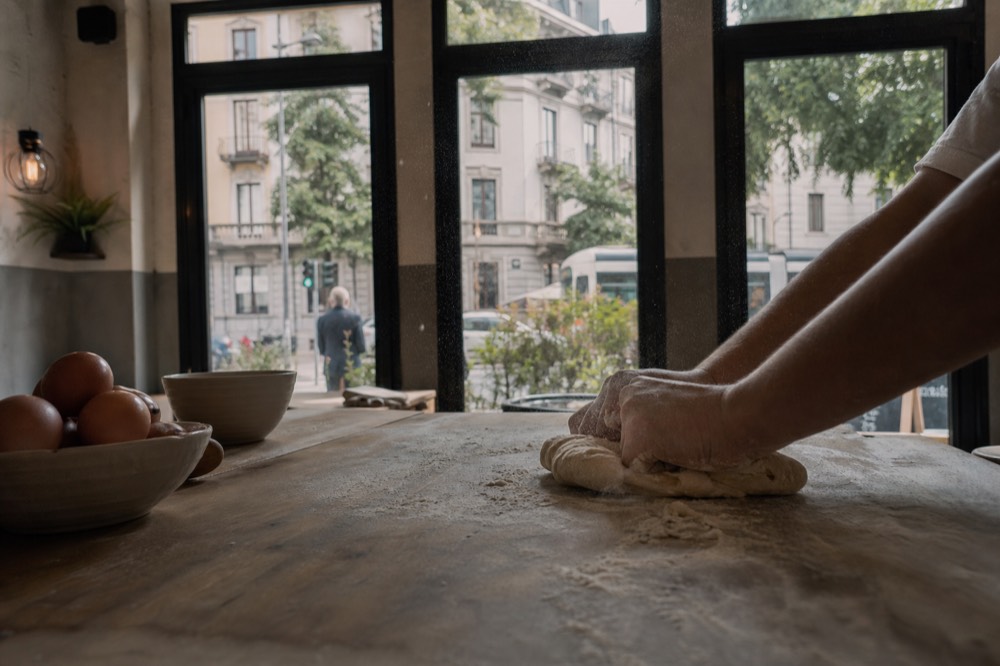
Yes, and the format contrast on this site is the pizza and gelato cooking class at Mercato Centrale, from $65.28 per person, rated 4.9 across 954 reviews, with unlimited gelato included in the session. It is a three-hour hands-on class rather than a walk, and it suits travellers who want to make something rather than taste their way between shops.
The class is run by Towns of Italy from their cooking school inside Mercato Centrale, on the first floor at Via Giovanni Battista Sammartini 1, and the listing shows it is booked 36 days ahead on average. The alternative format is the pizza-and-gelato pairing versus pasta-and-tiramisu within the same listing, so a family can split by interest and share the room. Like everything else on the roster here, it cancels free up to 24 hours before.
One practical note about Mercato Centrale itself: in February 2026 a health inspection found an infestation and 17 of the market's 27 activities were suspended while the site closed for extraordinary cleaning and reopened progressively, with vendors returning over the following weeks. The market is open daily again, but it is a reminder that even landmark venues have bad months, and that a live listing is a better check than a guidebook.
How Do You Plan A Sweet Day Around Gelato In Milan?
Anchor the day to one guided experience, then apply the counter-reading skill on your own. Morning suits a class or the chocolate factory, afternoon suits a gelato crawl, and evening suits the patisserie walk, since Milan's sweet shops stay open into the early evening and the passeggiata fills the streets between them. Book anything guided ahead: the patisserie walk averages 46 days of advance bookings.
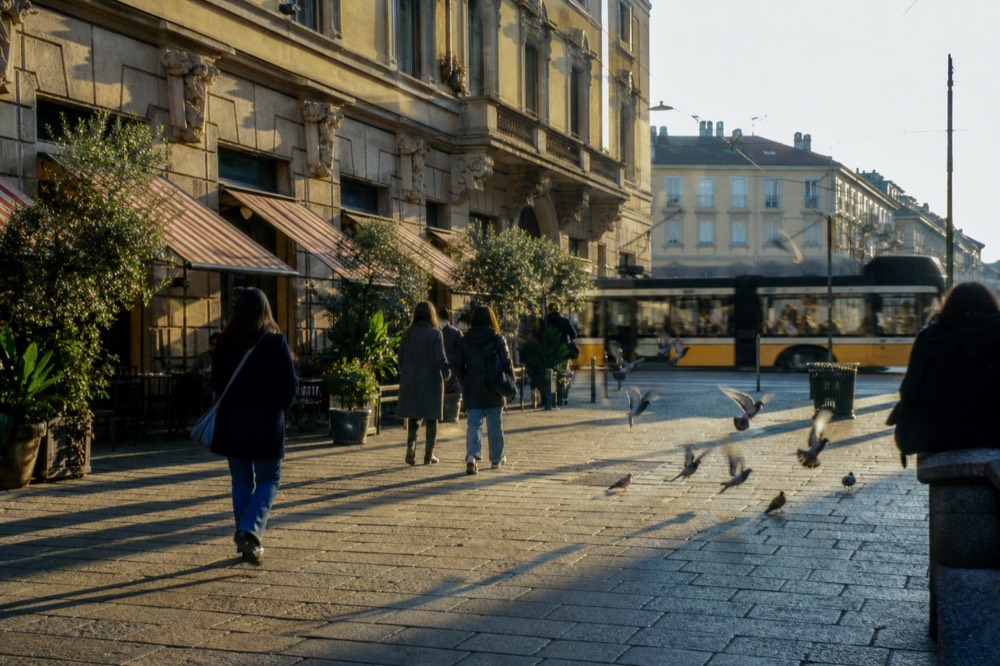
The neighbourhood logic is straightforward. Brera concentrates pasticcerie and gelaterie within a few streets and has drawn new openings, including Antica Gelateria Matteo, which opened its first Milan store at Via Mercato 30 in September 2026. The Duomo and Galleria area holds the tourist counters and the famous historic cafes, at tourist prices. Navigli holds the evening scene, and the movida ordinance in force from 11 June to 2 November 2026 restricts late-night takeaway alcohol across twelve zones including Navigli, Brera and Ticinese, which matters if your sweet walk drifts into an aperitivo, a topic covered fully in aperitivo in Milan.
Seasonality should shape the plan too. Gelato is a summer habit; panettone is a Christmas product by law and custom; Pan de Mej belongs to late April. A visitor in August faces the double reality of peak gelato weather and the Italian holiday calendar, when individual venues close for one to three weeks, so check opening days before walking across the city for a specific counter. There is no verified aggregate figure for how many Milan venues close in August, and any article printing one is estimating.
The skill this guide teaches is portable. Once you can read the lids, the colours, the list and the board, you can walk into any gelateria in Milan, or Italy for that matter, and make a better decision in ten seconds than a listicle can make for you in ten minutes. If you want a guided head start, the three products below cover the sweet spectrum from a one-hour tasting to a full cooking class, and every one of them cancels free up to 24 hours ahead.
These are the questions travellers ask most about gelato in Milan, answered with the same counter-reading logic the guide uses: the signals that matter, the colours that tell the truth, what formats and prices to expect, which sweets are genuinely Milanese, and which guided experiences focus on the city's sweet side.
Common Questions About Gelato In Milan
How Do You Spot Good Gelato In Milan?
Look for covered metal pozzetti rather than mounded tubs under a glass dome, muted natural colours such as grey banana and brownish pistachio, a short seasonal flavour list, and gelato stored below the rim of the tub. A shop passing most of these tests in ten seconds is very likely making its base on site.
What Colour Should Pistachio Gelato Be?
A dull, brownish green. Vivid Kelly green indicates colouring rather than pistachio. The same logic applies to banana, which should be grey in an artisan shop because real banana oxidises, and to fruit flavours generally, which should look like the fruit rather than brighter than it.
How Much Does A Gelato Cone Cost In Milan?
Prices vary by neighbourhood and season, and artisan shops price by size rather than by flavour, so the honest advice is to read the board before ordering. Expect artisan product in central Milan to cost meaningfully more than the tourist counters near the Duomo.
Is Gelato Actually Milanese?
No. Gelato is a national Italian craft with no municipal or EU designation tied to Milan. The sweets that do carry official Milanese recognition through the Comune's De.Co. register are panettone, michetta, barbajada and, since 2026, Pan de Mej.
What Is The Difference Between Gelato And Granita?
Gelato is churned, dense and served at a slightly warmer temperature than ice cream. Granita is a coarse crystalline ice, usually lemon or coffee, with no dairy in the classic versions, and in Sicilian-influenced shops it is a breakfast item served with cream and a brioche.
Are There Guided Tours Focused On Milan's Sweets?
Yes. The sweet delights patisserie walk runs 2.5 hours from $65.07 per person, the Enrico Rizzi chocolate factory tasting runs one hour from $35, and the pizza class with unlimited gelato runs three hours from $65.28. All three cancel free up to 24 hours before.